

How did I become a rug hooker?
From my earliest memories I was interested in “making things” and curious about the world. According to my parents they were always searching for me – but I wasn’t lost – just off exploring. When they took me out as a toddler, as a safety precaution I was in a harness with a lead because I could be gone in a blink of an eye!
I learnt to sew and knit in the conventional way for those born at the end of WWII, from my grandma and mother. Though neither of the women were “conventional”, my grandmother was a tailor of men’s suits and my mother in the early days of her marriage worked alongside my father in their local grocery shop with its attached residence in Victoria on Australia’s east coast.
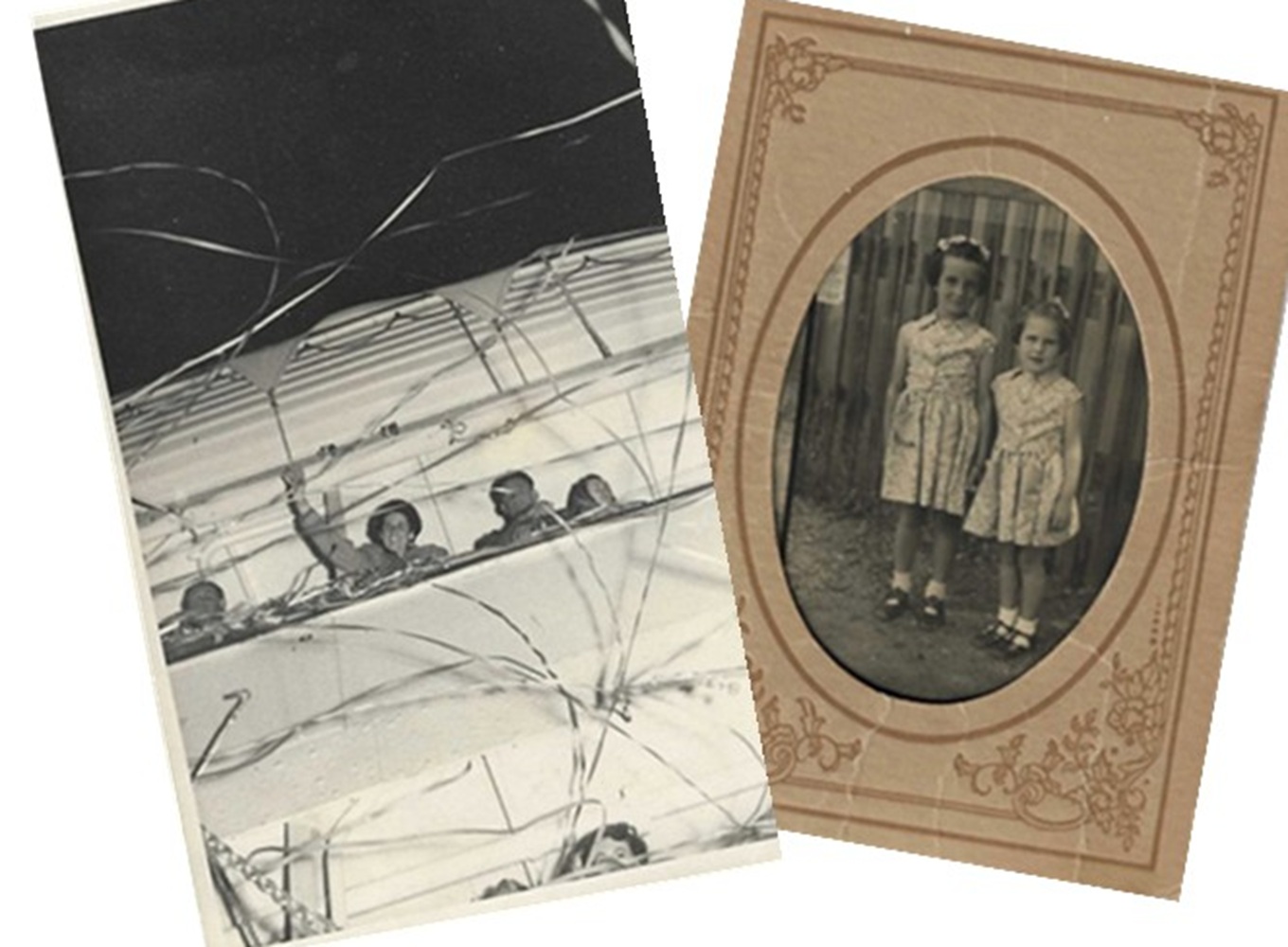
In 1951 my health became so bad the Dr said to survive I needed to live where the climate was warm and dry.
Dad had been in the Navy – his ship docked at Fremantle during the war years, and he’d spent a little time in Perth so was aware of the hot dry conditions. There was no hesitation – even though Mum had never been to the West, and they didn’t know anyone in Western Australia; they sold up their business, left family and friends and off we sailed across the Great Australian Bight on a very rough voyage. At that time, it was like going to the other side of the world. Only a matter of days after our arrival, they had purchased another shop with an attached residence and went back to working together. My grandmother would come to visit for several months each year to escape the worst of the Victorian winter and spent her time sewing and knitting for me and my sister and answering my “how to” questions.
A few years later. it was my father’s illness that moved them from the shop and they both went to office work in the city. My mother was employed as a secretary in a small one-man office but finished up running the administrative and financial side of the business while her employer worked in the field. Little did any of us know history would repeat itself.
(Image caption): 1951 Leaving Melbourne & Sisters Visiting Perth Zoo
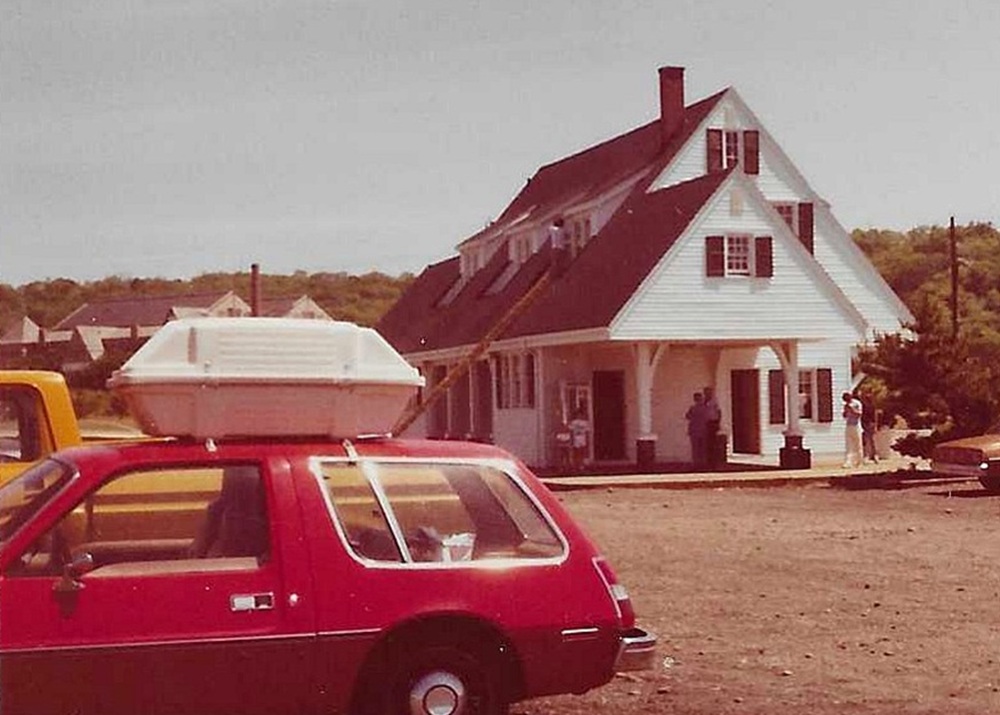
1974 it was my turn to face the unknown when I moved to the other side of the world with my American husband and two small boys, 1 and 6yrs old.
I had worked with my husband in his business in Australia which had taken us to outback locations in Queensland and the Northern Territory, as well as in Western Australia. In the USA he worked for other companies which involved moving from city to city, so my days were taken up with setting up house and the boys schooling. I became very adept at moving, I stopped counting at 40 moves. Now I look back I can see I was “networking” but the word “networking” wasn’t in my vocabulary back then. There was no social media; Facetime, Zoom or Skype and telephone calls back to Australia were expensive, only to be used in an emergency. My mother and I exchanged weekly blue airletters, not waiting for one to arrive to answer it. These pre-stamped airletters which could be purchased from the Post Office in USA and Australia were one page, that folded over in three parts – the outsides became the envelope with space front & back for To/From addresses. Because I always have much to say, I wrote in tiny script to squeeze in maximum words; sometimes adding non-personal notes to the back.
(Image caption): 1978 I've Been Everywhere Mate - My Pacer Wagon on Long Island, New York, jobsite.
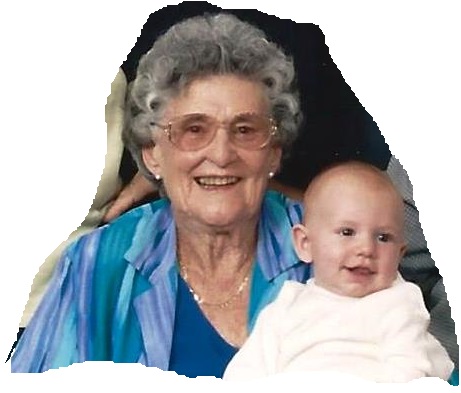
After my father died in January 1980, my mother came for a 3-month visit every other year. Her last visit was 2001, she turned 80 in March and came for a month in August to meet my only grandchild, also born that March. She used to tell people she was seeing America on the "Franco plan", because we were always in a different place. Our family song on car trips was the old Aussie ballad I’ve been everywhere mate, to which the boys would substitute names of American towns they'd been to. Moving between my husband’s job locations, I can claim to have circumnavigated the USA by car with kids in tow.
How much fun it would have been if I’d been part of the rug hooking scene back then.
(image caption): March Birthdays - Greatgrandmother Ida & James - August 2001
My rug hooking journey began in the MOST unconventional way
The year before my husband and I were to retire back to Australia my friend Judith Stephens asked me to search out information on a textile technique new to me – rug hooking. I followed the telecom’s slogan of the day “let your fingers do the walking” and talked to rug hookers from all over the United States, being passed from one to another. This resulted in a subscription to Rug Hooking Magazine, sent to me to forward because they didn’t ship to Australia. Flipping through the first magazine before sending on, really piqued my interest. That first issue was on “primitives” very basic rug designs with simple colour palettes. I can remember saying to my husband “Even I could do that”! I’d done some painting classes, oils and watercolour, neither were my thing but these images looked easy. The following issues arriving in the post came with images of beautiful wall hangings that appeared to be finely shaded “tapestries” as if they were painted with wool strips. I was hooked so started looking for a teacher near where we were living in San Francisco.
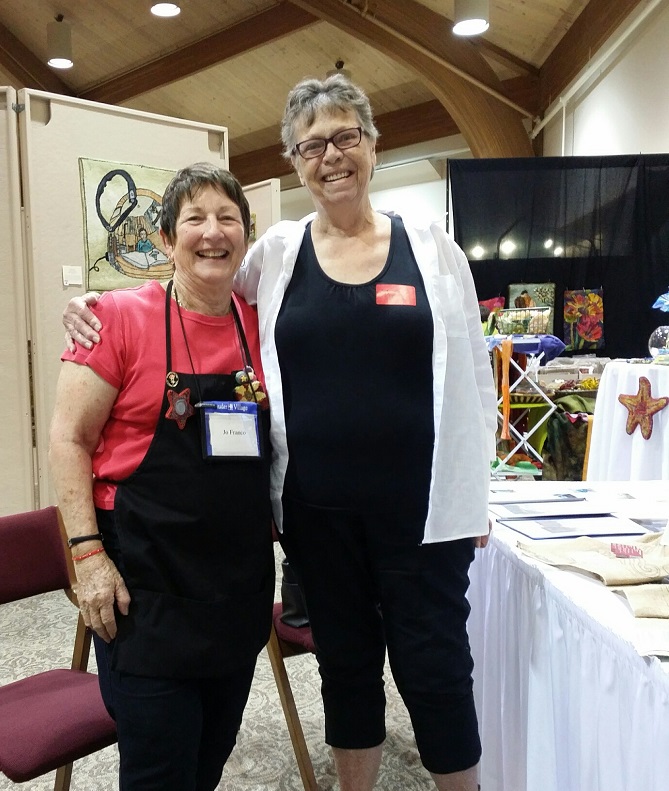
While searching online for a rug hooking instructor, I was introduced to Charlotte Price, the Director of the Pearl K. McGown Guild’s Western Teachers Workshop, a week-long residential event where rug hooking teachers come together and share their knowledge. Other McGown workshops were held in the northeast, south and I believe in one of the mid-West states. I explained to the Director I was looking for a rug hooking instructor before moving back to Australia where the North American Traditional rug hooking technique wasn’t known and there were no rug hooking guilds, suppliers or teachers. My friend who’d sent me on the mission, had some rug making knowledge, but it was of a different technique, introduced to Australia by Miriam Miller in Milton, NSW, who as a girl immigrated from the UK.
(Image Caption) Jo & Charlotte Price at the set up of the Global Textile Hub online mixed media exhibition in a virtual gallery - Re Imagined a Challenge with a Difference, which debuted at Rug Hooking Week Sauder Village Archbold Ohio USA 2018
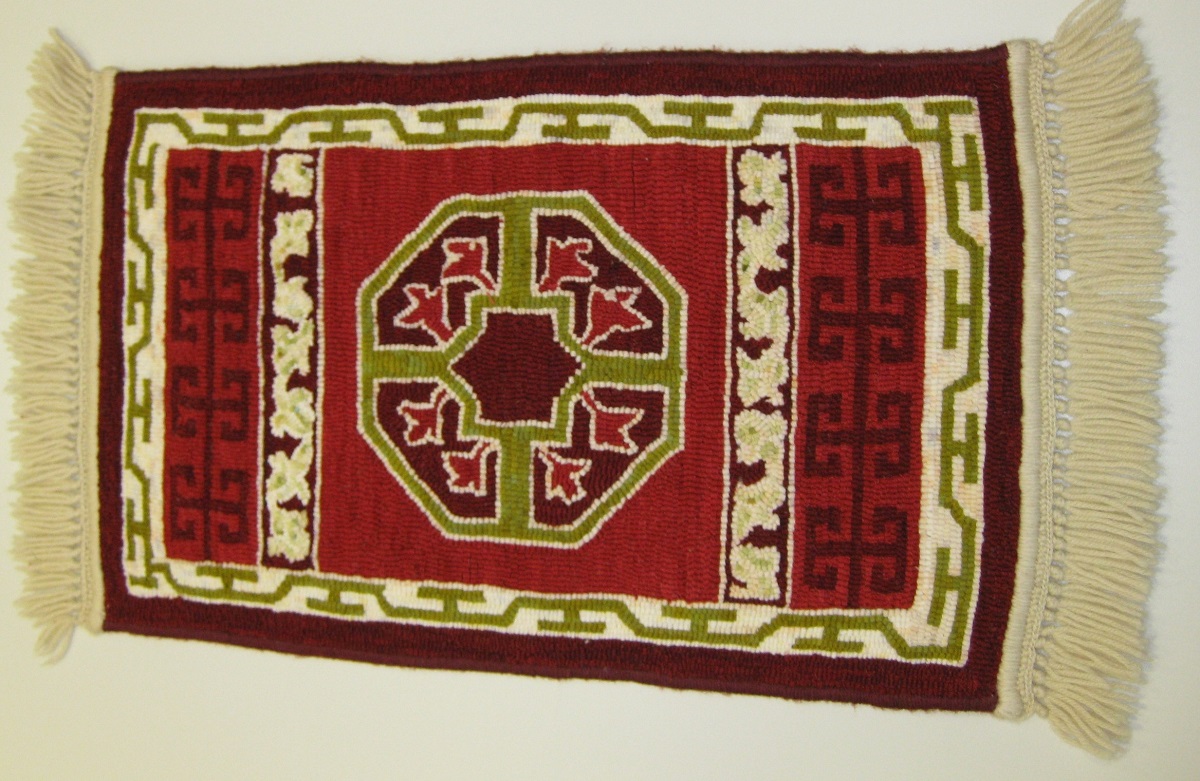
I was taken under the wing of the Western Teachers Workshop Director, and she invited me to attend the Teachers Workshop week in June of 2002. Off I went thinking I was going to audit the sessions and classes, but NO, I was thrown off the deep end into their Teachers Training program, a 5-year program where teachers who had been teaching for years are sponsored by other teachers. There I sat in the first workshop Monday morning pulling my first loops – Oh, the stress! My first rug - started in Angie's class and finished at a later date. Each year means 5 rugs started to be completed by the year of graduation.
(Image Caption) "Afghanistan" #TT514-H[Color] 13.5x22.5 inch oriental mat taught by Angeleen Malone using #4cut on monks cloth.
I missed the next-years’ workshop because of our move back to Australia but returned in June for each of the following 4 years – teaching my first class at Western Teachers Workshop and gaining my accreditation in June 2008. Fortunately, the annual event was held at the University of Oregon, in Eugene, which was not far from the home of my eldest son and his family. During my first workshop in 2002 I made friends with teachers from around the northwest USA and Canada. Fortunately for me there was a rug hooking group in Tacoma, Washington an easy drive from my family in Seattle and they adopted me, so I drove down with their group for the next 4 years.
I also met Laura W. Pierce, a teacher from Petaluma in Northern California, who invited me to her mother’s very select rug hooking group. Leaving after my first visit, her mother Emma said “see you next week”. How lucky was I, it was such an honour, I didn’t think twice about driving for an hour or more each week to get there from our apartment by San Francisco airport.
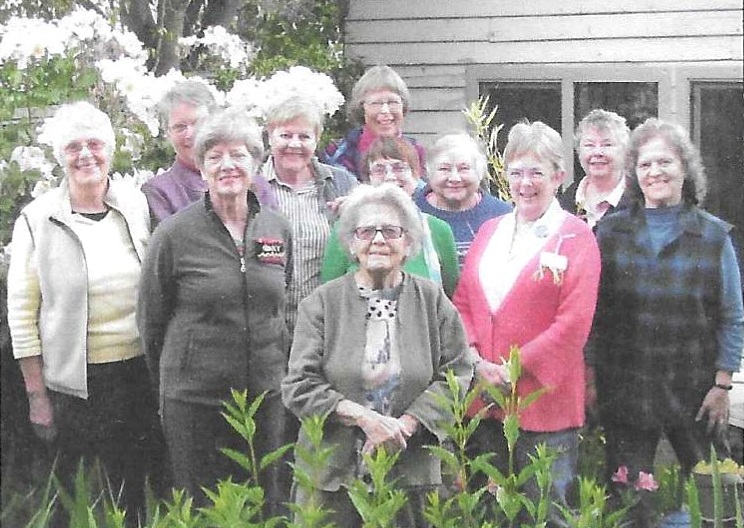
(Image caption): USA - Emma Webber, front and centre of her Group,with Judith Stephens (in pink) on her left and Emma's daughter Laura W. Pierce on Judith's left.
A twist in the road to rug hooking in Australia – upcycling was the answer
I discovered very quickly as I attempted to organize paid workshops in Perth, that Australians were not interested in using commercial patterns.
After showing some of the rugs completed for my accreditation of which I was quite proud, (25 in all) I had someone say – “I’m not interested, that’s like painting by numbers I want to design my own work”.
It was a difficult to sell the idea of this traditional rug hooking craft done the North American way, because of the expense. If you want to work in the traditional way from the northern hemisphere to produce fine shaded “tapestries” you need a good hook, a frame and a wool cutter to cut the fine strips measured in 32nd of an inch – making the popular to use size of #4 a 1/8” (3.2mm) wide strip. A #8(6.4mm), #9(7,2mm) & #10(8mm) are considered wide strips to hook with.
Sourcing wool fabric is also difficult. With our climate in the southern hemisphere being so much warmer, there is not a lot of wool clothing or fabric being recycled. In the Northern hemisphere they buy new rug hooking wool fabric (it’s a certain weight and weave) from several companies that service rug hooking suppliers and then spend more money dyeing the wool before tearing it into swatches to put through an expensive rug cutter/stripper.
It became obvious there’d need to be a switch here to recycled clothing and household fabrics, the use of which gives a different appearance to the loops. The loops formed with the traditional rug hooking technique using wool fabric are required to be uniform in height – the finished result is very smooth and looks machine made. With most other recycled fabrics, the loops mushroom or bubble giving a more textural appearance. If hooked tightly, strips of T-shirts can be made to look “uniform”.
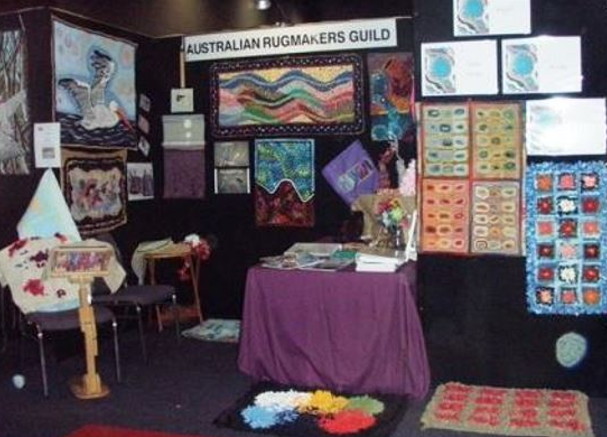
My friend Judith from South Australia gave a workshop in Perth at a week-long Craft & Quilting Fair advertised as Re-use, Re-cycle, Re-joice. To keep the cost down and make it accessible, she used the shaggy proggy technique from the UK, and we discussed the traditional rug hooking displayed it in our booth. I set up a booth at this event every May for 6 years – there was always a huge crowd at our display, with people saying “I love this – something new” – little did they know what an old craft it is.
Networking and formation of the Australian Guild/Group, a timeline

Miriam Miller in her Narrwilly Rug Room, Milton, NSW
-
2006
Judith and I who were members of The International Guild of Handhooking Rugcrafters (TIGHR) travelled to Wales to attend the Triennial Conference held at the culmination of their 3-year term. That year the organisation was turned over to the USA and in speaking with members of the new committee we were encouraged to nominate Australia to be the next Host Country for 2009-2012. Hosting an international event in Australia would be a monumental task with so few known rug hookers scattered over such a vast area. Miriam Miller’s group on the central coast of New South Wales were the only rug makers we knew of.
-
2008
2008 was billed as the first traditional rug hooking exhibition in South Australia - it wasn’t! We discovered on the morning of the Exhibition Opening that there had been a rug hooker from the UK who’d spent time in Canada then immigrated to South Australia in the late 1960’s bringing with her the knowledge of the traditional craft which she taught in the local high school of her country town. Other teachers joined her, and knowledge of the craft spread but it was never advertised beyond the surrounding country towns in the Barossa Valley. A member from this original group came to the 2008 exhibition bringing many of her own rugs. It was at this exhibition that the Australian Guild was unofficially formed. Nominated for President was Miriam Miller from Milton, NSW who had revived the proggy(shaggy) technique from the UK and in 1994 had formed a group who met and are still meeting at her Narrawilly Farm Rug Room. Their 30th celebration will be held in October this year.
-
2010
I flew to South Australia and with Judith and several members of her group drove to Miriam’s Rug Room in Milton NSW where an instructor from the USA would be giving workshops. There was a Guild meeting at that time and the Guilds name was changed from Rugcrafters Australia Guild (RAG – which Judith and I thought appropriate) to Australian Rugmakers Guild. It was on this trip that we discovered by chance old, hooked rugs in the Pioneer Women’s Museum and Judith and I along with the visiting instructor from the US, toured the archives of the PowerHouse Museum in Sydney – I had previous located the archival information and arranged that visit ahead of time.
-
2012
2012 saw the Triennial Conference of The International Guild of Handhooking Rugmakers (TIGHR) take place in Strathalbyn, South Australia. The nomination having been submitted in 2008 and successfully voted in at the 2009 Conference in Louisville, Kentucky. 75 International members were accommodated at Dunreath Homestead, where the week of activities took place. https://www.tighr.net/history-archival-info/past-triennials
-
2014
2014 saw the Australian Guild back in Strathalbyn for another exhibition and Guild meeting at which time there was a change on the Board, Miriam became President Emeritus and Judith took over as President. 2015 The TIGHR Triennial Conference was held on Vancouver Island in BC, Canada. Judith and I along with several other Australian TIGHR members travelled to this event.
-
2016
2016 Coast to Coast Exhibition – Canberra. A weekend exhibition of Australian Guild members works from across the country and another Guild meeting was held.
-
2019
2019 another Guild meeting was held in Strathalbyn – a 10 year celebration postponed from 2018 because it conflicted with the TIGHR Triennial Conference in the UK which some Australian Guild members were attending and Rug Hooking Week in Ohio USA where I was with the online opening of the Global Textile Hubs online exhibition in a virtual gallery.
-
2020
2020 – we all know what happened then - COVID hit and turned the world upside down. The state of Western Australia was locked down tight, nobody could enter –not even returning residents, so nobody left. Travel for everyone came to a complete stop. It did open for a short time at the end of 2021 but then closed again. It seemed strange being a closed off country within Australia. Because so many people were stuck at home during that time they went online and ‘how to’ YouTube videos became popular and as people were getting together on programs like ZOOM, the Guild membership completely dropped off. Nobody wanted to pay the minimal dues, so it seemed the time had come to disband the quasi-official unincorporated Guild. An online board meeting was held to officially handle that in 2022.
Judi Tompkins and I then paid to continue the website and to administer Rughooking Australia together as we had done since we set it up for the Guild in 2014. We changed the name on the website and on the social media to the Australian Rugmakers Group.
Innovation – before COVID
-
2017
2017 was the formation of Global Textile Hub, run by three friends, rug hooking guild members, Judi Tompkins from QLD, Kira Mead who then lived in Albany and me in Perth, came together to close the tyranny of distance by taking textile exhibitions online. A Call for Entries went out for the 2018 Online Mixed Media Exhibition in virtual gallery to debut at Rug Hooking Week at Sauder Village, Ohio, USA.
-
2019
2019 the GTH team held an International Global Rug Hook-In and an online ZOOM bringing together the GTH team in QLD, Perth & Albany together with participants at a rug hooking exhibition in Ohio, USA and showing a video compiled of interviews with rug makers from around the world.
Seeking grants for another online exhibition; with the help of the Small Business association where I live, we received not only good business advice but a referral to a top IT lawyer for a free appointment. I visited him with Judi in my purse (phone set to Skype) taken out and sat on the boardroom table across from the lawyer and me. We thought we’d get 5 mins or maybe 15 mins max but as it was a public holiday and the suite of offices was empty of staff, he talked to us in detail for almost an hour. He mentioned his wife was an avid quilter maybe that helped our cause. As for our future plans, he couldn’t understand why we wanted to do something without making a profit. We discovered, it boils down to anything you want to do requires that you form a company and become incorporated, which involves bureaucracy and taxes, we didn’t want to do that. However, we did learn how to involve our project with another incorporated group and have them auspice our event.
-
2020
2020 - Call for Entries for the 2021 Online Collaboration with a Difference Exhibition in virtual gallery – debuted online again at Rug Hooking Week at Sauder Village, Ohio, USA.
Where am I now?
Back to networking, working with community groups and still connected internationally.
Currently, Judi Tompkins, my website co-admin since 2014 is taking her textile work in a different direction from traditional rug hooking. I however want to continue my research on rug hooking in Australia and the networking I’ve been doing for over 20 years, so now seemed a good time for me to personally take over the website where I will still promote rug hookers and rug hooking groups around Australia.
Banner Image Artist – Wanneroo Rugmakers Group