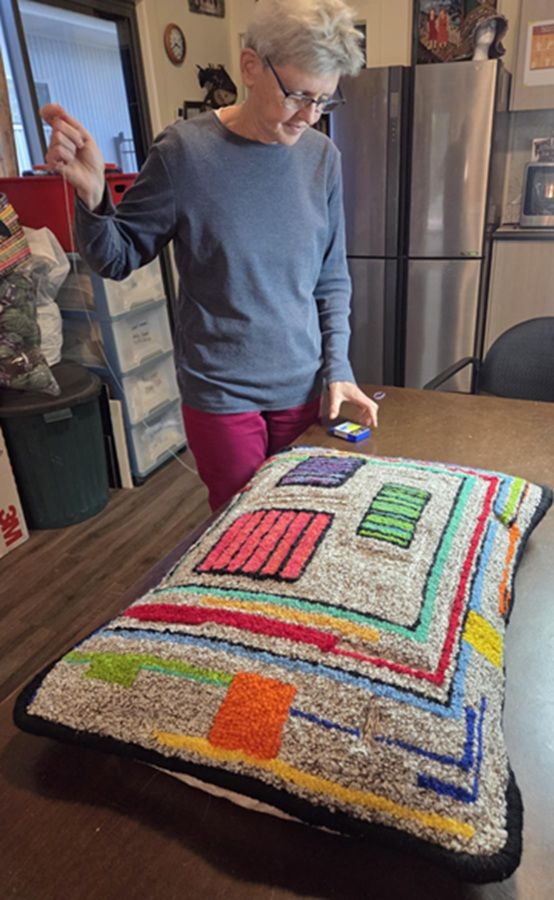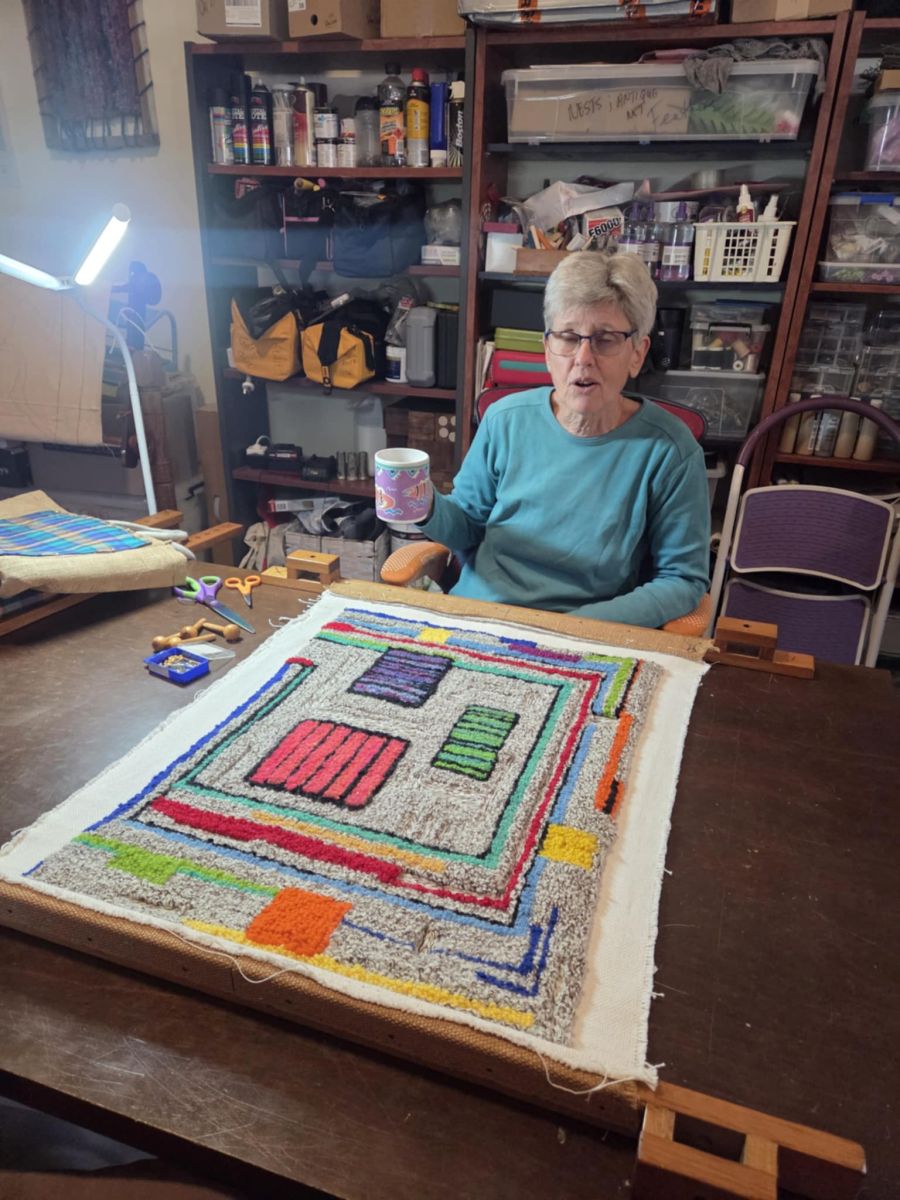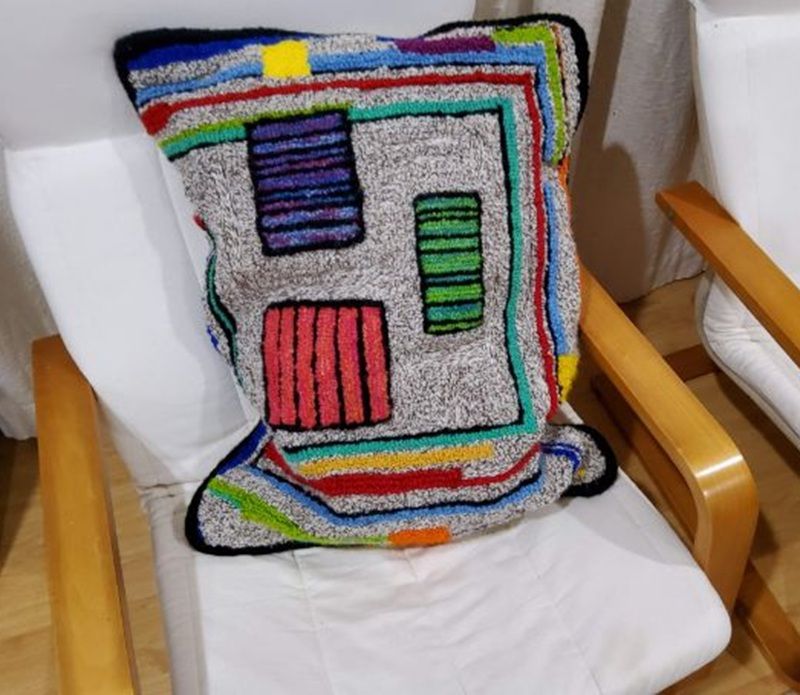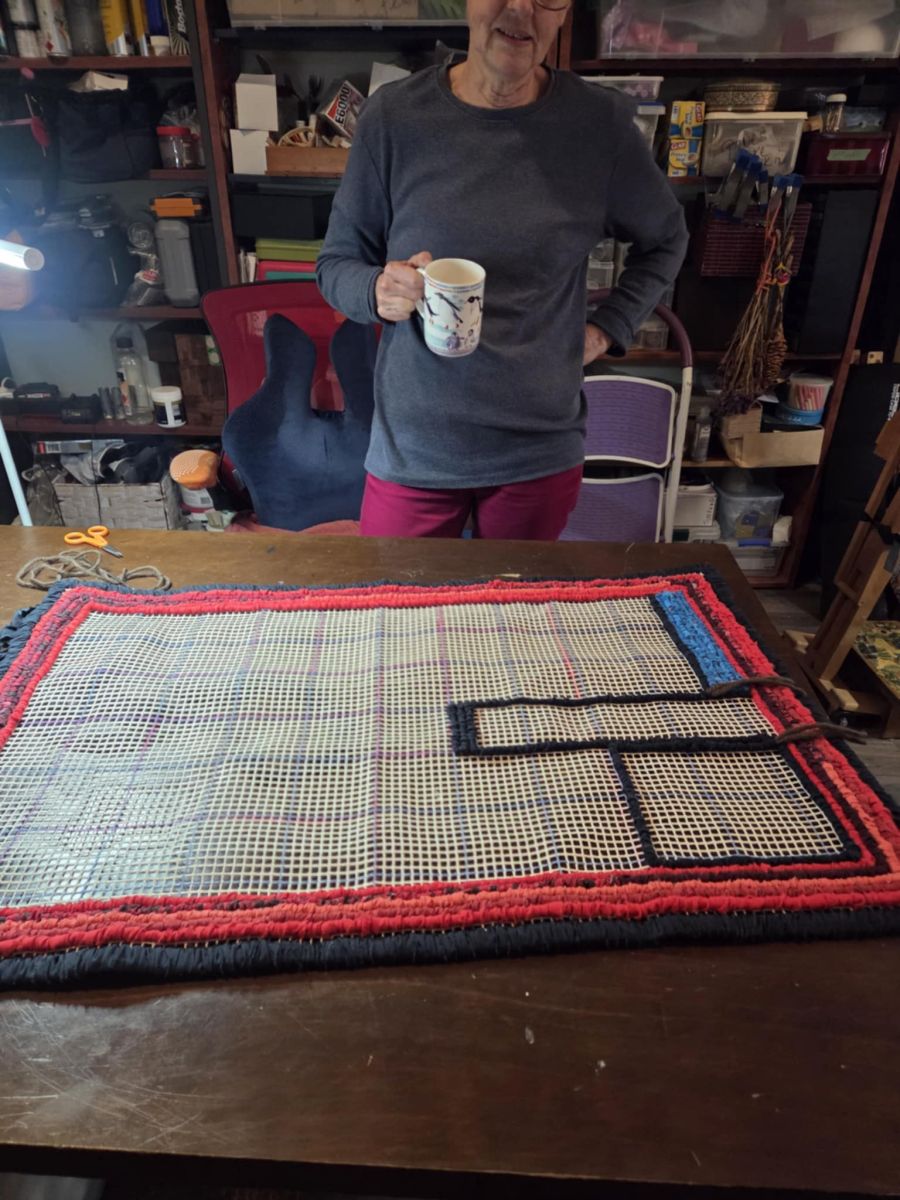
Need a Frame or not for rugmaking

ISSN 2207-001X      April 2026

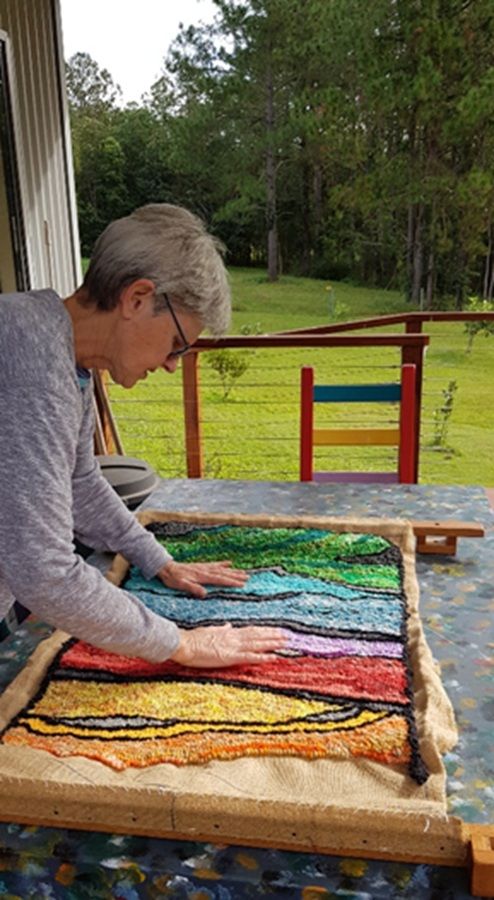
When beginners ask about rugmaking, usually the first question is, “do you need a frame?”  There’s no quick answer, because it depends on the rug maker and the technique being used. Most rug hookers using the “traditional” hooking technique, of pulling loops of fabric or yarn through an open weave or using a punch needle, the answer is normally “Yes”!

There’s all manner of wooden and metal rug hooking frames shown online; tabletop, lap frames, frames on stands (either a single adjustable floor support, or four fixed legs) with the frame face being flat or adjustable, some that swivel; not forgetting the early stretcher frames and geared Cheticamp frames.

So many choices! but what it finally boils down to is, availability and cost, particularly the impact of international shipping costs.  Some Aussie rugmakers have purchased and shipped or carried home frames from overseas – many have shown ingenuity and made their own.

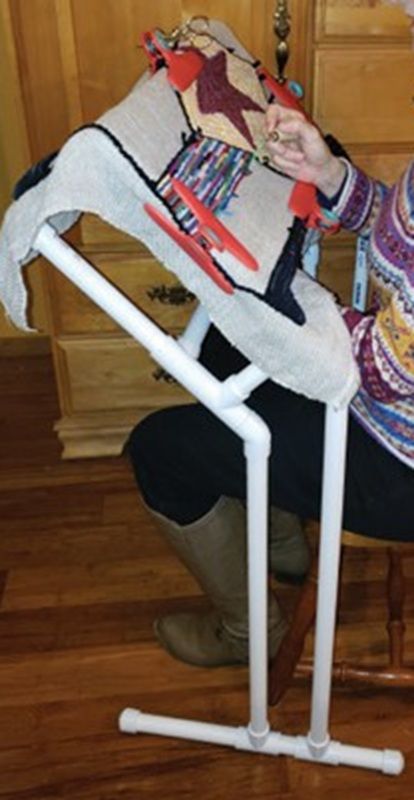
In early 2018 one of our group members made her own frame from PVC pipe which at the time I shared online in my Blog

When I checked out her source I saw it came from Judy Taylor’s website Little House Rugs and thinking there might be a copyright problem, I emailed Judy. After several emails back and forth I discovered she lives relatively close to my family in Seattle who I’d planned to visit August 2018 after attending Rug Hooking Week in Sauder Village, Ohio USA.  Judy invited me to visit, and I spent a very pleasant afternoon at her home & studio. When I arrived she had a PVC frame dismantled so she could show me how it went together which I shared on my return home along with images of her Jacob sheep and Angora goats, raised to provide the wool she spins.

In South Australia, Judith Stephens had also come up with a couple of PVC frames; a folding mini lap frame and one on tall legs.
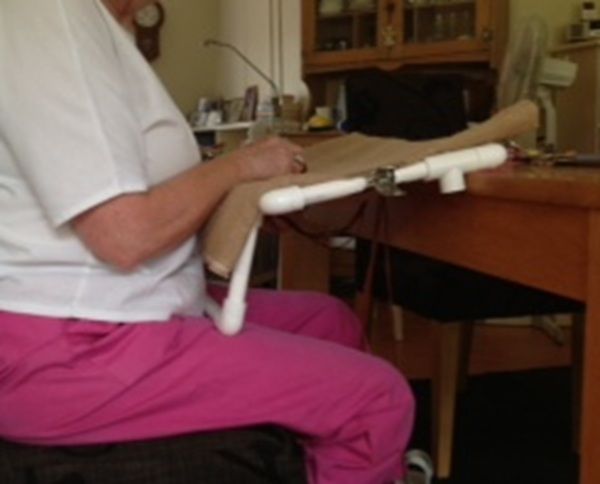
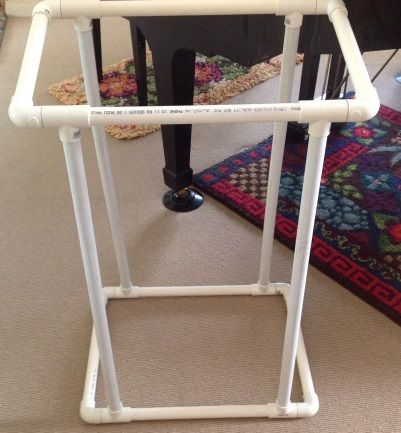
Getting back to whether frames are necessary; in earlier times and cooler climes (Seattle-USA, Tasmania in OZ and in the UK), many rug makers create tension on their backing fabric (foundation cloth) by wrapping the fabric across their lap and tucking the ends of the backing under their legs. In fact Judy Taylor also has a video showing that she started rug hooking this way 30 years ago.  Wrapping across one’s lap works well for latch hook, seen here,  with a latch hooker from Tasmania working on her own design, also locker hooking and proggy/proddy.
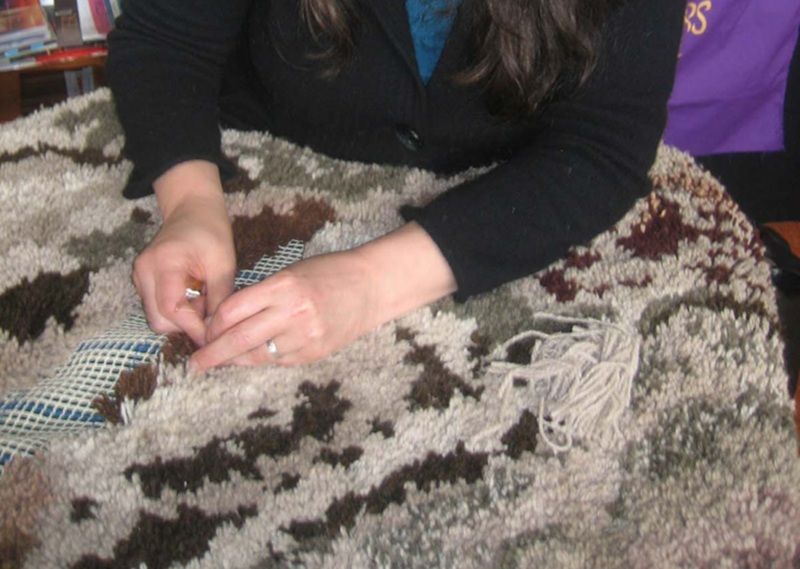
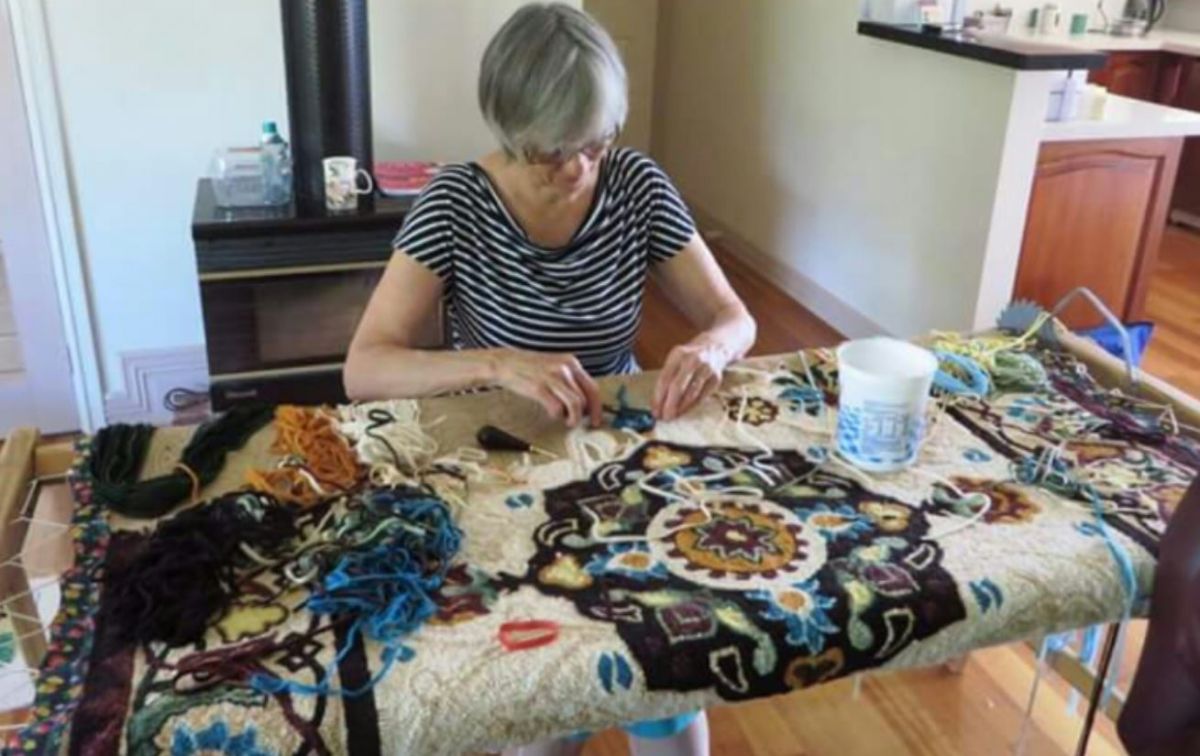
Having said that, some of our Wanneroo group members don’t tension their proggy pieces – here’s Tricia’s water lily rug  in the making and the finished product.  Sharen usually locker hooks on her lap and moved to table top as it began to grow – a hall runner for very long hallway.
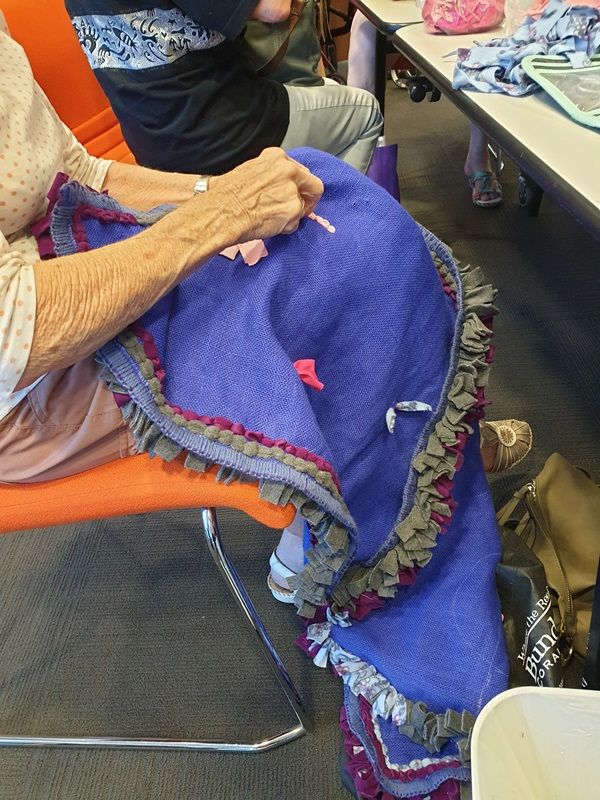
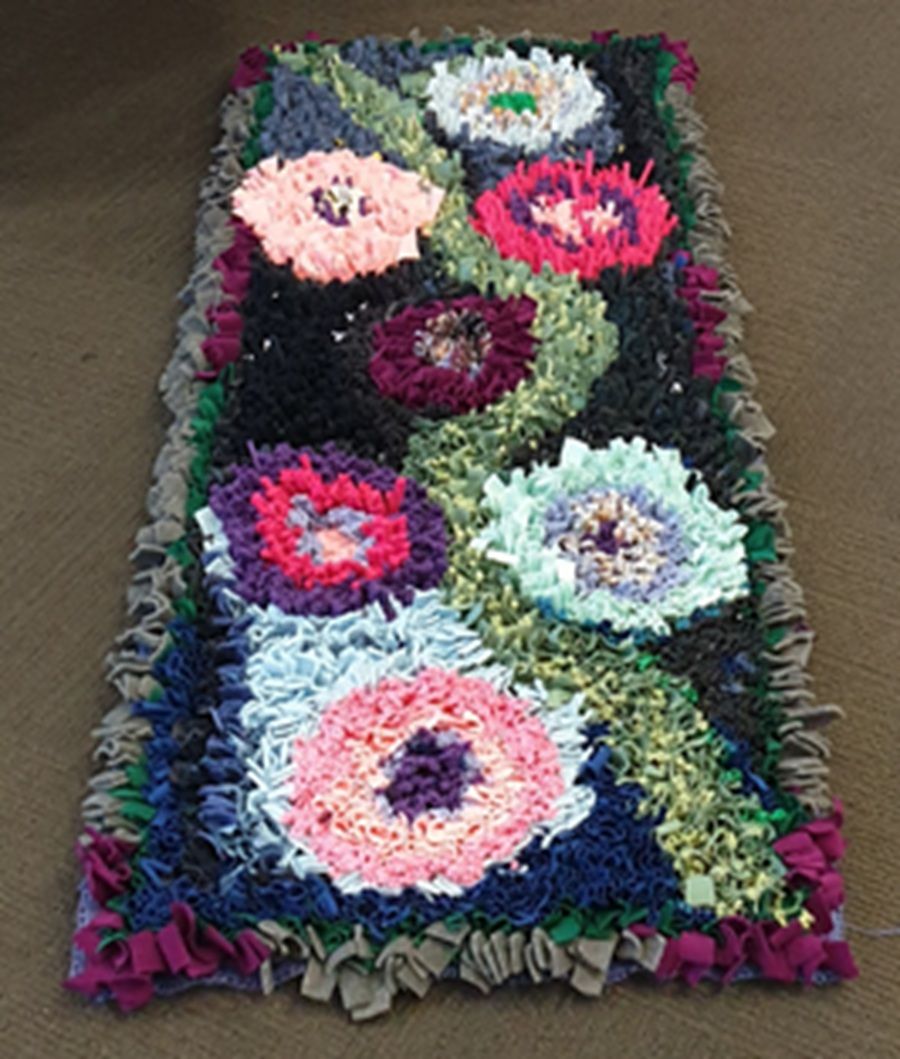
Due to lack of rug hooking resources and suppliers in Australia and costly international shipping we Aussies are good at improvising;  The saying, “Necessity is the mother of invention” definitely holds for Australian rugmakers. While our group didn’t invent the stretcher frame which has been in use since the early 1900s, we did modify the specifications shared in Miriam Miller’s book Proggy & Hooky Rugs to accommodate six rug hookers at one time – reminiscent of the old quilting bees.
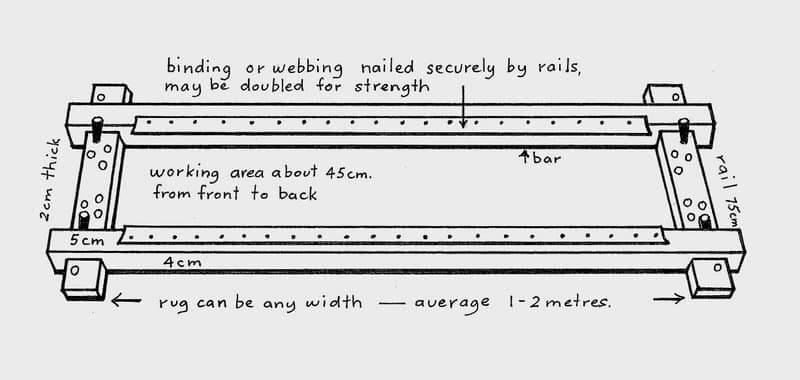
As Crocodile Dundee would have said “That’s a not a frame, THIS is a frame!”
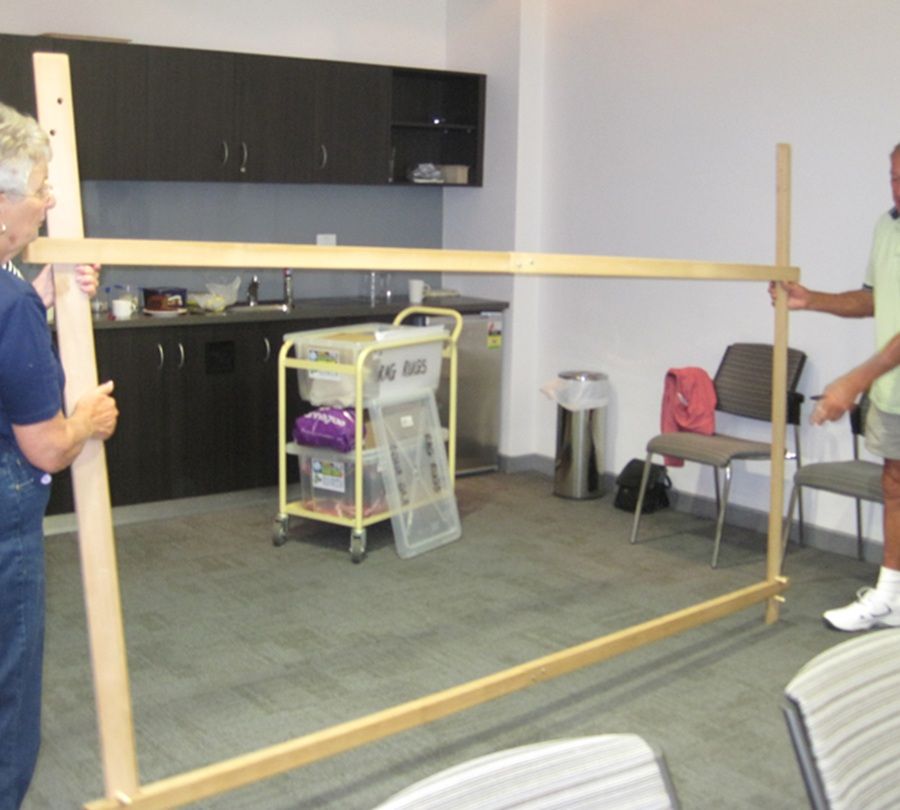
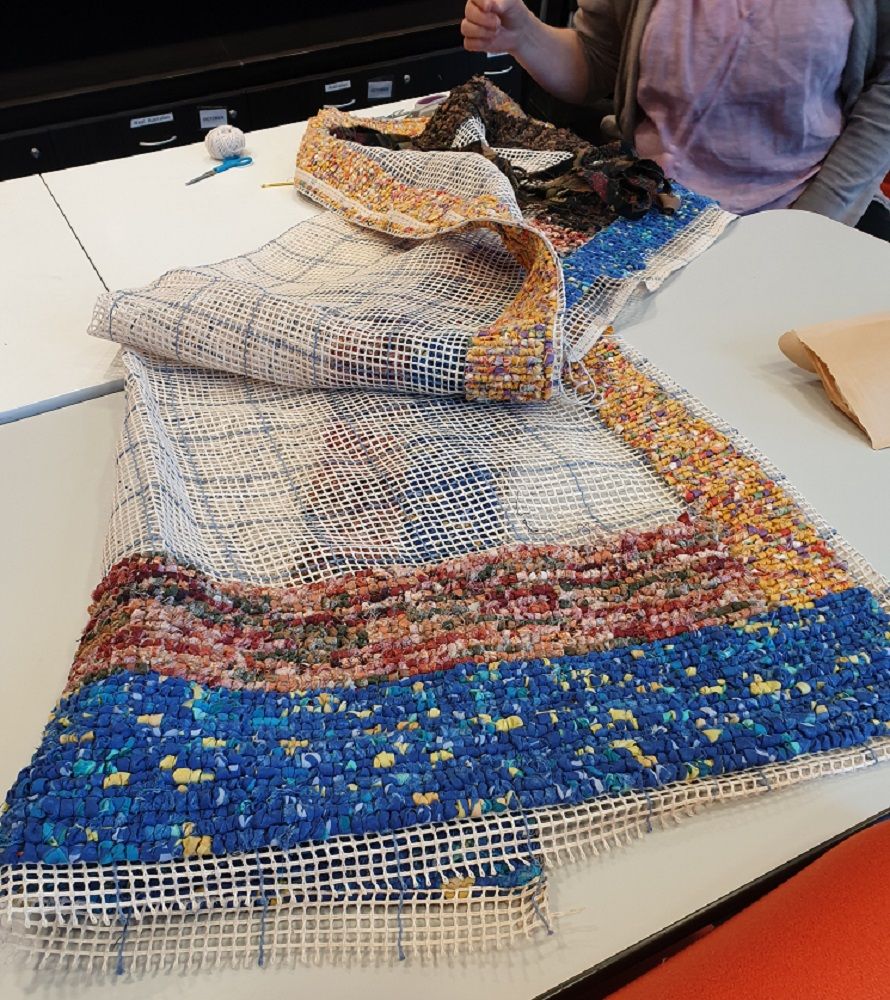
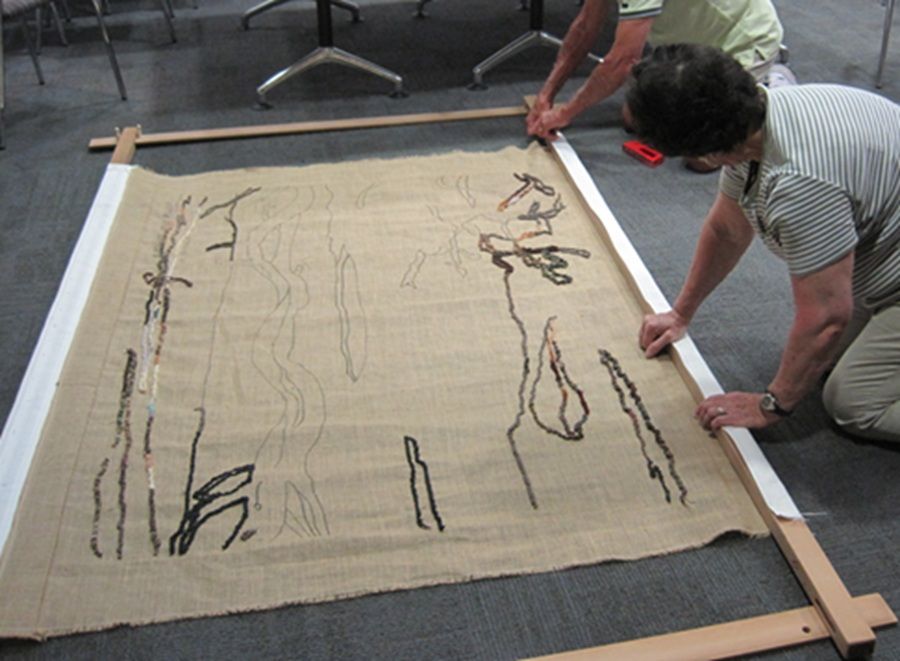
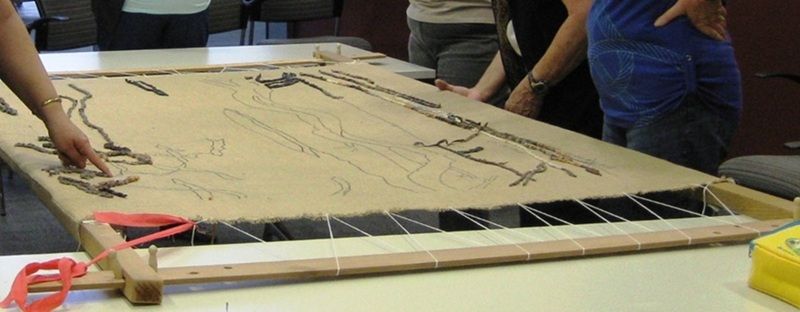
Here’s a progression of images of the frame from start to finish. The Hessian backing was stitched onto lengths of upholstery tape which were then stapled to the frame top & bottom and each week it was laced onto the side bars.

The outline of the design was hooked, then it was discovered that small  sections would not show up amongst the shaggy lenths of the proddy pieces, so the frame was turned over and those sections were hooked in wool strips which provided “relief” within the textural work. At the end of each Saturday mornings session the lacing was undone and the piece rolled around the top and bottom bars and tied together so it could be stored as a roll on top of the cabinet in the room where the group met.  To accommodate three people working from each side the edges were left rolled – we worked from the middle of the piece unrolling as necessary. The weight of the worked area in the centre created a problem and it became necessary to add another flat board between the 2 tables to take the extra weight, this board just slipped in between the two rolls at the end of the session.
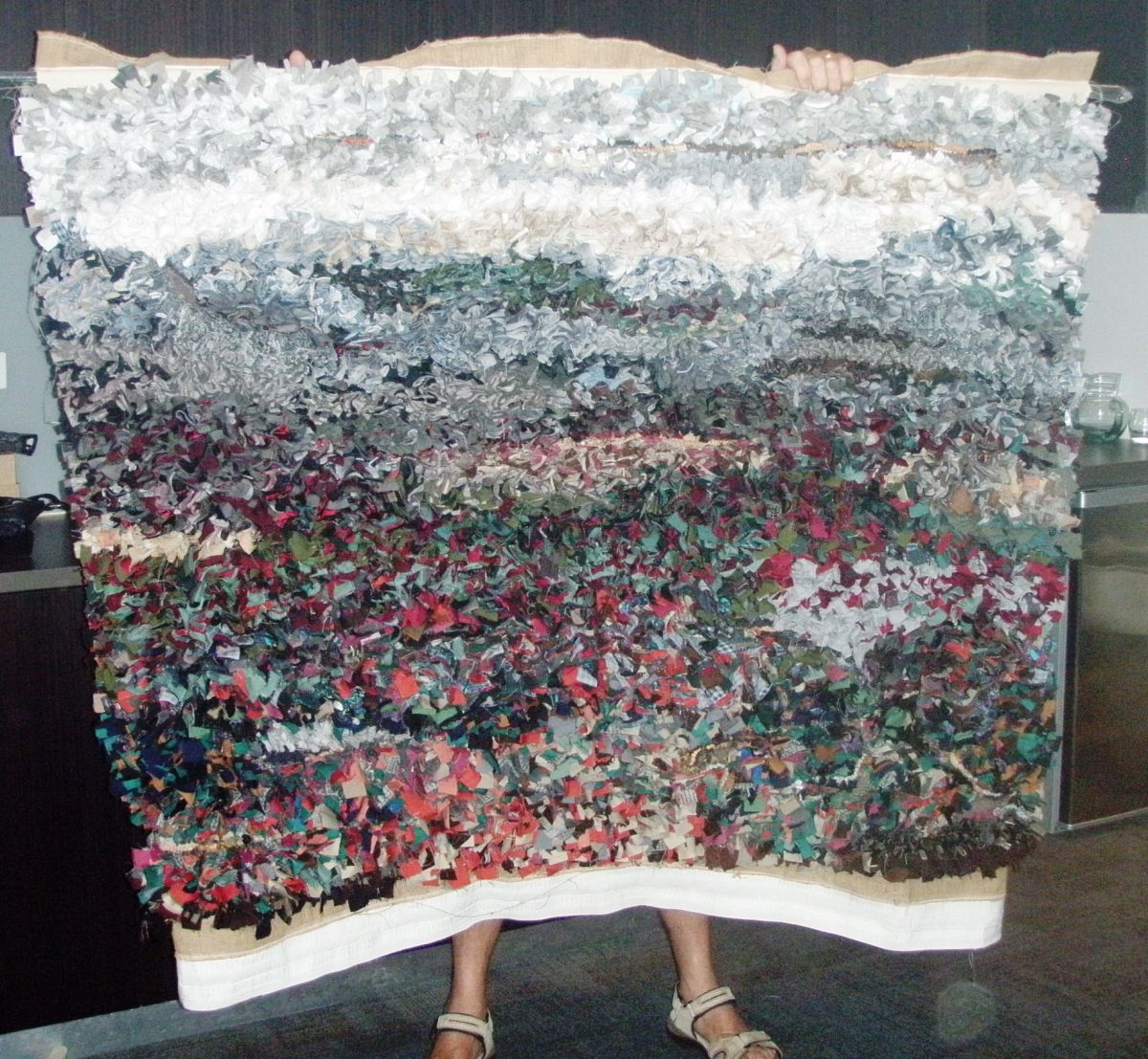
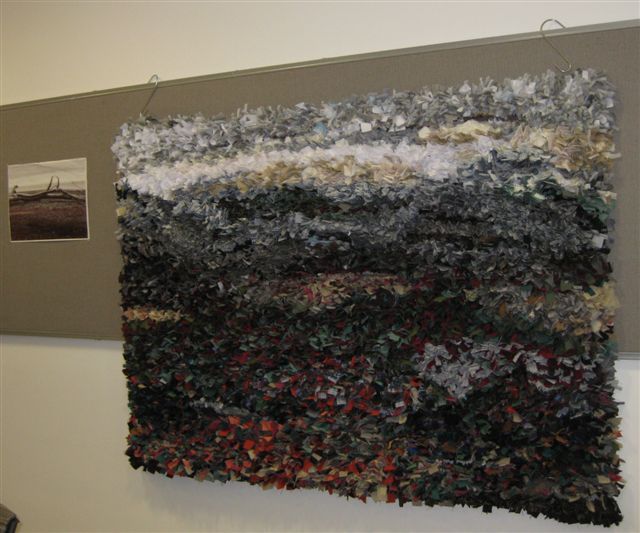
As with  punchneedle hooking the design is more evident on the back of the  work. The finished wall hanging, seen here with the photo that inspired it taken by local artist Lynne Franke, now hangs in a meeting room at the library in Wanneroo, north of Perth in Western Australia.
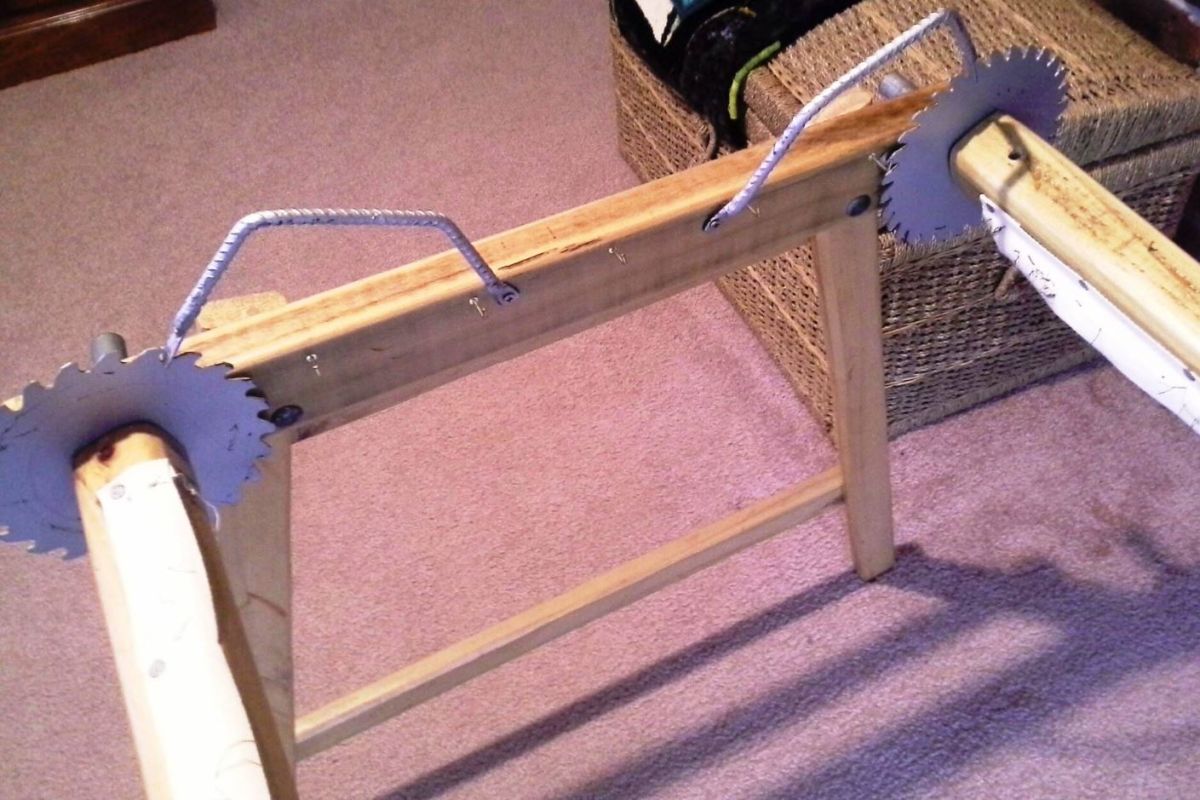
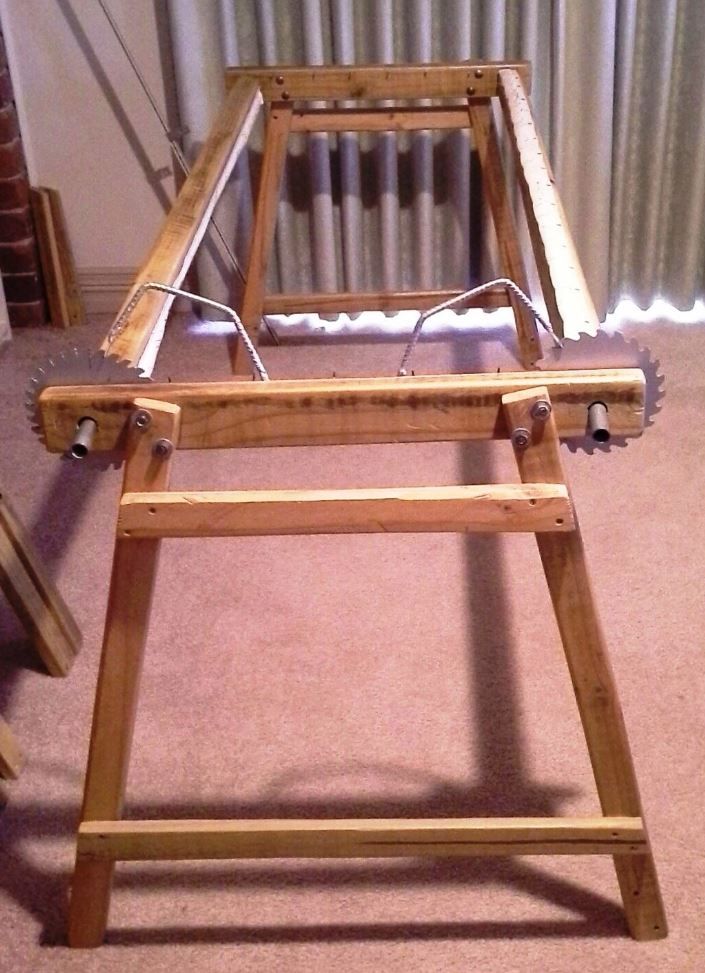
On Australia’s south east coast in Victoria, Chris Norbergen, who hooks with wool strips, had the only Cheticamp frame in Australia. When asked about her Cheticamp frame, which she sold some years ago, Chris said; “Jo, I made it myself with a bit of help from my husband. I got lots and lots of pictures and info online. I took ideas from several different frames. Made it a bit wider than my finished rug, which was 5ft. Used old saw blades, which hubby blunted for me for the gears. Made at a comfortable sitting height, and bob’s your uncle. Done and dusted. Chris’s version of the cheticamp frame I also made an additional set of rails, somewhat shorter for smaller size rugs. Someone got a good deal because it was a one-off.”
Here are a couple of images of the frame itself –  I’ve not seen a real Cheticamp frame, but this looks very much like images I’ve seen.
 

Miriam Miller is from New South Wales, when we met in 2008, she and her group of Narrawilly Proggy Rugmakers all used stretcher frames resting on carpenters’ sawhorses. In fact, the first edition of her book published in 2008 showed only stretcher frames. By the time the second edition came out Miriam had met other rug makers from around the country and overseas and I think I’d convinced her that lap frames were popular, so she added a lap frame image to her book, a Puritan. Now even for larg pieces, Miriam mostly works on a lap frame, a Snapdragon gifted to her by a Canadian friend. Here she is working on her large signature sunflower piece.
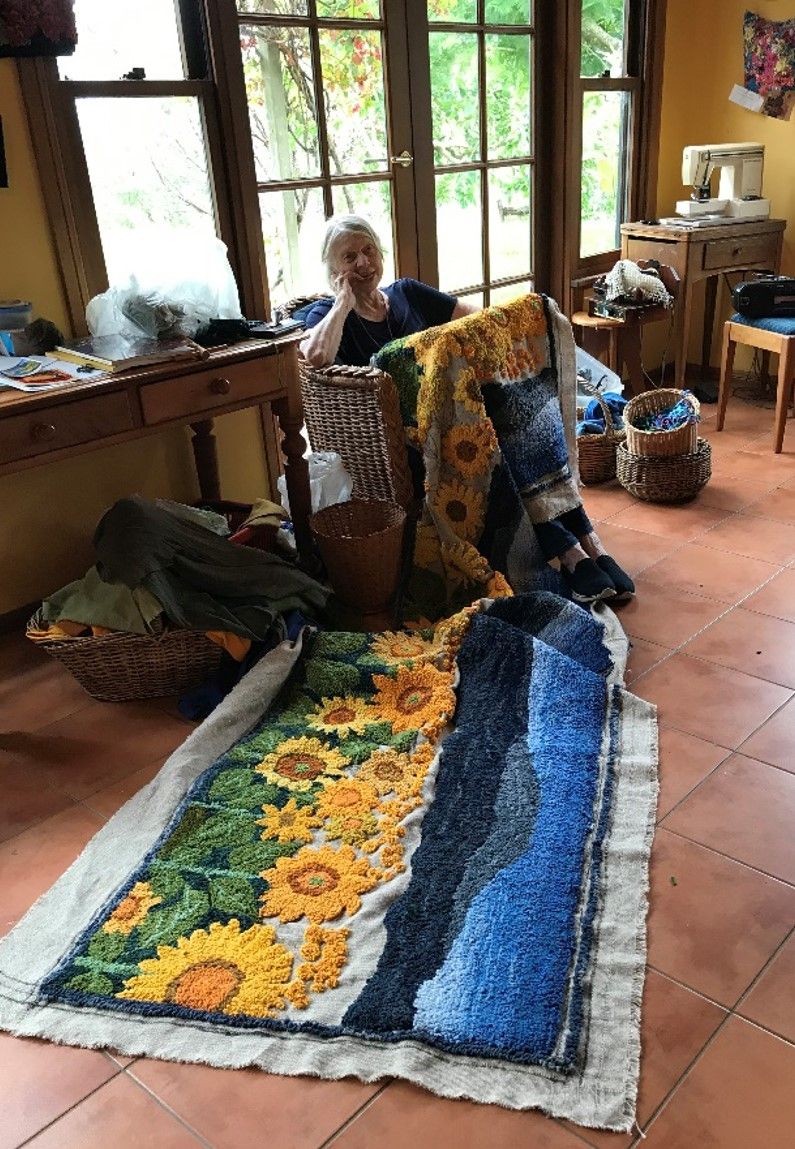
Also from New South Wales, Gail Nichols came up with a frame design to work on her large, hooked wall hangings.

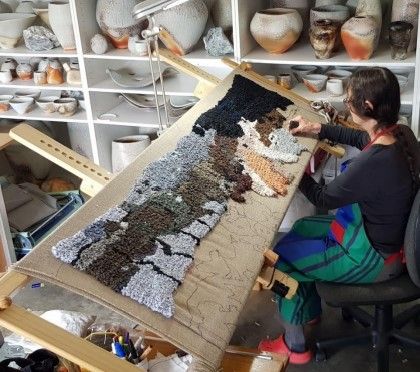
Bobs Creek Culvert designed & hooked by Gail Nichols, NSW, Australia

There is a connection between Gail from New South Wales and Judi Tompkins in Queensland, besides the fact that they both hail from Michigan, USA. When Judi decided to take her creations in a different direction from traditional rug hooking to 3D textile art, her Townsend Cutter went up for sale and found a home with Gail.

These fabric cutters are from the USA, they are very easy to use, and do such a good job, and don’t have blades that need sharpening. Problem is they are quite heavy, especially with carry case and extra cartridges for different sized strips, so are not only expensive to buy but expensive to ship.


I happen to know there’s an original Townsend, like new, very lightly used, available for sale in South Australia. If anyone is interested, they can contact me to be put in touch with the seller.

Judi Tompkins Studio Palimpsest is on the Sunshine Coast north of Brisbane. Currently she’s getting ready to be part of the Sunshine Coast Open Studio Art Trails to be held from 17th to 26th July. Seems a long way off; but apart from creating new works, her time is taken up planning what to show in her two galleries and work studio, plus maintaining the surrounds which are more than your average backyard.
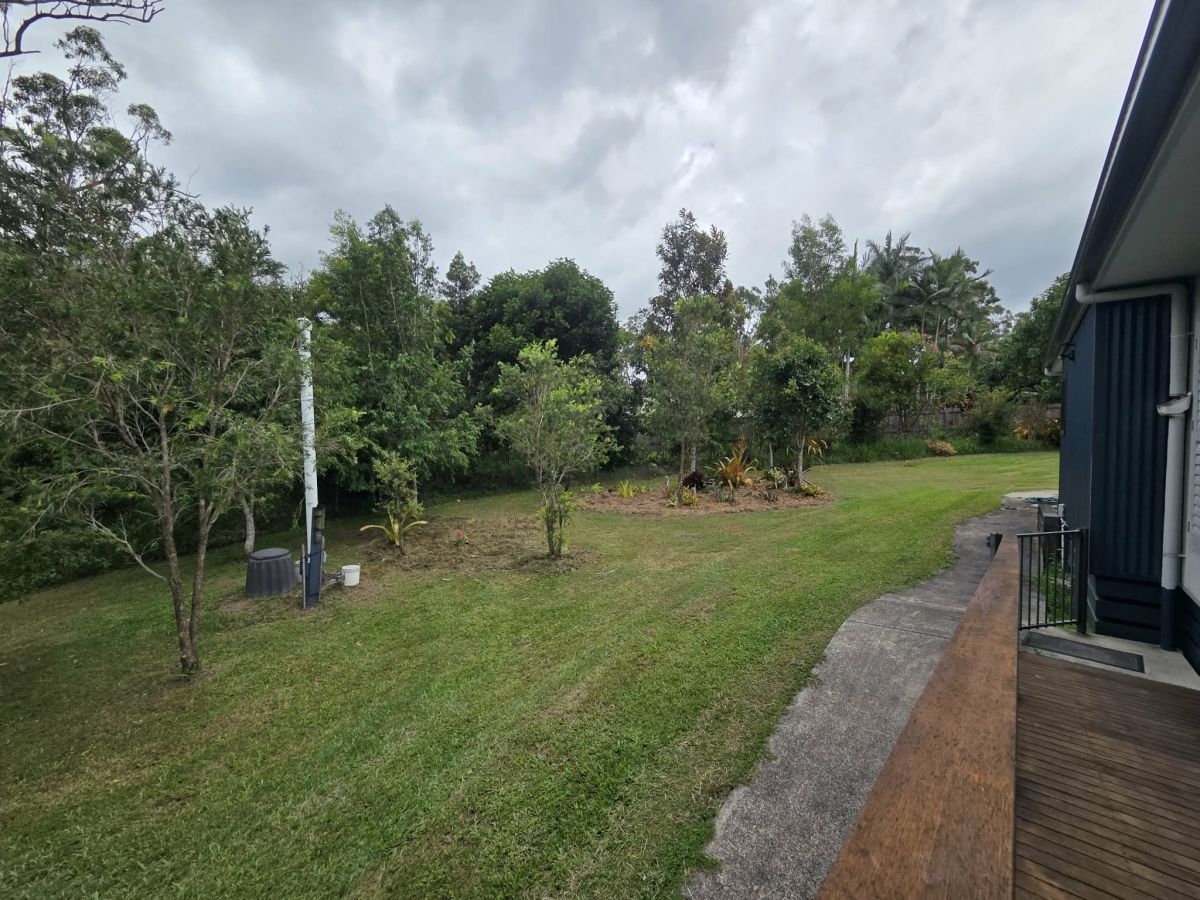
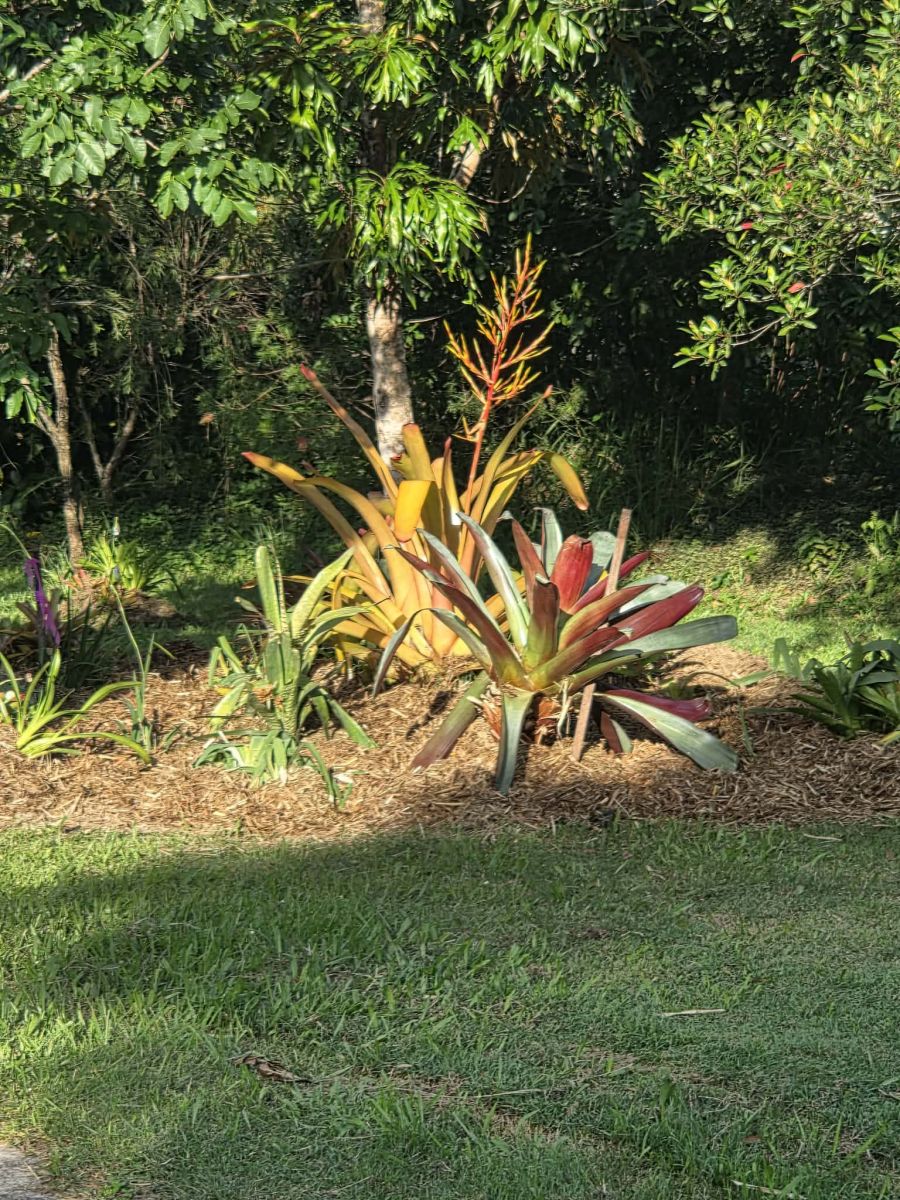
This installation; Wood burl table and mat designed to fit under it created by Judi, sold during Open Studios 2025, Its shown in place at the purchaser’s residence.
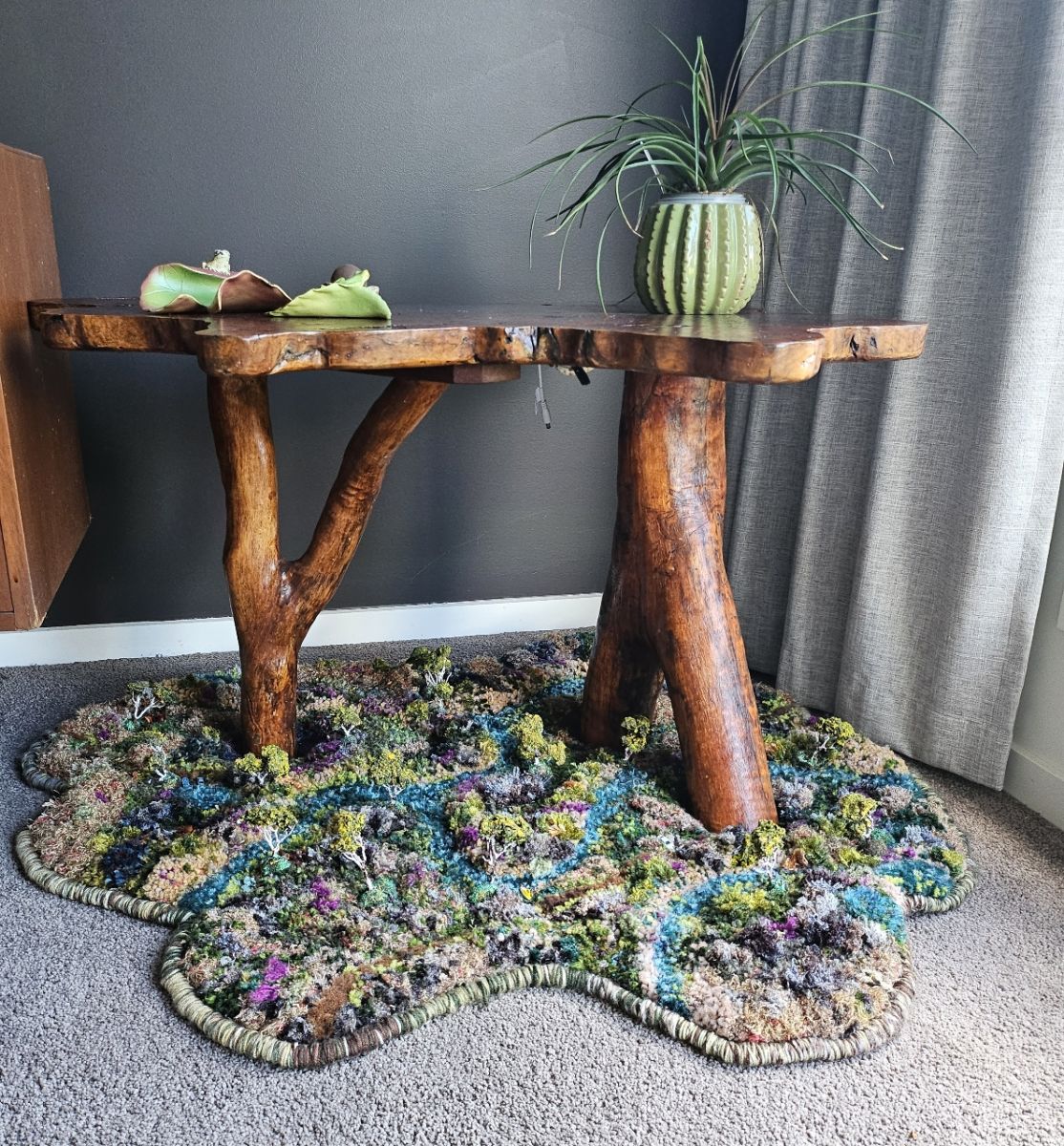
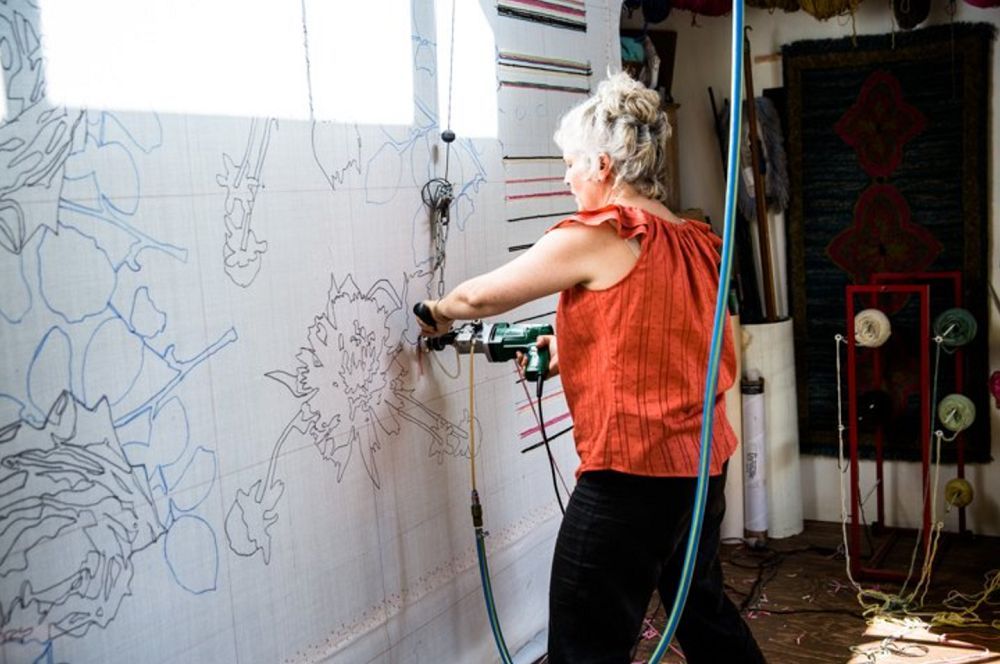
Still in Queensland, south of Brisbane in the Gold Coast Hinterland on Mt Tamborine north, as part of the Tamborine Mountain Arts Trail, on May 2 & 3rd 2026 from 9am to 4pm Bec Andersen is opening her studio

Find out more about the Tamborine Mountain Arts trail here

Bec is the only rug hooking supplier that I know of in Australia, she works on commissions and also gives punchneedle workshops in her studio and holds regular gatherings for her students – the reels that can be seen on her Facebook page look like they’re having such a lot of fun. Check out here on InstaGram. To learn more about Bec Andersen, textile artist, go to her website and subscribe to her newsletter.


This brings us to South Australia, in particular the country town of Strathalbyn, where the Australian Guild was formed in 2008 bringing all the previously mentioned rug hookers and groups together. The last Guild meeting was held there in 2019.
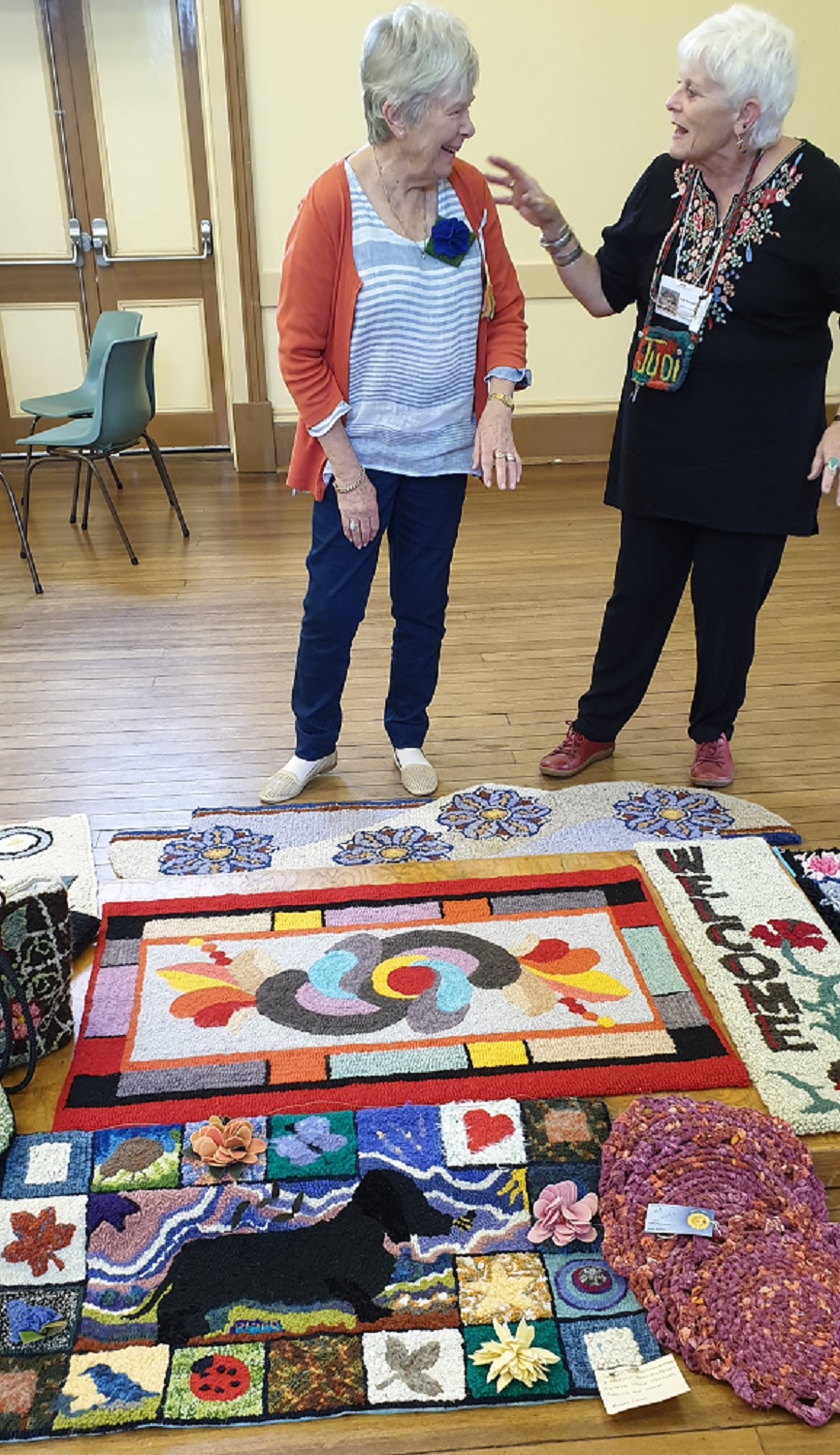
The Two “Judith’s” Judith Stephens, Retiring President talking with Wemaster Judi Tompkins

Judith Stephens was the leader of the local StrathMatters group which still meets on a regular basis. You can read about the interesting program of 2019 events hosted by the StrathMatters here.

A further wrap up can be seen here introducing the new board. Sadly Martha Birch from New South Wales who took over as Vice Chair passed away recently. Martha introduced rug hooking to many at Sydney Quilt & Craft Fairs and started a rug hooking group in North Sydney – she will be missed not only by family and friends but also by the rug hookers she inspired.

After years of designing and making rug hooking frames and organizing events, Judith still attends the Strathmatters group however not as the leader, her time is now mostly taken up with her other love, music. As a piano, violin and viola teacher in the past she has joined a recorder group. From what I’ve heard of the price mentioned for her new instrument, these are not your typical school recorders.

Strathalbyn was also the location for the 2012 Triennial Conference of TIGHR (The International Guild of Handhooking Rumakers) where 75 visitors from overseas stayed at Dunreath Homestead.
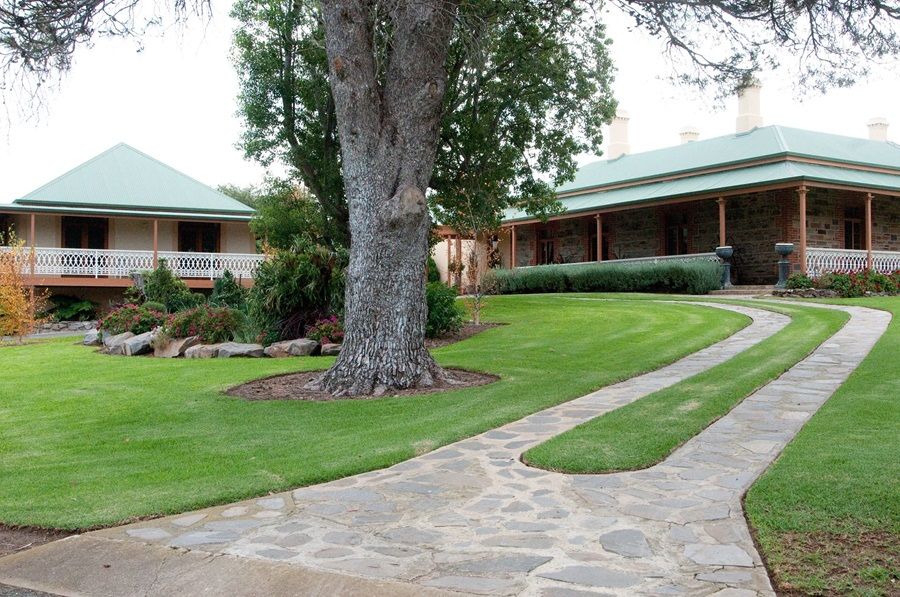
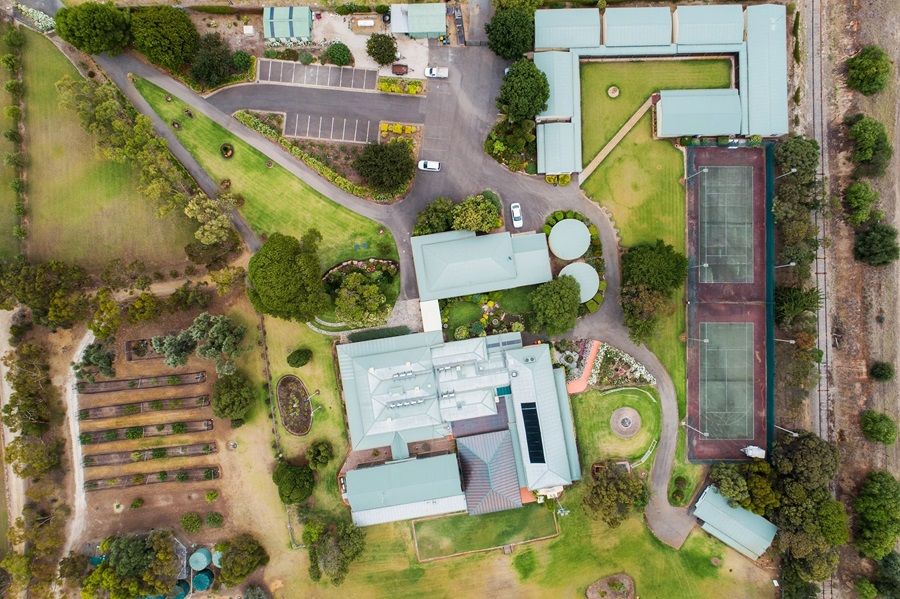


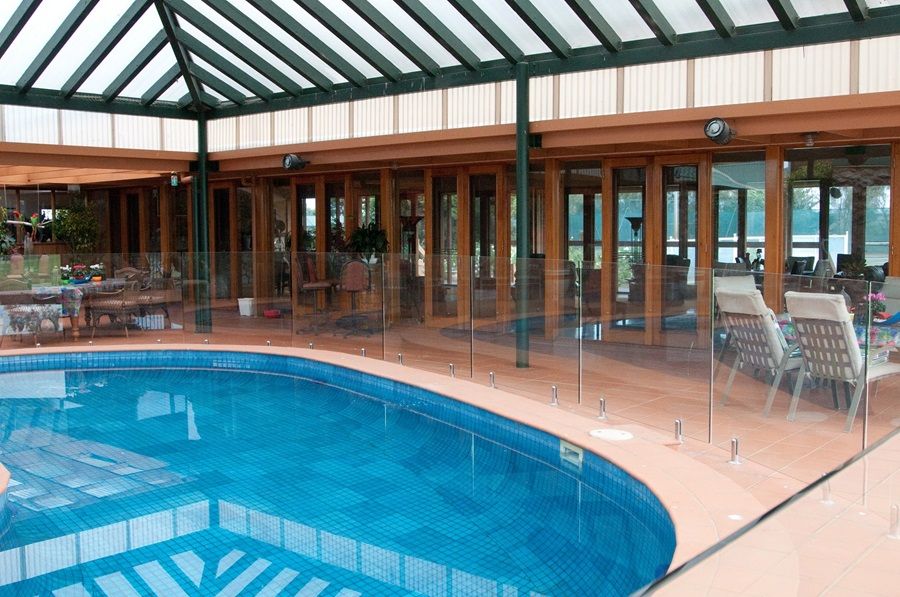
Ausssie rug makers who were billeted around town, joined theinternational visitors for the activities held in areas around the pool and meeting rooms looking out onto the countryside. It was arranged so all participants could take part in every event. After the Conference some of the international visitors stayed on over the weekend to give workshops in different traditional rugmaking techniques; while others went with Miriam back to Narrawilly in NSW where the Narrawilly Proggy Rugmakers hosted special events.
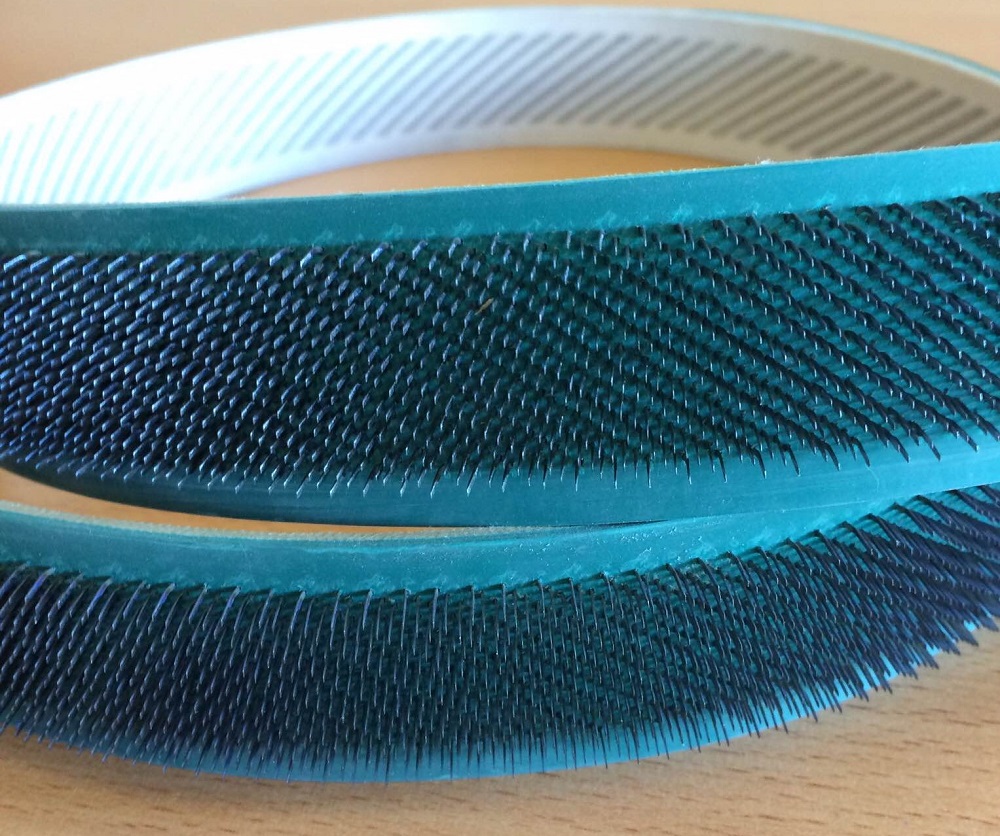
Getting back to frames, most rug makers will tell you that the backing should be stretched onto a frame, ‘drum tight’. Begging the question – how to keep the backing fabric tight on the frame? Some swear by metal gripper strips, others hate them! Punch needle frames usually have gripper strips that completely cover the edges of the frame; to avoid damage to hands and arms an elastised cover is often used over the edge of the frame as shown in this image taken from a video of  The Happy Hookers in Bec Andersen’s Studio, on Mt Tamborine, QLD.
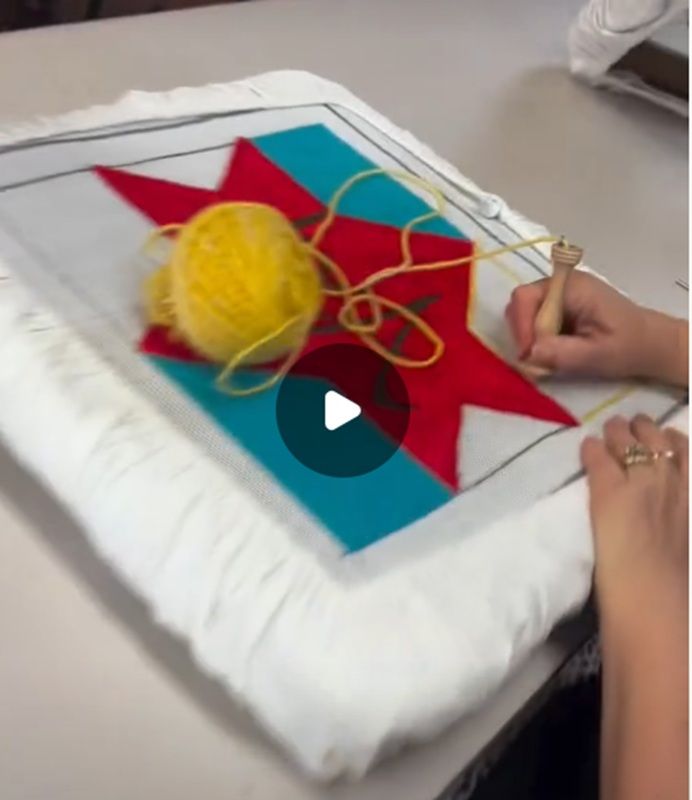
When it comes to moving your work on the frame, grippers are leathal on previously hooked loops of wool yarn, not so bad on strips of wool frabric. To avoid having to move their work, some Punch needle rug hookers use larger frames as can be seen in this fun video of  Bec Andersen’s Happy Hookers showing off their work on Instagram.
Who would have thought so much could be written about rug hooking frames without even mentioning the standard frames for sale in the Northern Hemisphere. I’ve managed to gather quite a collection of different types of frames on my trips to the USA to visit my family. I have two favourites, both with grippers, a Pittsburg folding frame that goes with me on a Saturday morning because it’s so light and easy to pack; the grippers face into the plastic base. At home I use a  Fitzgerald wooden hex shaped frame that swivels and has stand that I can adjust height and angle to me but… now that I’m using more wool yarn than wool strips I’ve joined the battle of trying to move my work without the grippers constantly causing a problem. So maybe I’m ready for a PVC frame to add to my other locally made frames, this is what prompted me to look back at Judy Taylor’s story.

I hope you enjoy my ramblings about using or not frames to work on – there’s a whole other discussion about “framing” your work!

Happy  Hooking and Creating to all


To replicate fine shaded tapestry pieces, working with finer strips of wool fabric or punching with yarn most rug makers will tell you that the backing should be stretched onto a frame, as ‘drum tight’ as possible. Begging the question – how to keep the backing fabric tight on the frame?

Some makers swear by metal gripper strips; they certainly do a good job of keeping backing fabric tight, and most punch needle rugmakers use frames that have gripper strips completely covering the edges of the frame.

Gripper strips are either loved or hated; due to the damage caused to hand and arms and the difficulty when using wool yarn, to move work in progress, besides their limited availability and cost.

The prickle damage to arms can be avoided by using an elasticised cover over the edges of the frame once the backing has been stretched into place.  To avoid having to move their work, some Punch needle rug hookers use larger frames.

Those working with wool yarn using smaller faced frames with gripper strips have come up with various ways to avoid the grippers snagging the wool yarn beyond the “careful removal” (slowly pulling out, away & up).
A Cautionary Tale: Framing Textiles

What happens when you neglect to ask if the framer has worked with textiles?

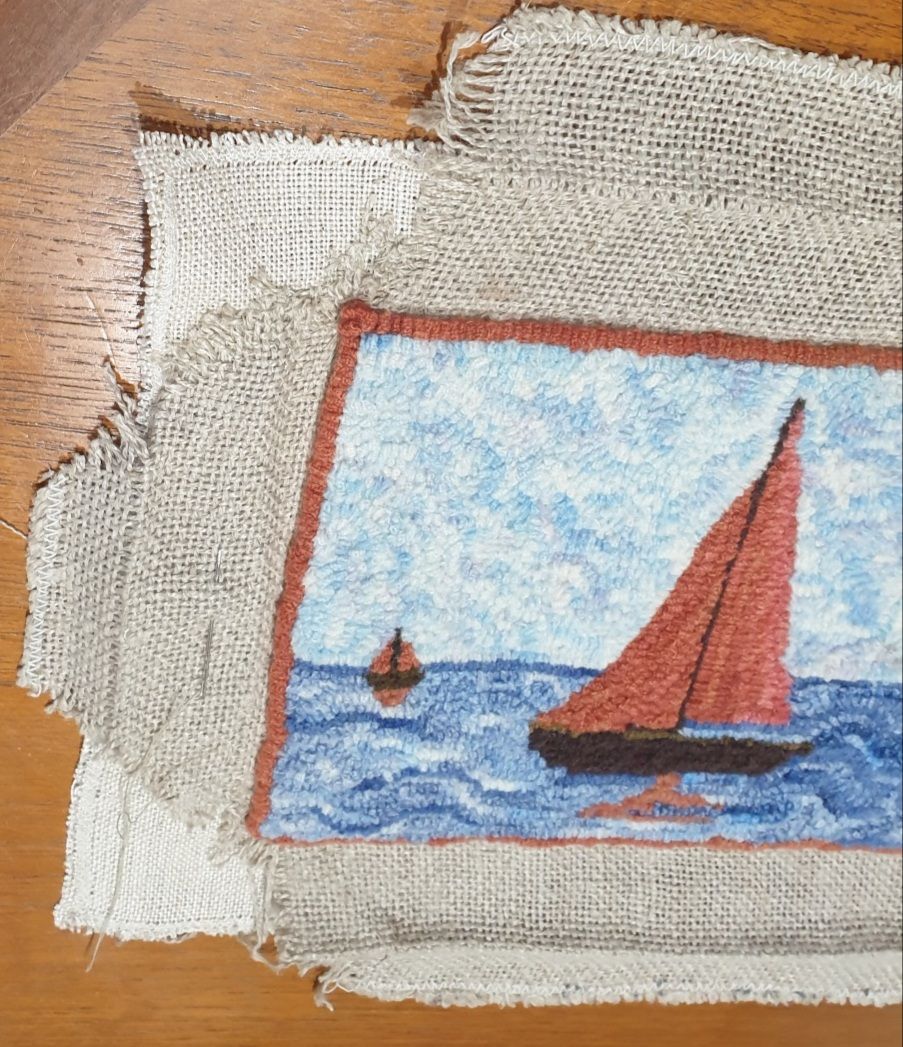
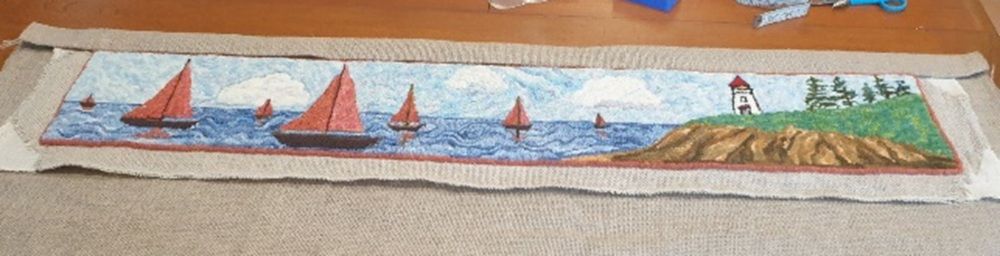
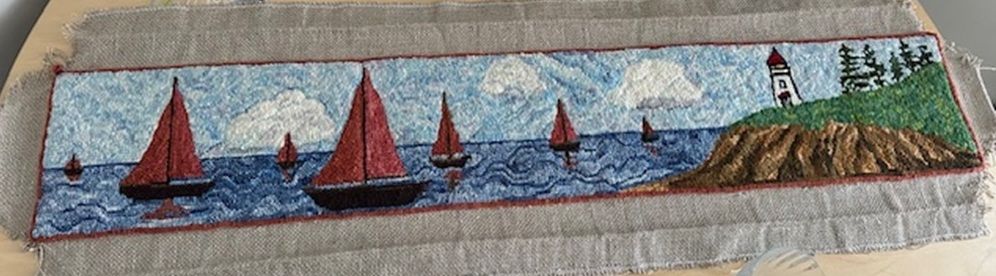
Imagine this; you deliver a lovely, hooked piece (36×6.5 inches /90x16cm) bordered with one line of red loops to a professional framer, and it comes back with the red loops completely covered by the frame.

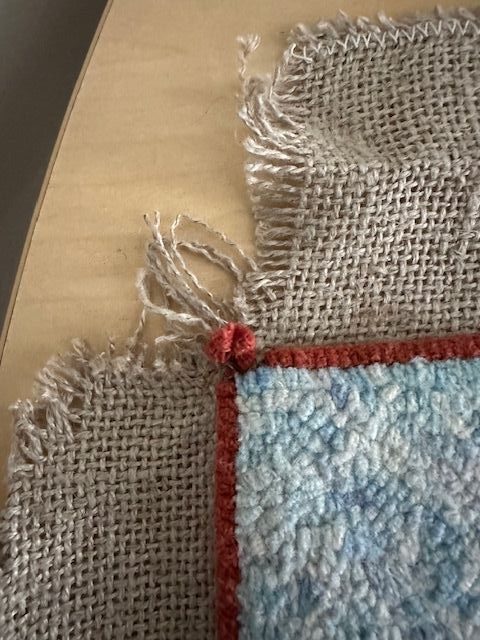
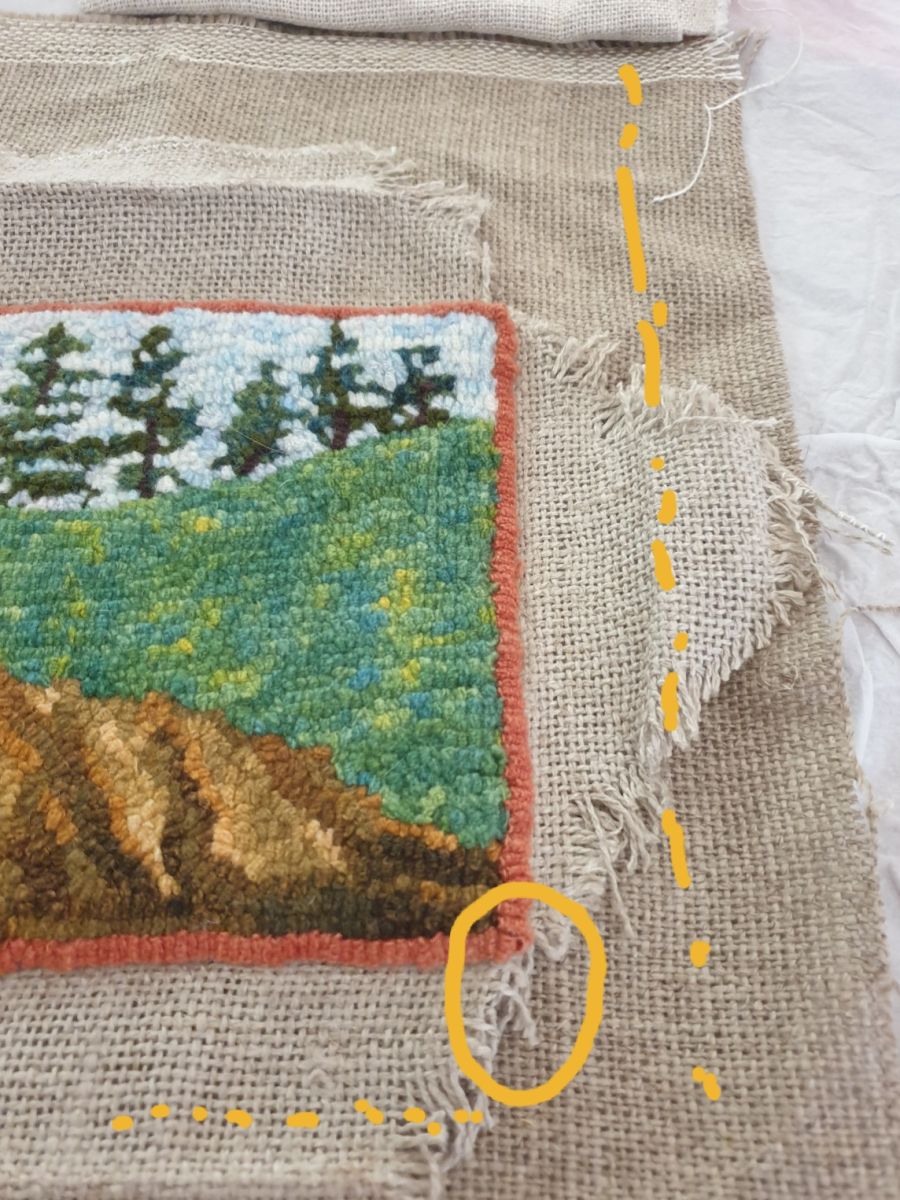
Taking it out of the frame you discover a mounting board had been stapled under the linen backing with way too many staples, and either double-sided tape or glue used as well, with the corners cut into the fabric backing as you would cut paper, right up to the last row of loops – this was how it looked – all chewed up!

The Owner of this piece who lives on the East Coast of Australia contacted me through my website looking for a rug repairer and sent the image shown above and detailed here.  I contacted a couple of rug hookers in the Eastern States, but they were not interested in taking on the repair, so I offered to make the repair myself. It would need to be mailed to me as I live approximately 3,294 kms (approx 2,046 miles) away on the West Coast. However, as the piece was long and narrow it could be rolled, into a small bundle to mail, so there was not much difference cost-wise sending it locally to someone in the East or across the country.

Looking at the image I decided I could add pieces of new backing in the corners and darn over the rough edges of the existing backing holding them down to the new backing. My idea was to then cut off the excess original backing at the fold and roll what was left to the front including what had been darned, and whip stitch over the rolled edge using wool of a matching or complementary colour.

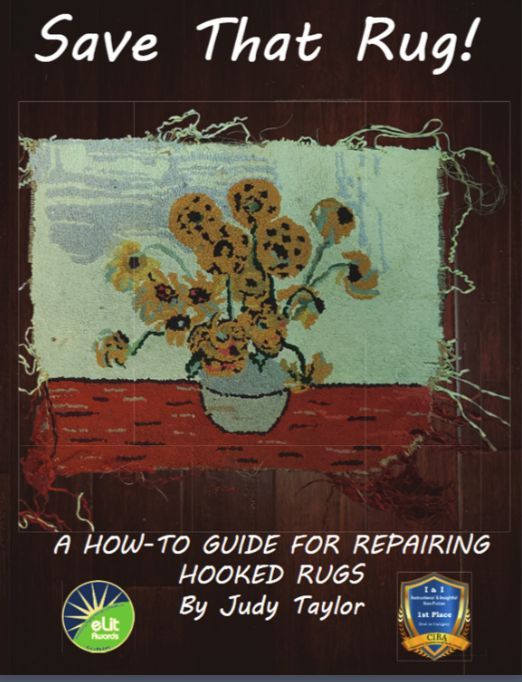
This was my first rug repair for someone other than myself. Checking for other ways of fixing this piece, I ordered a digital version of Judy Taylor’s book Save That Rug!

The best part about ordering a digital version was not only would the book be less expensive and wouldn’t incur expensive international shipping, but I also wouldn’t have to wait weeks for it to get it here.  The order went in and I instantly had access to the flip book.

I could see my idea of darning onto patches of new backing was covered in the book.  However, with a slight difference… in the book, hooked loops in the area to be repaired were removed and the wool strips that could be salvaged were hooked back into both the existing and new backing along with new strips of wool matching the colour. Judy Taylor said she repairs hooked rugs using wool yarn even if the rug was hooked with wool strips, as it’s easier to match the colours and isn’t obvious in the repair. It’s a good idea to practice this on an old rug first; I had one in my collection that didn’t hold any significance, otherwise I’d have purchased a raggedy old rug from eBay as a practice piece.

The piece in question was beautifully hooked by a Canadian rug hooker using what I’m guessing is size #3 or maybe even #2 strips of wool, so I didn’t want to encroach on the hooked surface since it seemed to be merely a matter of stabilizing the last row of hooking. There were a couple of loops of red wool pulled out in the top left corner where the weave of the backing expanded as the cut went into the adjacent row.   A relatively simple fix with hook and burling iron.

On further reflection, the turning to front and whipping wouldn’t work because I’d added a larger piece at each end of the rug to help stablize the corners and without it being hooked into, it would have shown on the back; besides the owner particularly wanted a border of the linen backing left around the piece to show as a mount when the piece was framed.

The Owner and I had some email conversations back and forth and I agreed to stabilize the corners, fix the red loops and make the repair with about 1.5 inches of backing showing as a border.

To do this, I purchased a length of primitive linen from my rug hooking friend Judi Tompkins in Queensland.  Judi works with rug hooking techniques to create sculptural and 3D textile pieces, so she had some idea of what I was faced with to make this repair.  Although I didn’t keep track of the exact hours spent, Judi and I had many online video conversations about the project, and I photo documented each step.

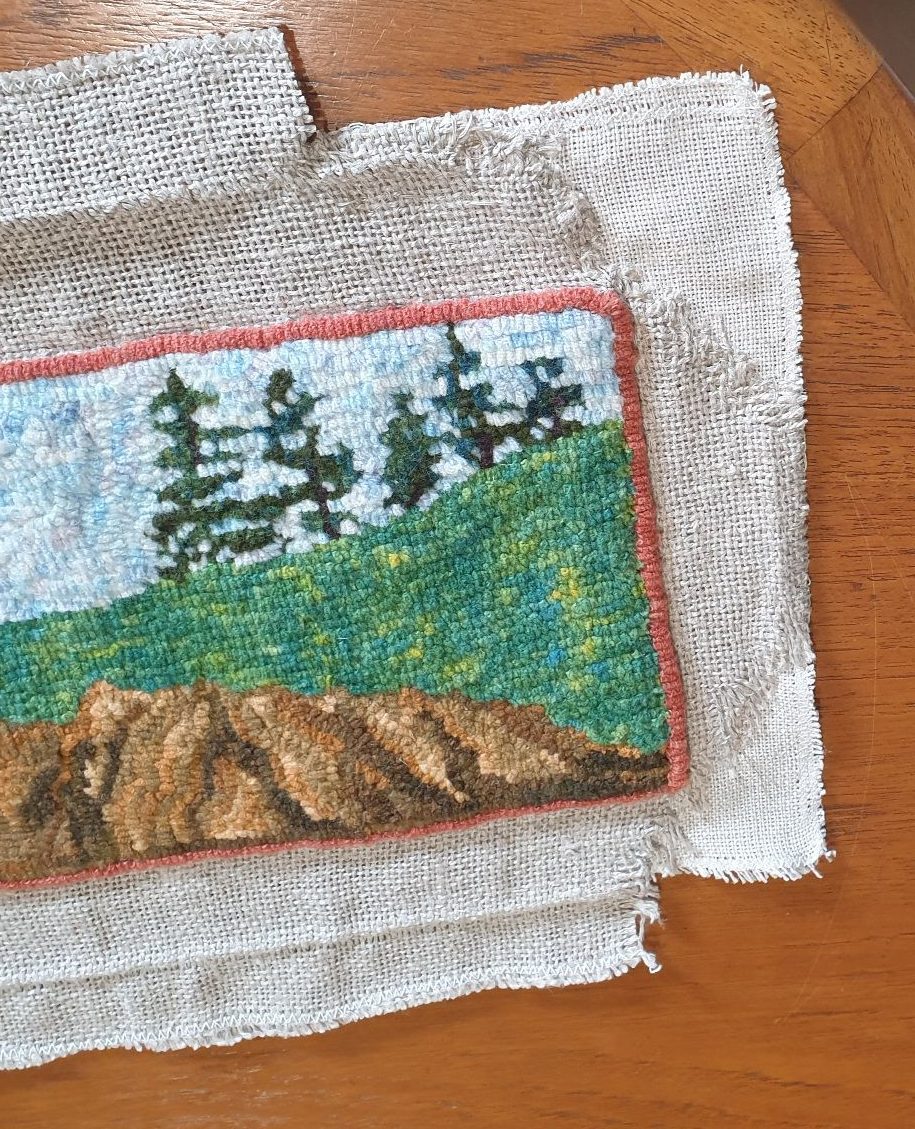
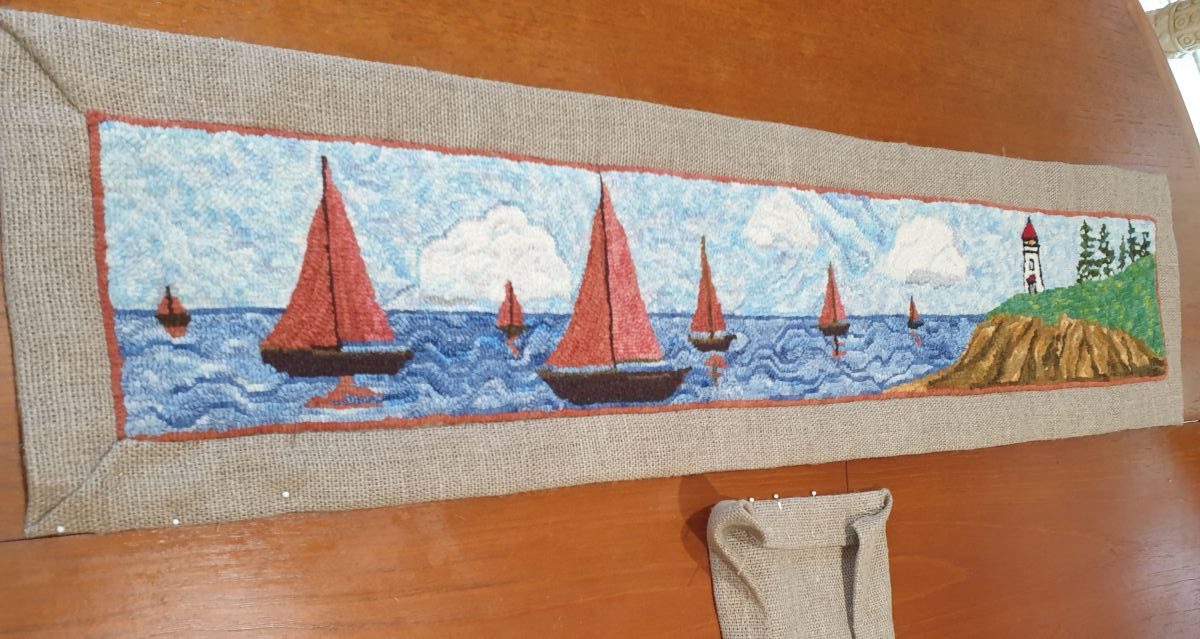
Here are the raggedy edges at each corner of the piece darned onto the new backing. To give strength and stability to the corners, at each end I used one piece of lightweight backing that I had on hand.

When I say “darned”, I stitched over and under the warp and weft of the ragged original backing into the new pieces of backing to prevent the cut loose ends moving.

Then I cut off the excess original backing at the fold and laid the whole thing on top of the newly purchased linen which was turned over to the front with a turn under by the last row of hooking. I stitched in and out of the weave close to the base of the red loops using a strong thread the same colour as the new backing to stabilize the last row of hooking. 

Then came the tough part – the corners!   All stitching was being done by hand, so they weren’t your typical mitred corners stitched on the sewing machine. Fortunately, I had a piece of backing left over, so I constructed a practice piece – with the same size turn overs and layers as the main work giving me a place to play around and try and come up with neat corners without compromising the one and only piece of linen I had for the repair.

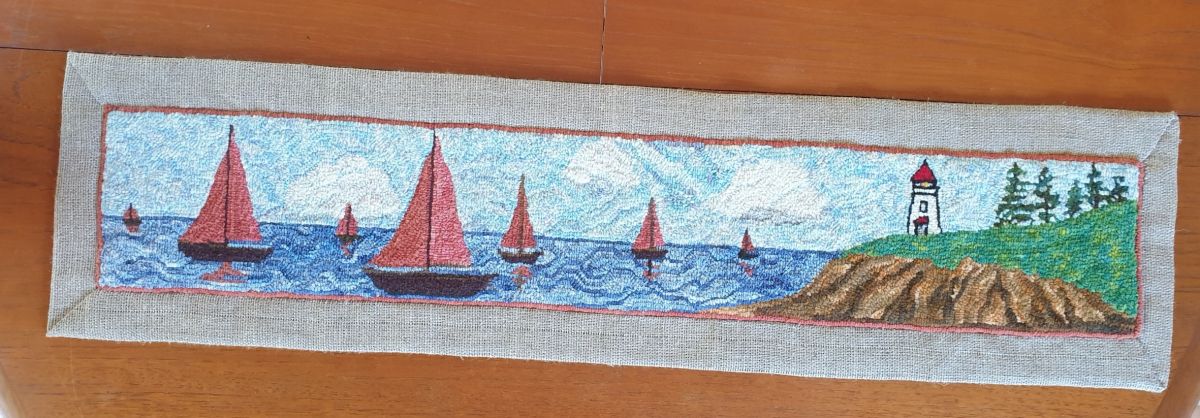
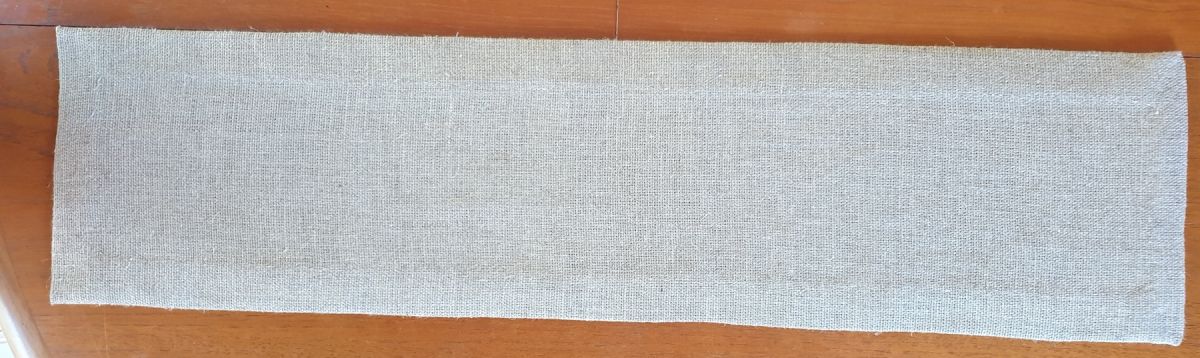
Here’s the finished work and the backing with the border stitched through into the backing such that the stitching doesn’t show…

The Owner is thinking of framing this piece, so now with its built-in mounting and clean back it should easily drop into a frame or be hung from a support.

Being an “old salt” myself, with many years of handling sails, I can see other ways this piece might be hung using marine hardware to allude to the nautical theme. It could have grommets inserted in the top border or a length of marine rope overstitched around the edge or even be attached to a flat piece of weathered board or hung from a piece of driftwood or other items found washed up on beach – ghost nets or salvaged moring rope, all sort of possibilities; all would allow the piece to be hung from gallery art track, picture hooks or nails in the wall.

When Judy Taylor from Little House Rugs (USA) and I were discussing this fix and I mentioned the back would be completely covered, Judy wondered if that might cause a problem for future repair, but as this work is to be hung not used on the floor, it shouldn’t be a problem.  If worse came to worst the backing could be unpicked, not something I’d want to do knowing the hours it took working on all those tiny stitches.

Fortunately for the Owner I’m not charging for my time, only the new piece of backing fabric and return postage. I took this on thinking that it would be a quick fix. Even though it turned out to be a real challenge, I’m looking at it as a learning experience, one that I can share with others as the owner has given me permission to write about the repair of her hooked wall hanging.

Happy Hooking & Repairing

Reclaim the Void update

ISSN 2207-001X   January 2026

What an interesting way to start the New Year!  I’ve just read a Reclaim the Void update issued in December 2025 by Vivienne Robertson the project’s creative director and co-founder, who emphasizes that the project is about community, conciliation, and a shared responsibility for environmental impact and overconsumption. The process of weaving the rugs in community groups or at camps on country has been a central part of the healing process.

An unexpected weather event last year meant the opportunity to install the rugs on the nominated site was lost.  A new site has not yet emerged, and so Vivienne says;

“We are learning to be patient, allowing the project to unfold in its own way and its own time.

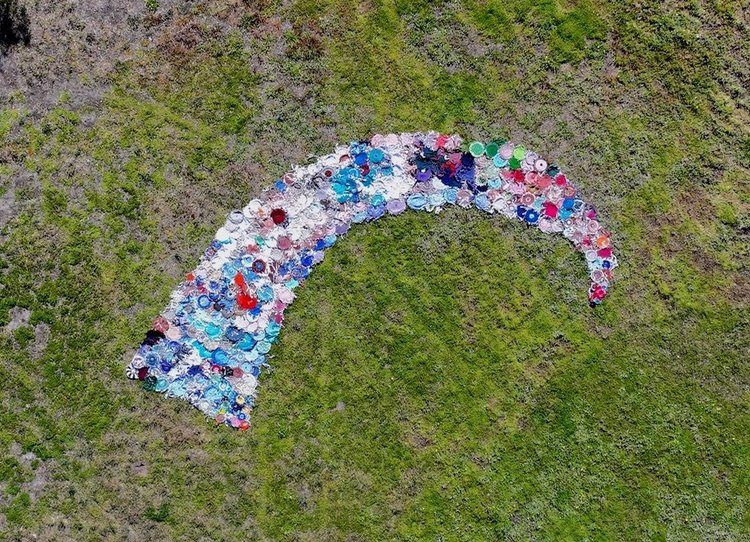
In the meantime… those rugs wanted to be out and about and laid down on the earth and the communities who made rugs have been calling for them. So, in September 2025, 500 of the smaller rugs went on a road trip!”

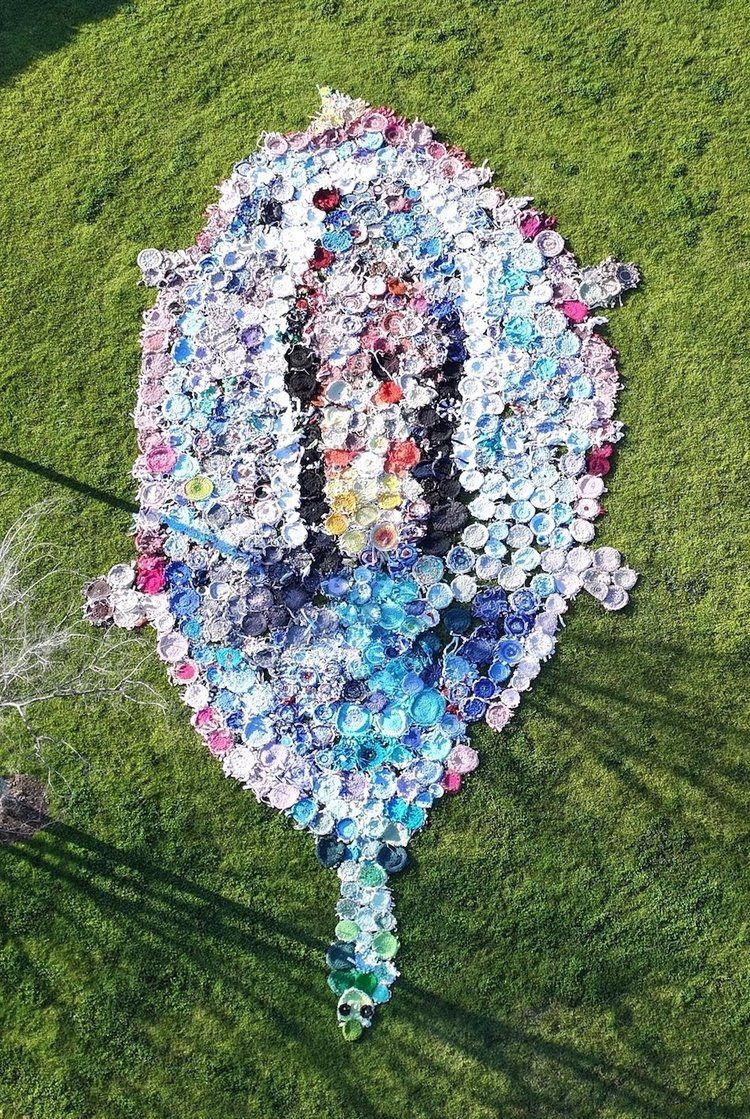
To: Kojonup:Yakkan – Artist: Jessica Romic, Collaboration with Badgebup Aboriginal Corporation and Noongar Community of Kojonup WA.   Drone photo: Jane Hammond


Katanning: Kartanup – Artist: Tina Hansen Meeting place for tribes. Collaboration with Badgebup Aboriginal Corporation and Noongar Community of Katanning, WA. Drone photo: Jane Hammond

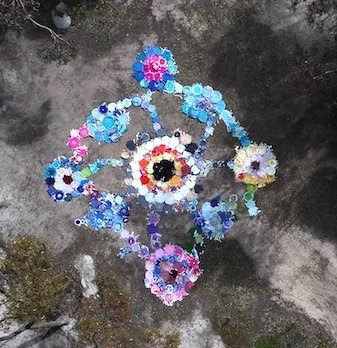
                          Kwa – Artist: Way Moo Collaboration with Badgebup Aboriginal Corporation and Karen, Community of Katanning, WA.                           Drone photo: Jane Hammond

And then to Bold Park Community School, in Boorloo/Perth: Woordawoort – Artist: Rubeun Yorkshire. Collaboration with Bold Park Community School. Drone photo: Liang Xu

Photos taken at these events by Nic Duncan can been seen in Vivienne’s newsletter. To receive the newsletter with more news and updates, go to Reclaim the Void’s website  scroll down to [SUBSCRIBE] and enter your email address.

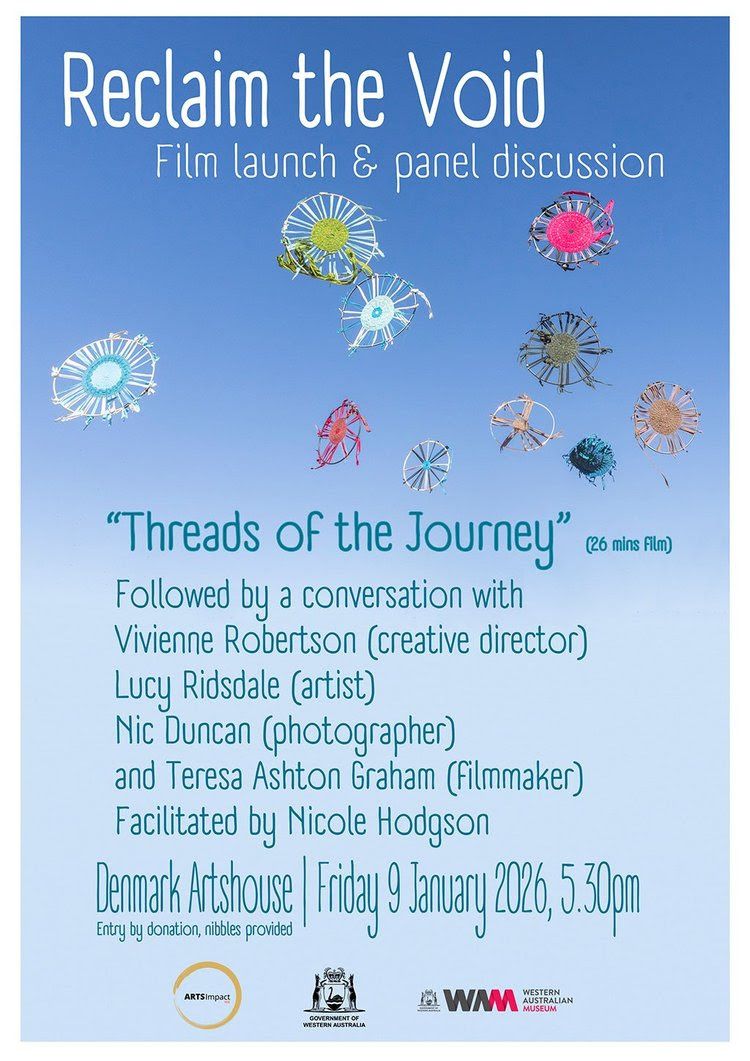
A film, Reclaim the Void: Threads of the Journey, will be released the 2nd week of January. Keep an eye on social media! The launch is in Denmark, Western Australia  – Friday Jan 9th 5.30pm at the Denmark Artshouse.


The “rugalogue” is also nearing launch.

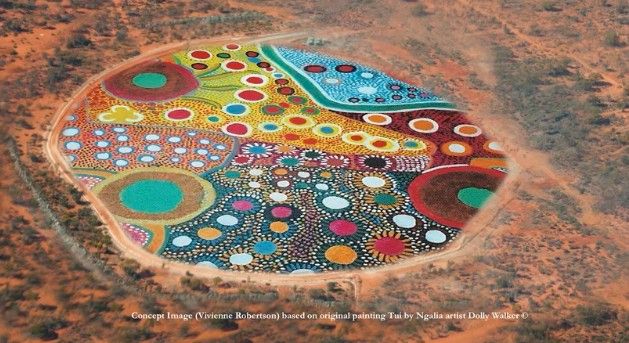
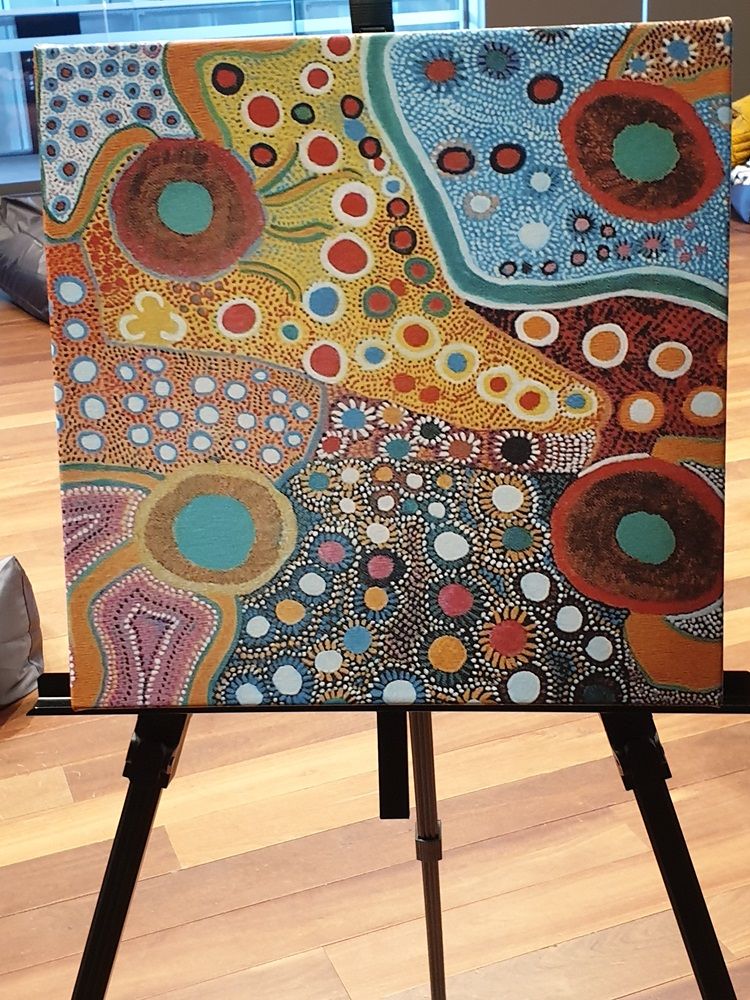
Over 4,000 rugs have been collected from contributors worldwide. The project is creating a “rugalogue,” an interactive digital catalogue that will allow people to virtually find their specific rug within the final 40x40m artwork and read the personal stories or reflections shared by the makers.


The first “assemblage”  days were held at the WA Museum, Boola Bardip.

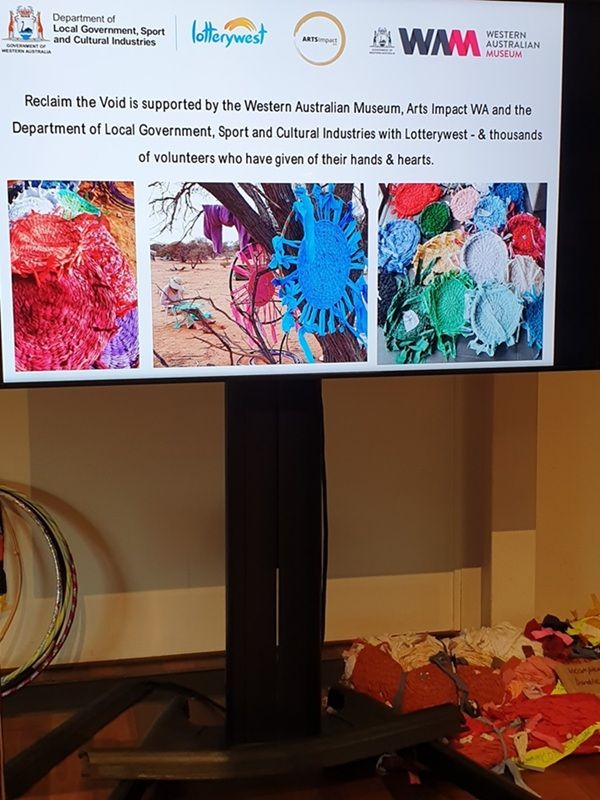
Kath a member of the  Wanneroo group and I volunteered, not quite sure what it would entail. When we arrived found there was plenty of signage and videos to explain the project for those who weren’t rug makers, but had come along after seeing the assemblage sessions advertised by the museum.

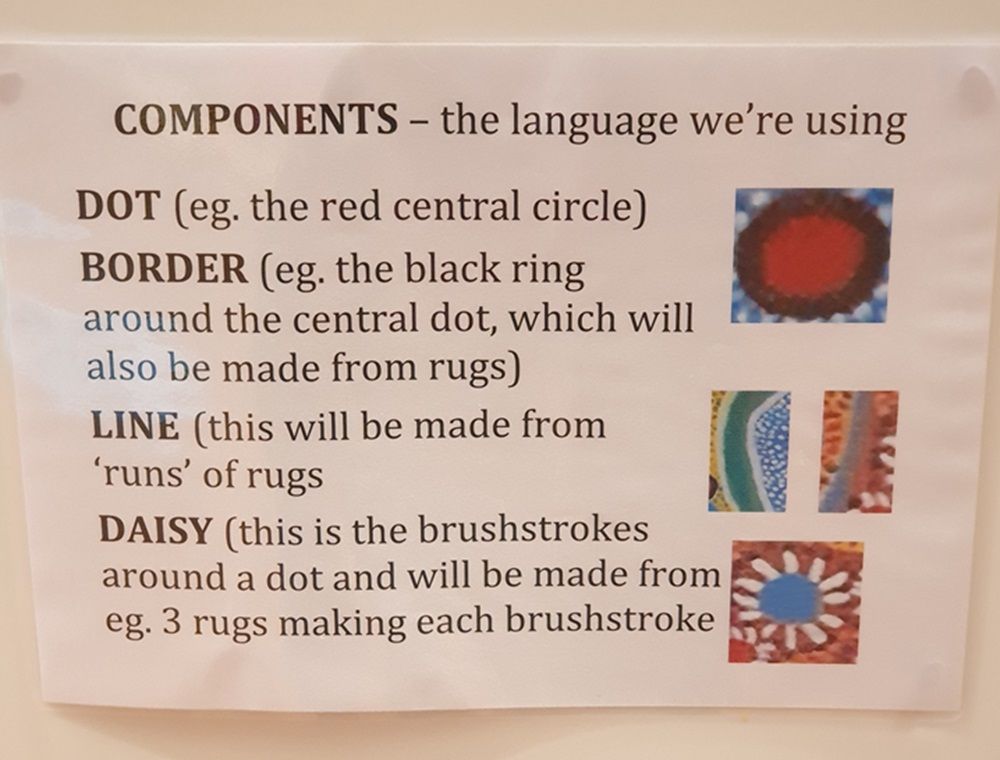
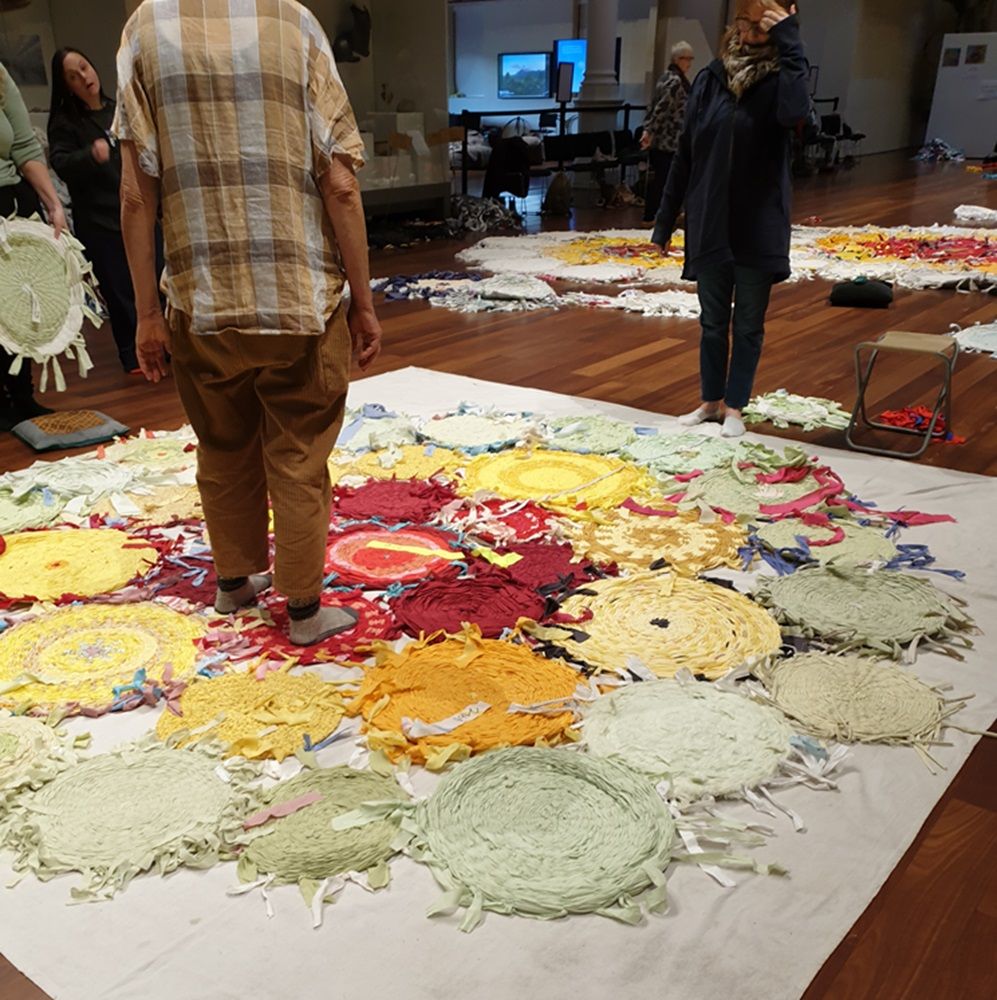
Wall signage showed how the smaller dots would be tied together to form the dots of various sizes numbered on a section of the concept image.


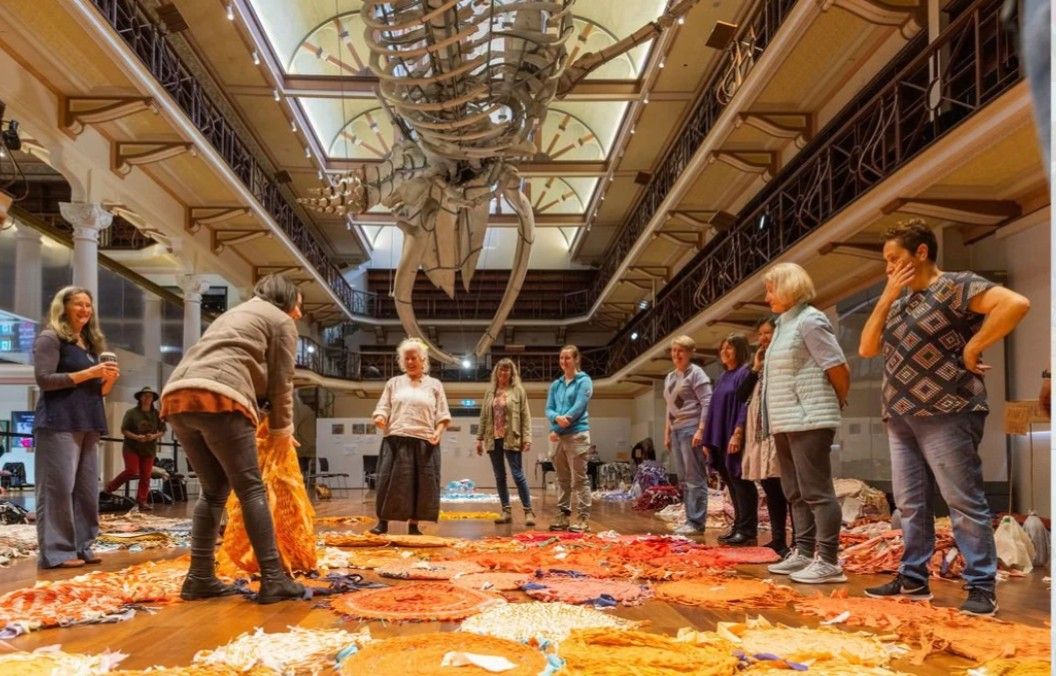
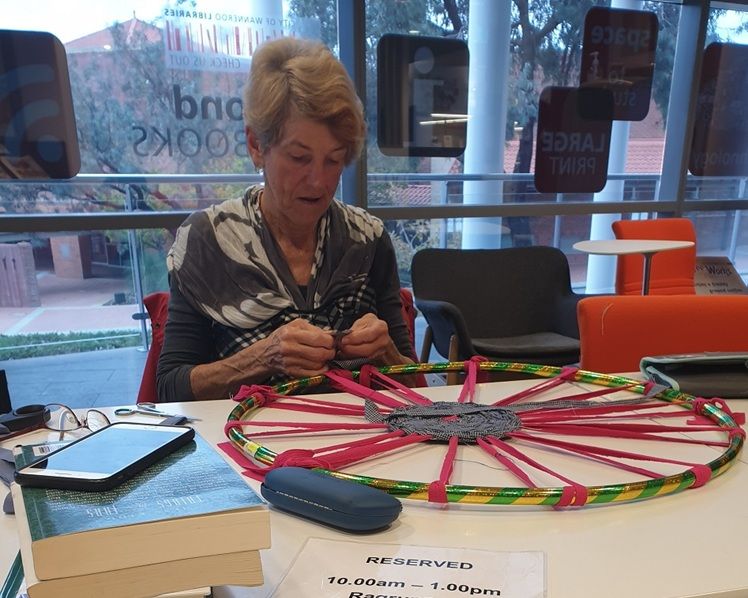
The first days involved volunteers sorting the hundreds of rugs woven on hula hoops, into piles  of “like” colours stacked around the edge of the room. After a general explanation on how to select from the various colours, enough mats to make a dot of a certain size and it’s border colours, the volunteers were divided into groups of four or five to work together on each dot creation – that’s when I discovered  many people see colours diferently; it took  a lot of swapping out of placed rugs by different people before the group came up with a finished dot.

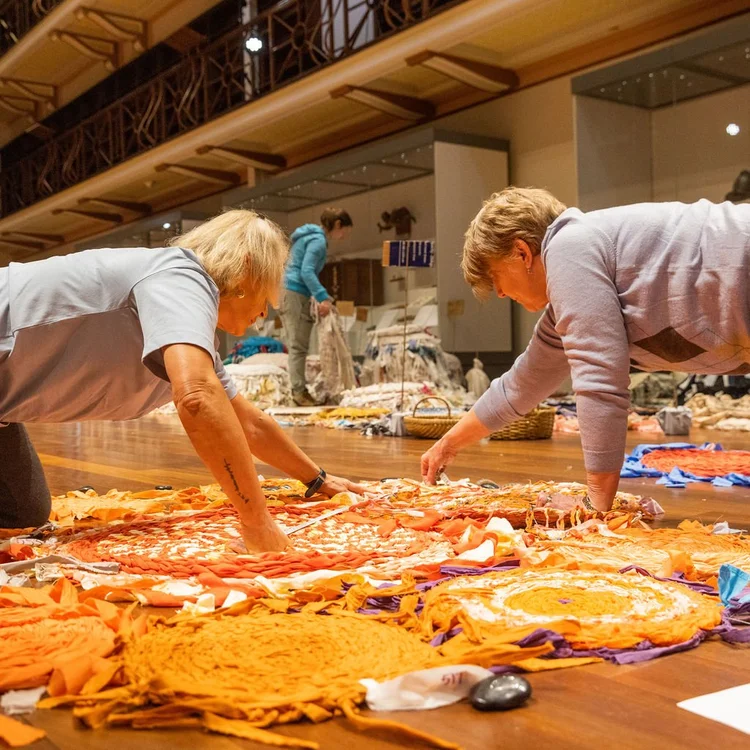
When it was time to get down to work, literally, this volunteer wasn’t sure she’d ever be able to get up!  These images by Nic Duncan were taken at the beginning of the dot assemblage which lasted for several days either side of a weekend in July 2024.

After Kath and I had listened to the explanation given at the begining of each day,  I took this image of the assemblage I was working on; Kath, in a black and grey jacket, in the background walking over a completed yellow dot with red centre and white border. Thinking I’d be smart I took with me a small folding stool, bottom righthand corner of this photo, but I soon discovered that it wasn’t going to work; not low enough, I couldn’t get close enough to tie the rugs together so I finished up spending the best part of the day on the floor!

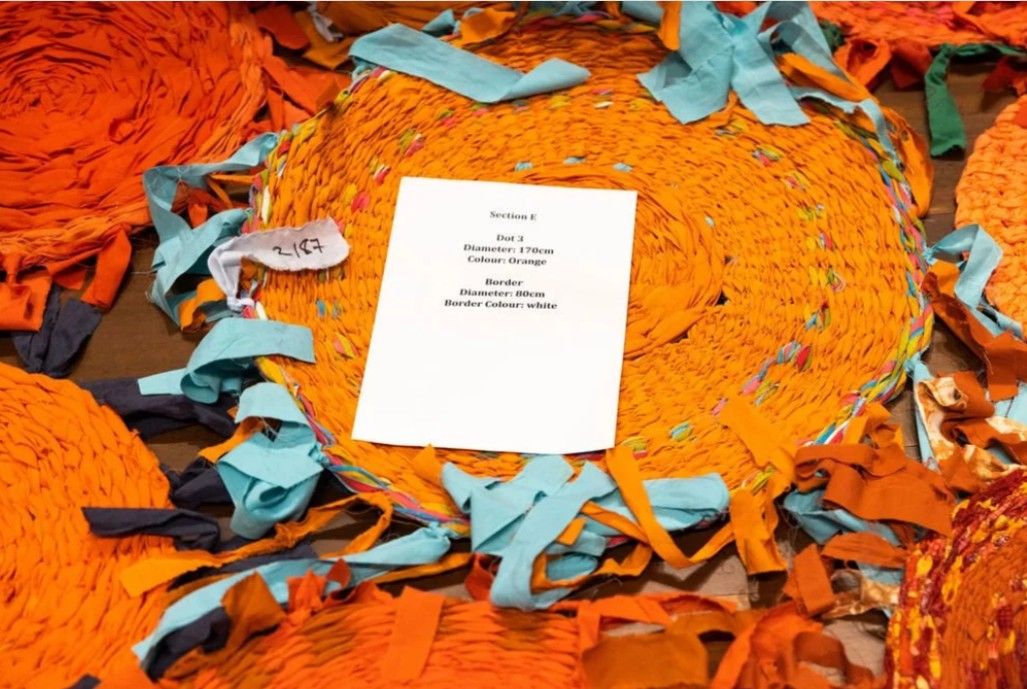
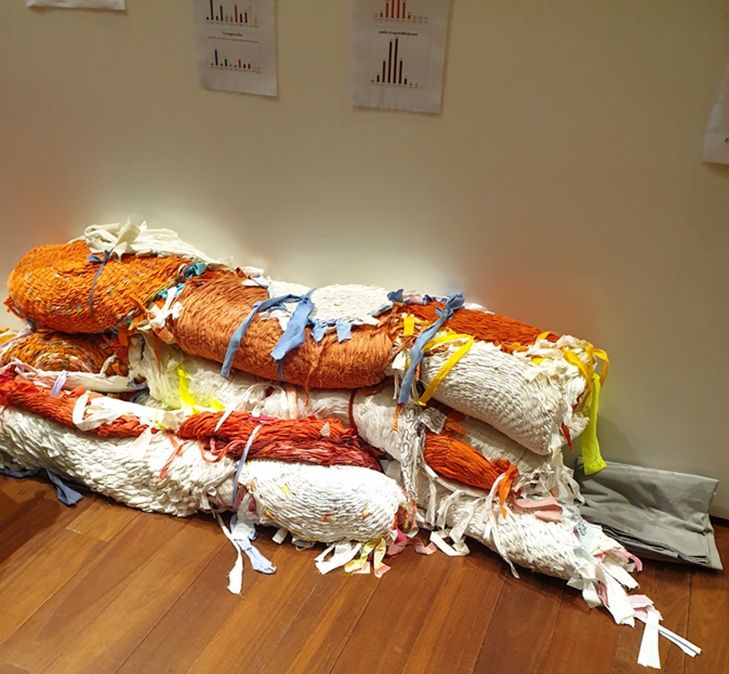
Before the large finished dots were rolled up and tied, the number on each individual rug was recorded on a spreadsheet along with information showing the dots location on the painting (Section: Dot#,Diameter,Colour,Border,Diameter,Border colour).
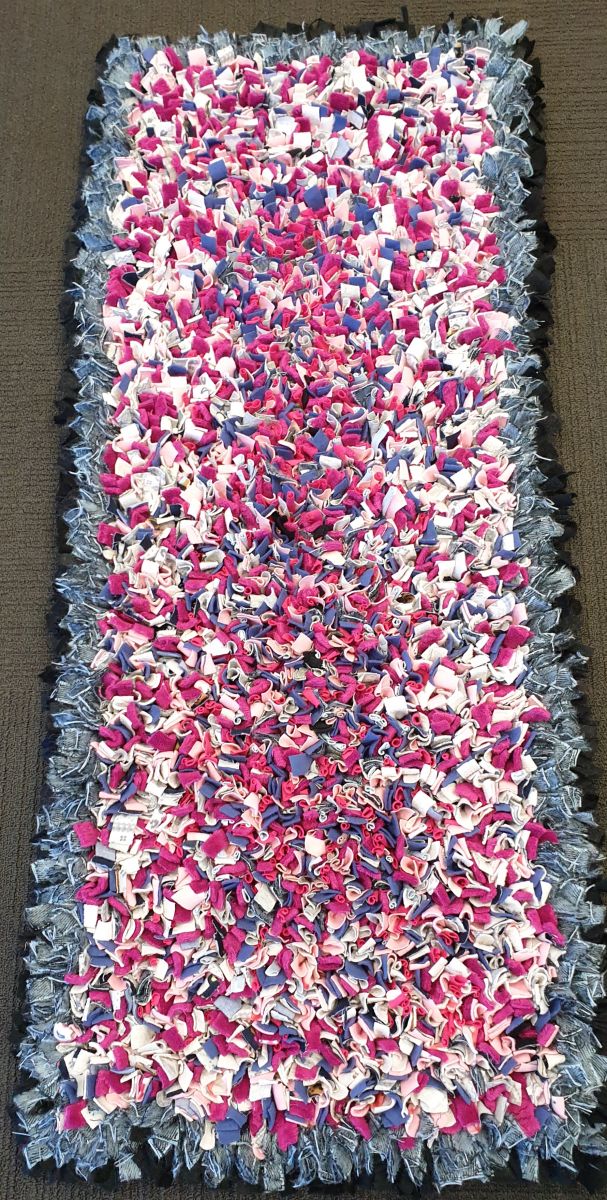
As the rugs had been received they were numbered on fabric tags firmly tied to each rug and the weavers name and location recorded. With thousands of rugs coming in from across Australia and around the world this was a mamoth task. These recorded details are the basis for the previously mentioned “rugalogue” an interactive digital catalogue.
Bundles of completed dots

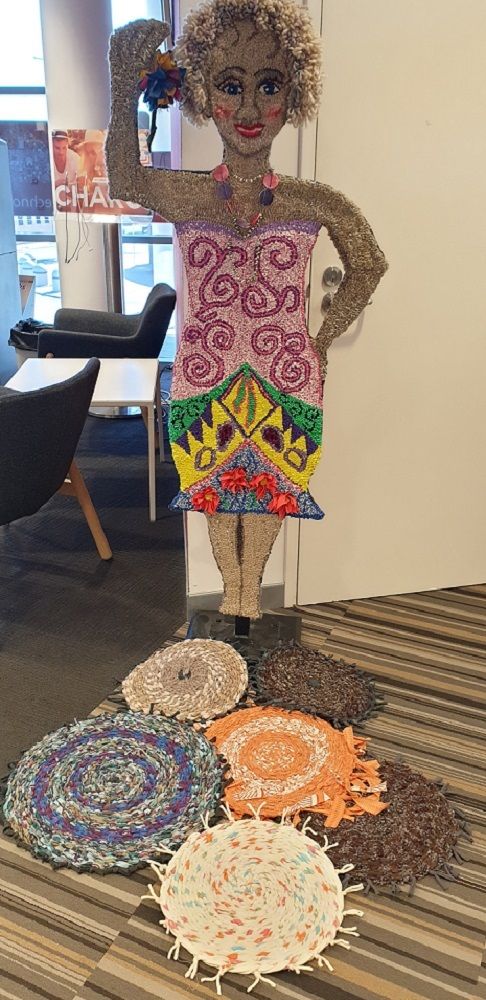
Signing off with a couple of images of the Wanneroo Rugmakers;a few of the rugs made by the group and Tricia weaving a dot rug.


Jo Franco


Wishing everyone a SAFE & HAPPY NEW YEAR   Jo Franco

International Rug Hooking Day 2025

ISSN 2207-001X           11th December 2025

The Annual International Rug Hooking Day is held on the 4th December.  Usually Aussie rugmakers’ greetings show up first on social media as we see the new day before those in Europe and the Americas. This year Wink Lindsay from Western Australia was right on time, sharing greetings and an image of her latest design ‘Grounded’ at 6am on the 5th of December,  Australian Western Standard Time, which would have been 6pm on 4th December on the East Coast of the USA & Canada, the home of so many large groups of rug hookers.

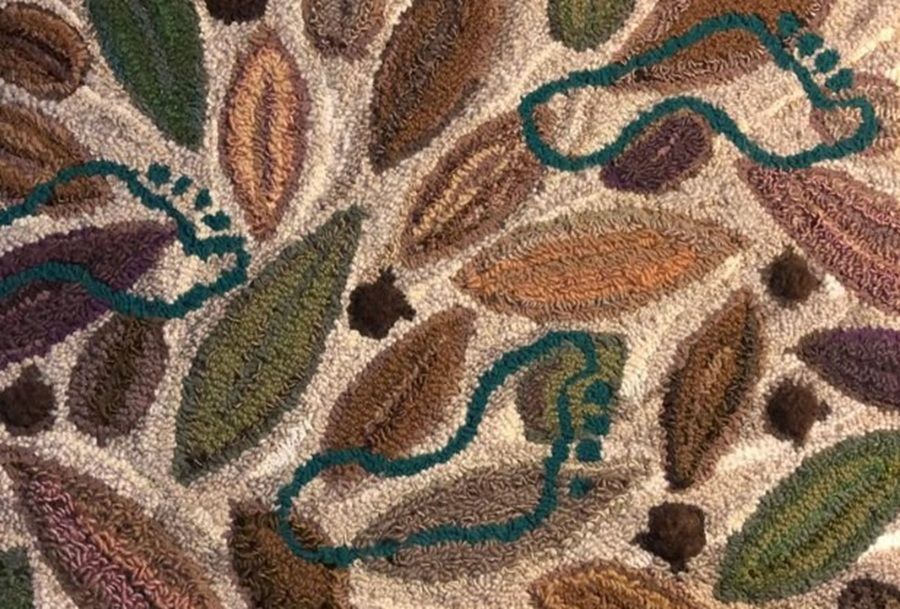
Wink says, “This wonderful craft helps me stay ‘Grounded’ and the beautiful Australian Bushland is a constant inspiration.”

Walks in the Jarrah Forest near her home inspired this work, hand hooked using up-cycled fabrics and yarn on Hessian backing. I particularly like the way Wink has included her footprints, as in life, to blend into, not disturb the leaf litter design.

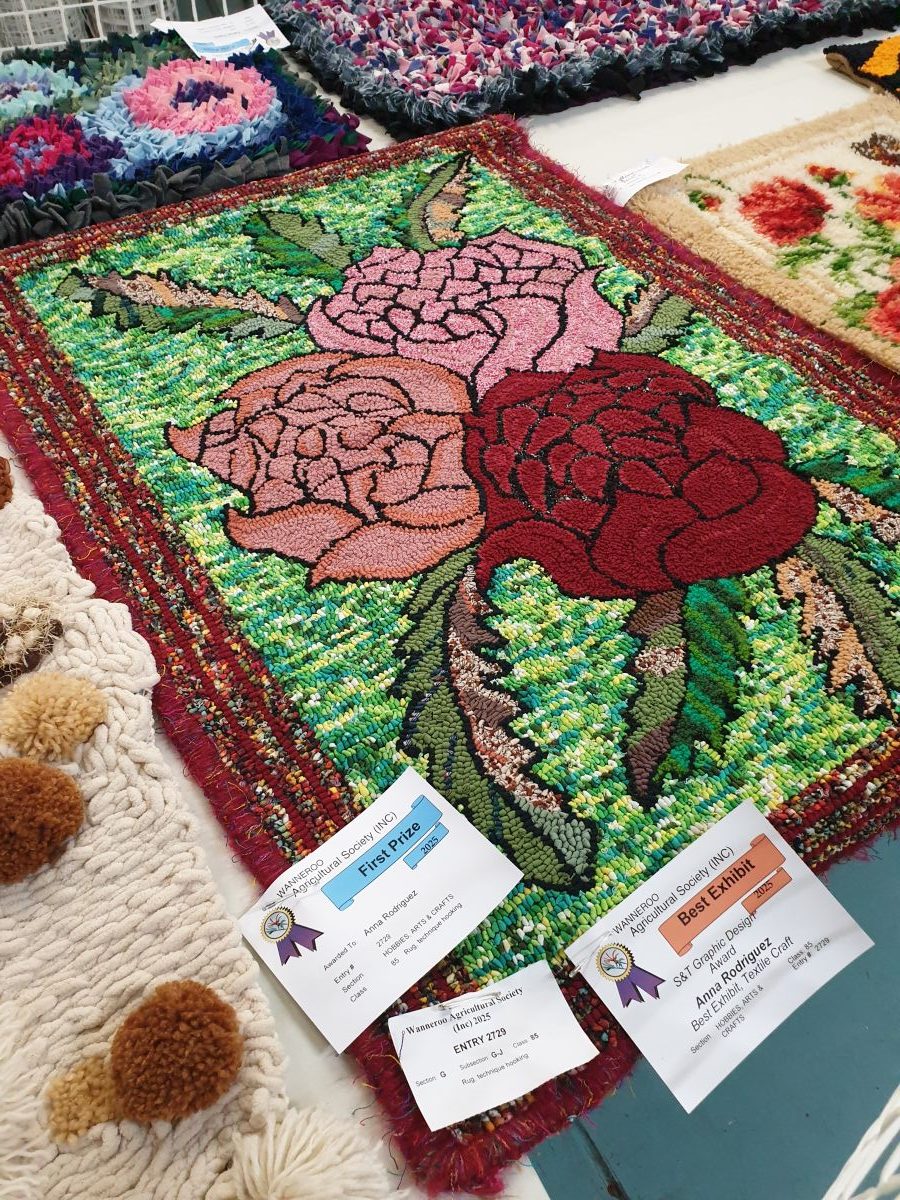
The Wanneroo Rugmakers missed celebrating International Rug Hooking Day this year – busy with their entries for the Wanneroo Agricultural Show, held the last weekend of November.  Think “State Fair” if you’re reading this in the USA. Here are some of the winning entries.

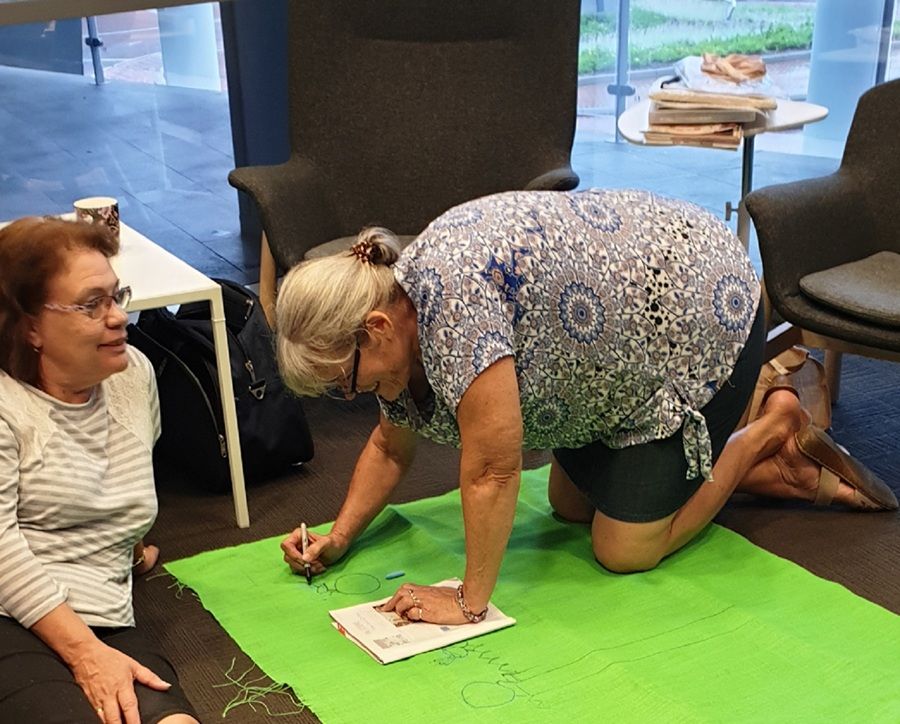
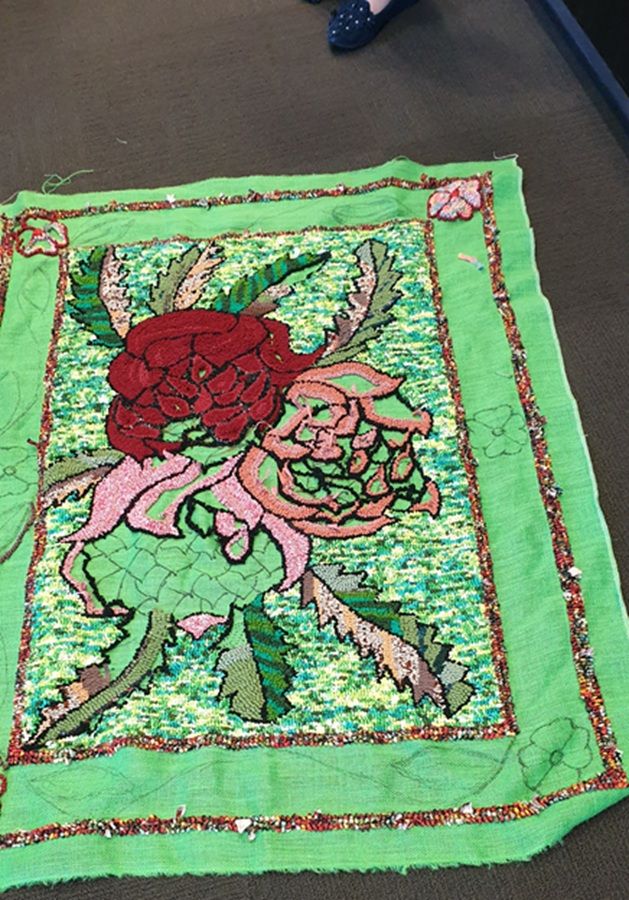
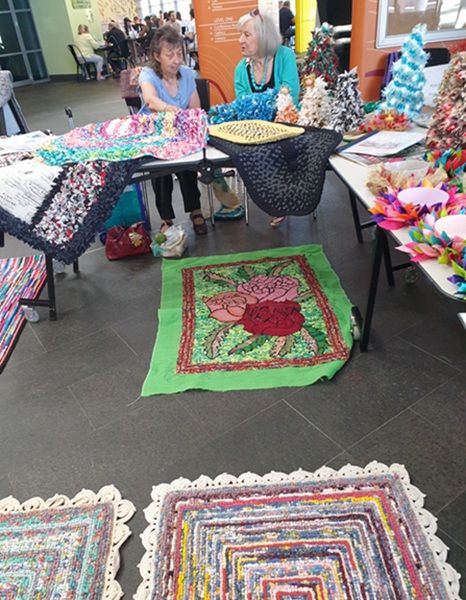
“Waratah” by Anna Rodriguez. This piece took 1st Place in the rug hooking category and Best Exhibit in Textile Craft. It was designed in 2019 by Leslie, a dearly missed group member who passed away on 5th June 2022.

This image shows Leslie drawing up the design on the library floor, Anna sitting by sharing her ideas.


Changes to the original design were discussed with the group members over time and Anna decided to eliminate the original border design of leaves with abstract flowers in the corners, replacing them with lines of colour drawn from the central motif.

Fabric used was all recycle clothing from Anna’s closet.  The edge of the piece was rolled and whipped with a textural novelty yarn incorporating the colours of the stripped border. “Waratah”, started in 2019 – became a UFO for a few years, and was bought to the fore again in 2025 to be entered in the 2025 Wanneroo Agricultural Show.

Remembering International Rug Hooking Day 2021; coming out of COVID isolation, a hands-on rug hooking demonstration and exhibition which featured Anna’s partially finished Waratah wall hanging, along with a couple of her locker hooked rugs with crocheted finishes.


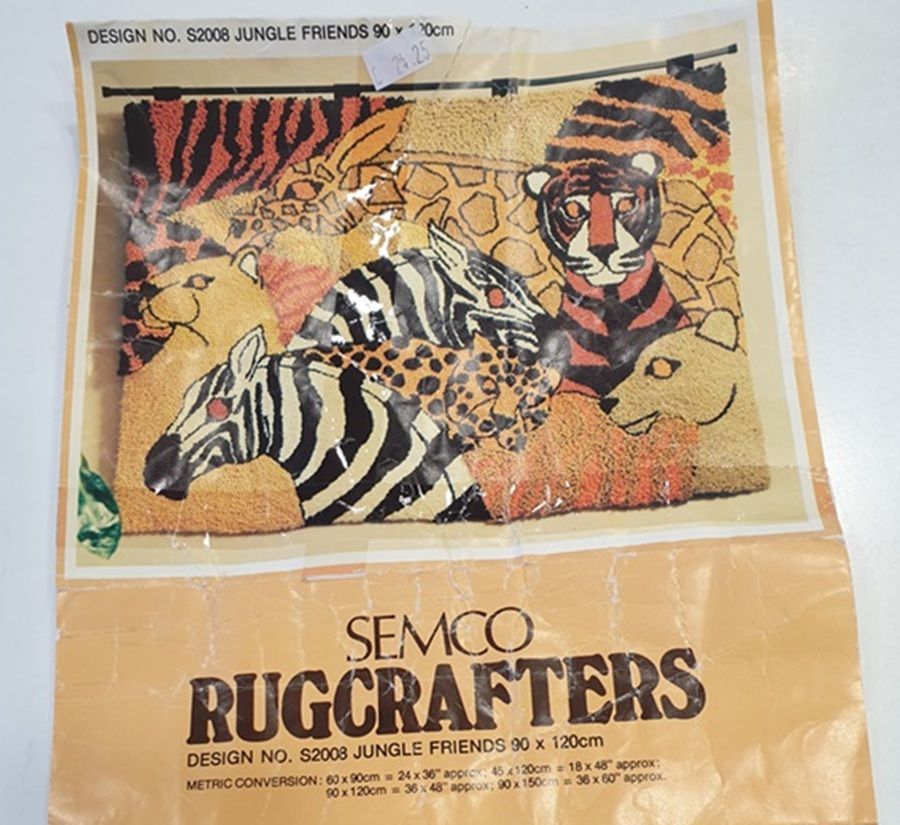
The design 36 x 48 inches (90 x 120cm) printed on good quality backing and with all the wool it was a steal!

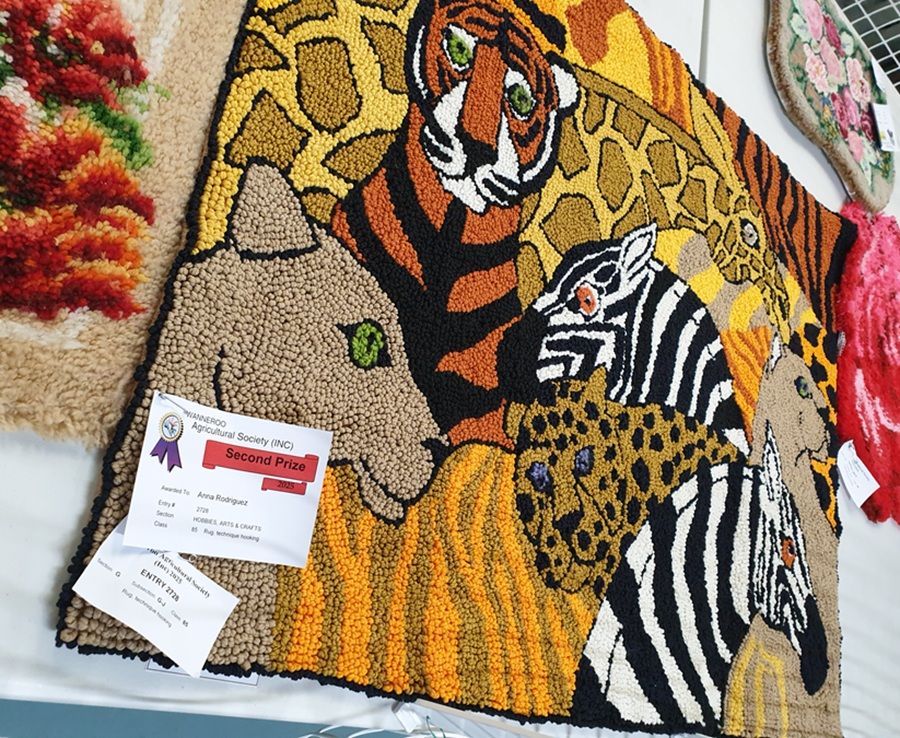
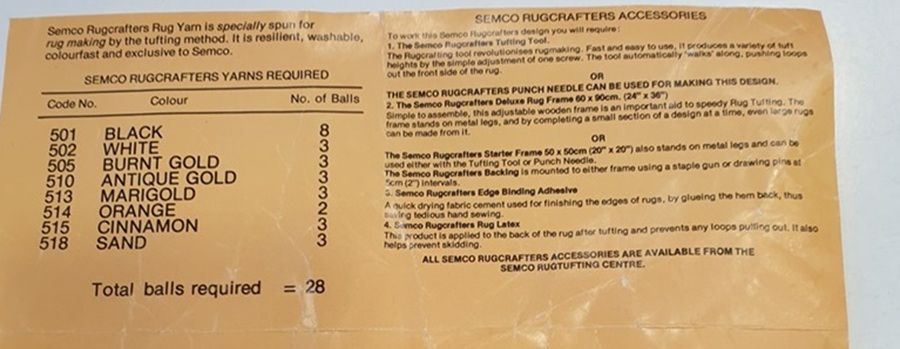
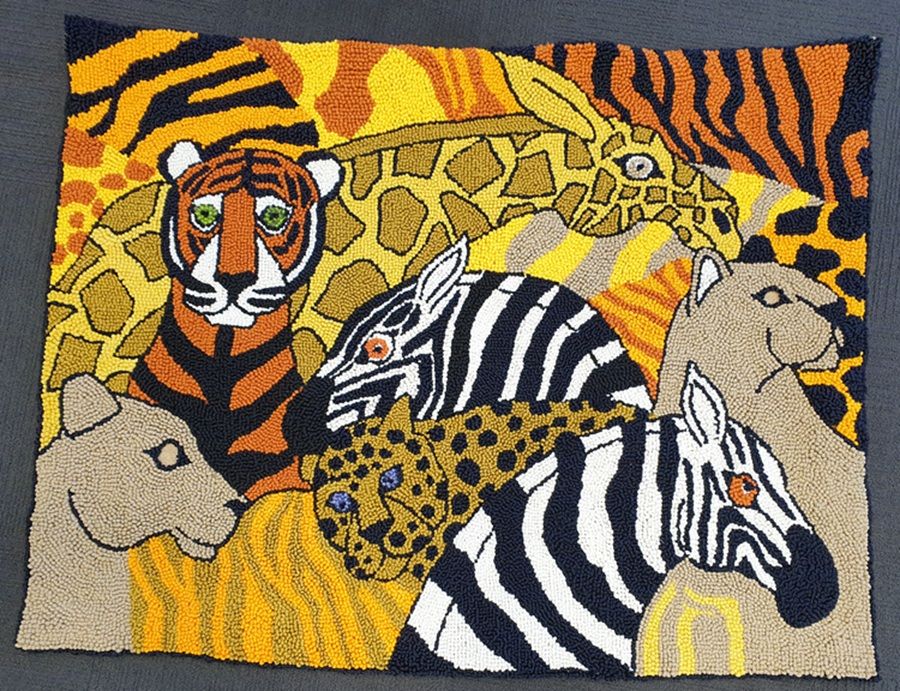
Second prize in the “rug hooked” category at the Show was also taken out by Anna with a SEMCO pattern which she found in an OP Shop. It came as a kit complete with design and all the yarn needed and a strange looking old fashioned punch needle. Anna discarded the tool and hooked the design printed on a reasonably good looking backing using a traditional rug hook.

Fortunately, Anna’s hooking style is low and close, so there was enough of the various colours of heavy rug hooking wool yarn that came in the kit to complete the work – well almost. Sometimes with hand-me-down projects like this that have languished unfinished in a bottom drawer, some of the original yarn is used for other projects. There wasn’t 3 full balls of the sand colour, so when Anna could see she wouldn’t have enough she rearranged the colours in the background.

Theres a small white price tag at the top this SEMCO Rugcrafters image  – AU$24.25 (USD $16.13)


You may have noticed the finished piece is in the reverse of the package image, that’s because it was intended to be punched hooked from the back and Anna used the traditional rug hooking method, so the back became the front.  I learned this lesson of reversing images the hard way when making up a proddy/proggy piece with lettering on it.  All the animals in the kit picture were shown with “blank” eyes. Anna deviated from the image and gave all but two of the animals coloured eyes.

How do you hook animal eyes? I knew I’d seen articles on hooking animal eyes in Rug Hooking Magazine, so searched my old copies. It was a mammoth task; I’ve kept copies of RHM since the late 1990s. Then I remembered a resource page on the website of the Canadian Ottawa Olde Forge Rug Hooking group. Under Resources – Inspiration you can search all the articles and patterns in Rug Hooking Magazine from its beginning in 1989.  Contents can be searched and sorted by name, title, pattern, year and issue, as well as by selected categories of interest.  A separate subject index is also available.

Special thanks to Jane Thacker (librarian) and Norma Elliott (webmaster) of Ottawa Olde Forge Rug Hooking who developed this resource page and have made it available not only to their members but to rug hookers worldwide.

Also listed on YouTube were videos by Cindi Gay  showing how to hook cats’ eyes. In the end Anna came up with her own version of animal eyes.

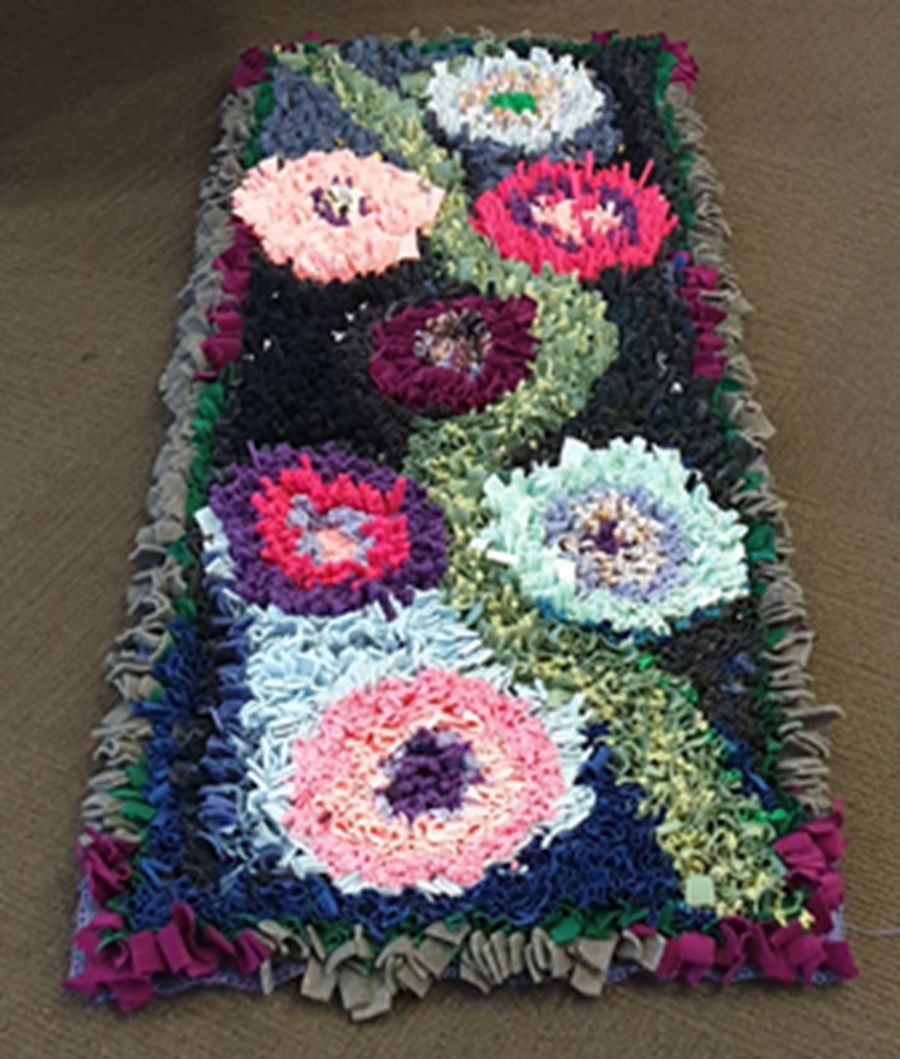
In the Proddy category, these rugs by Tricia Thacker who hails originally from the UK, took out 1st and 2nd place.  I’ve just realised I’ve mentioned a rug hooker with the same last name in Ottawa; just to make sure I didn’t have a typo I checked the Ottawa website – all good.

I must thank Tricia for  permission to use her Waterlilies rug as the banner image for [The History of Rug Hooking] on this website.

This image of Tricia’s Hit & Miss doesn’t do it justice as the purples and pinks  in the image are not deep enough – they should be the same colour as those in the Waterlilies rug.


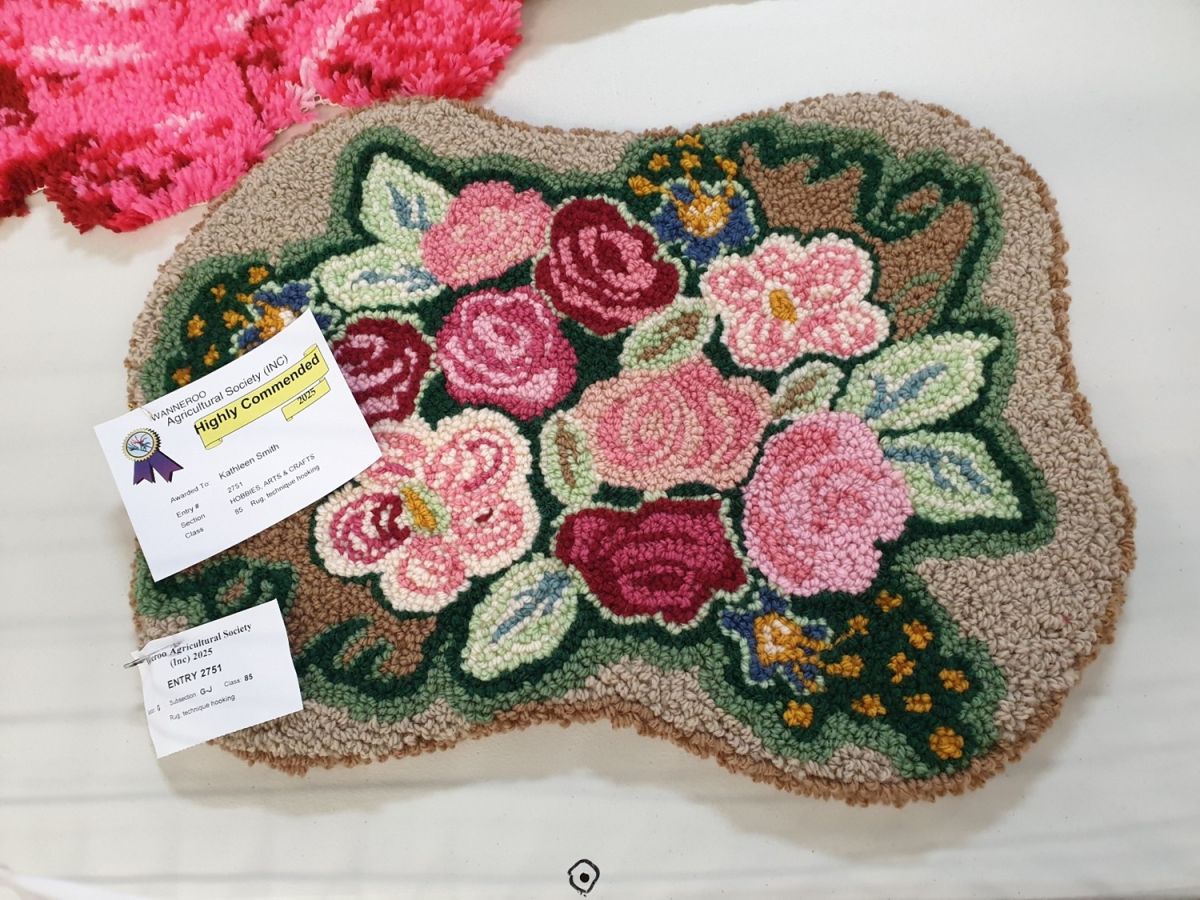
Kath’s Show entry, a commercial design, received an Honourable Mention; it was a piece that had been started and then donated to the group along with some wool but no picture to go by. Kath decided on a colour plan that worked with the wool that was available. It was obvious that the beige colour was for the background but again, not enough to cover the original rectangular design. Giving the piece an irregular border solved that problem. The finished piece was approximately 22inc x 15.5inc (56cm x 40cm)

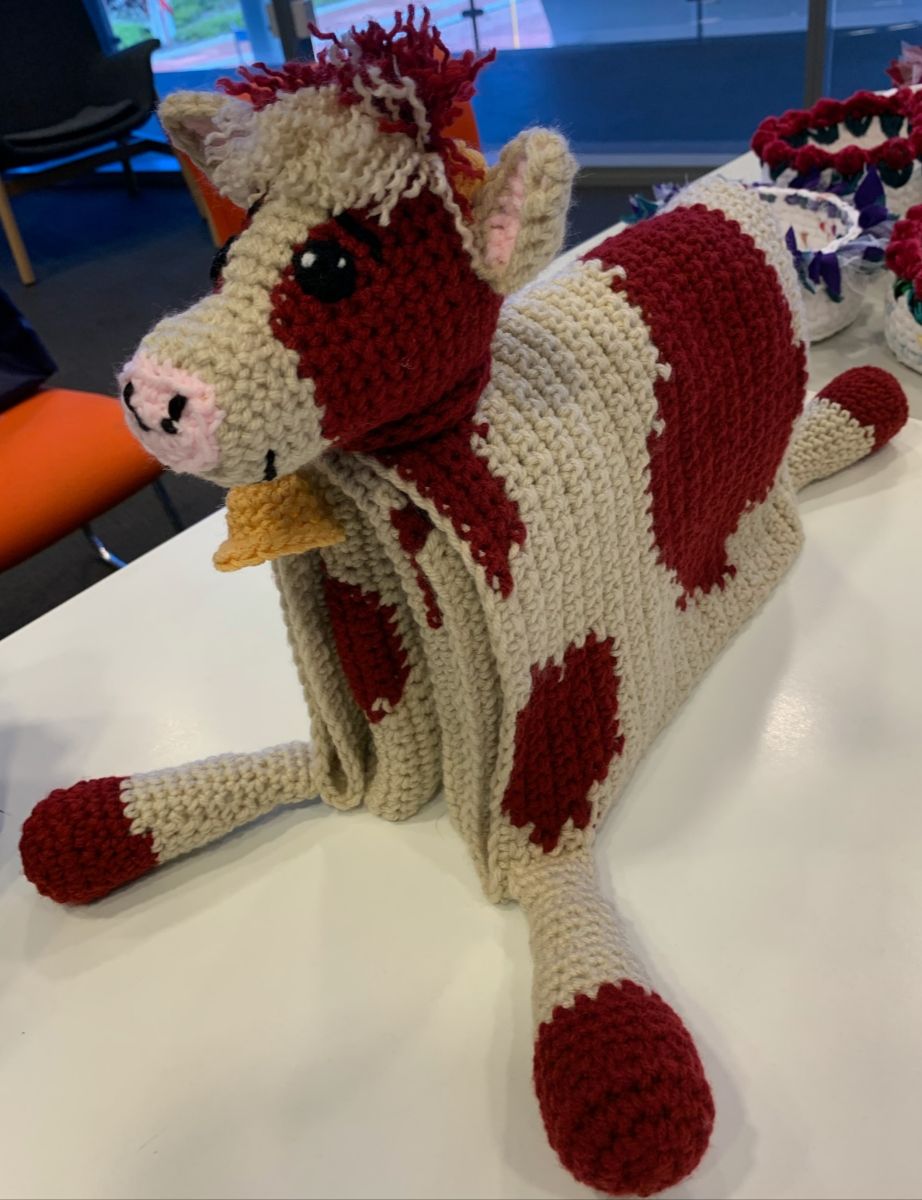
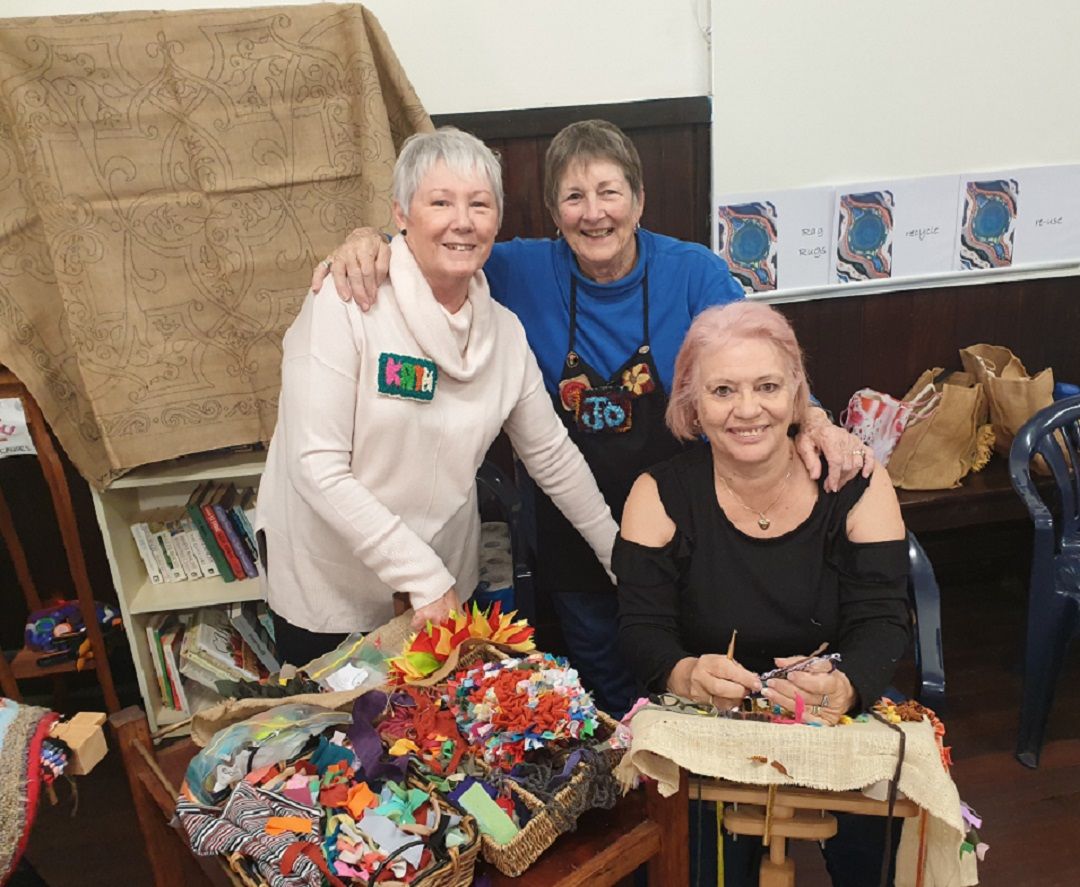
Kath, like several members of our rug hooking group also crochets – her most recent work another crocheted cow – this one unlike the previous baby rug, hangs over the arm of a couch or chair with handy pockets – no more – “where’s the remote!”

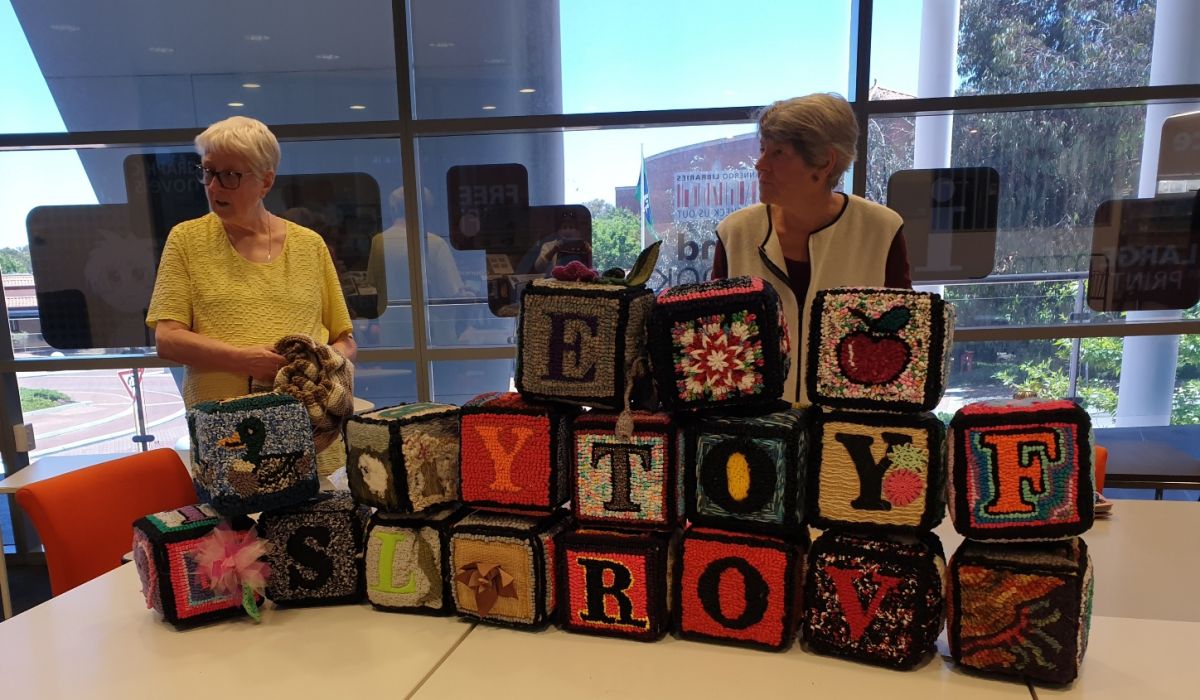
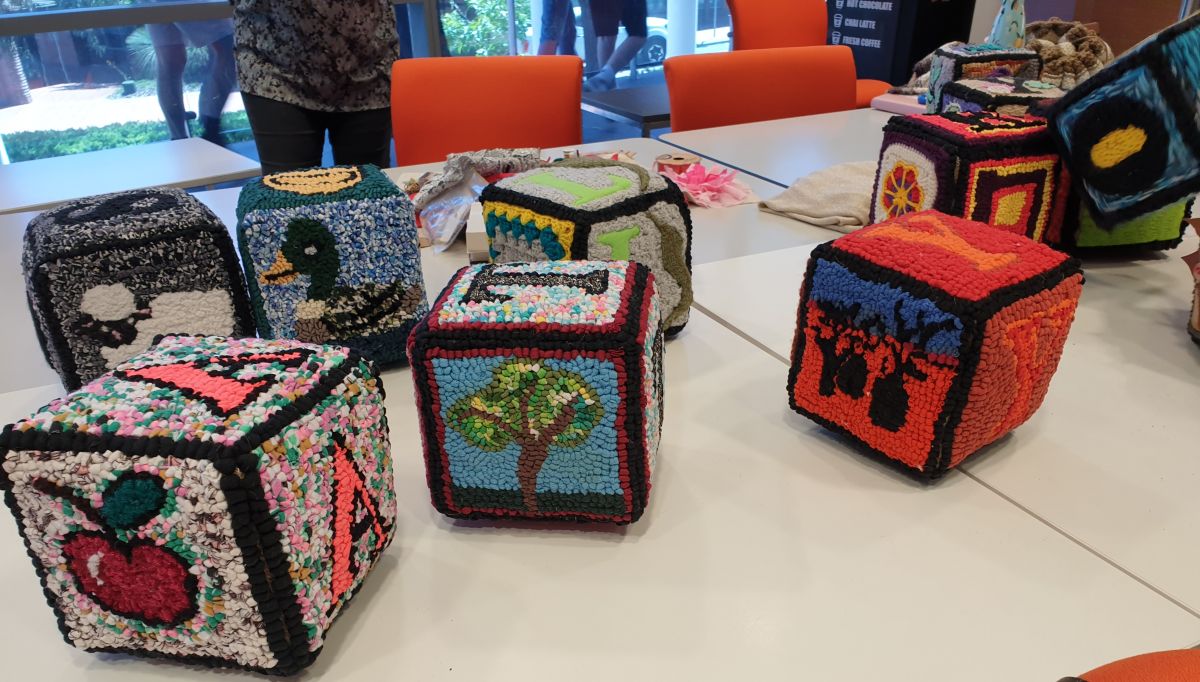
Below – Linda and Tricia admiring some of the hooked blocks made several years ago to spell out the name of a fibre festival, which is no longer being held, so the blocks were being sorted and will be used again in several ways.

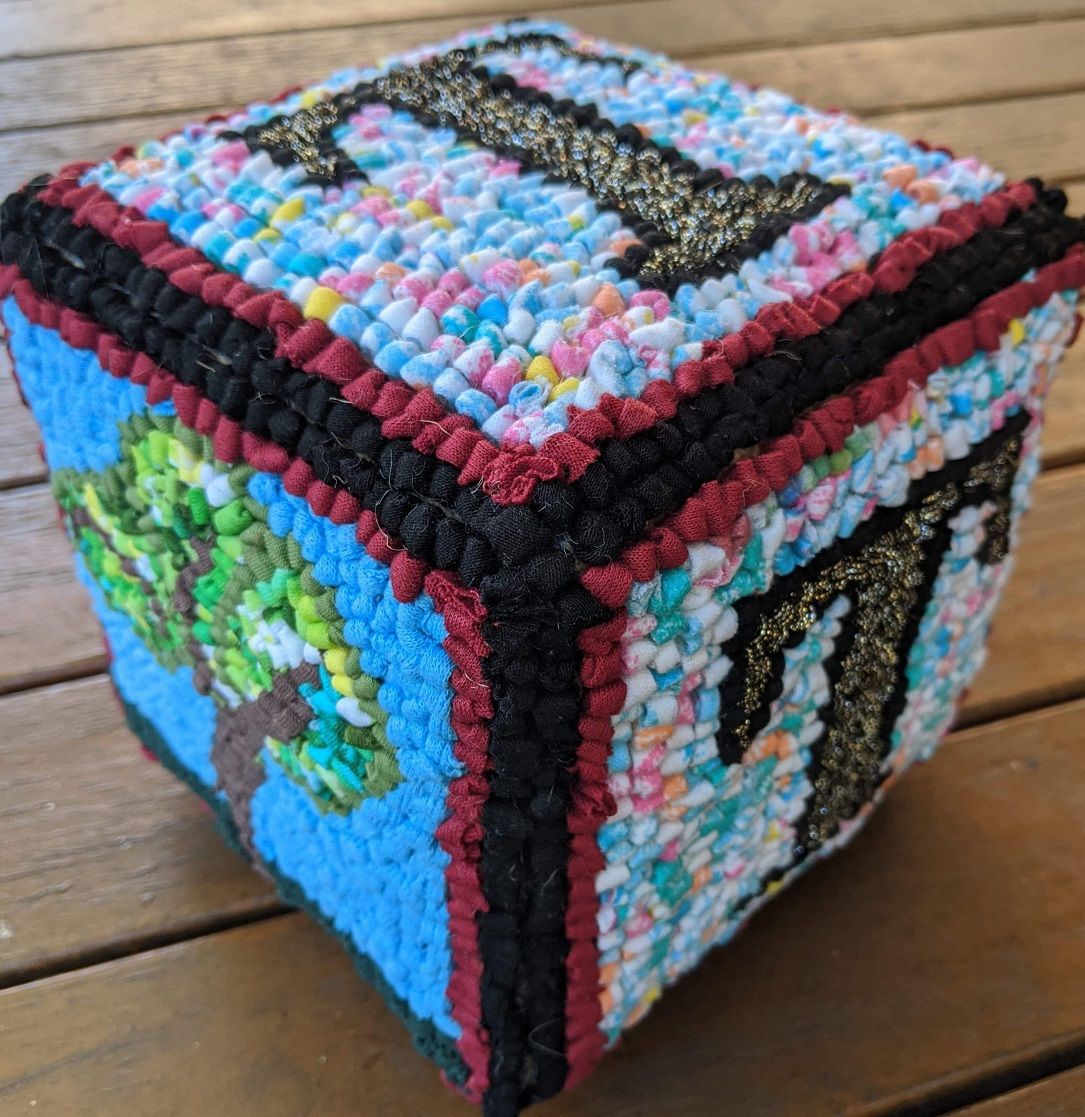
The block size is approx. 6 inches (15cm) square, I hooked the letters using T-shirt yarn and members of the group designed the images and finished them off with crochet, stitch and hooking.

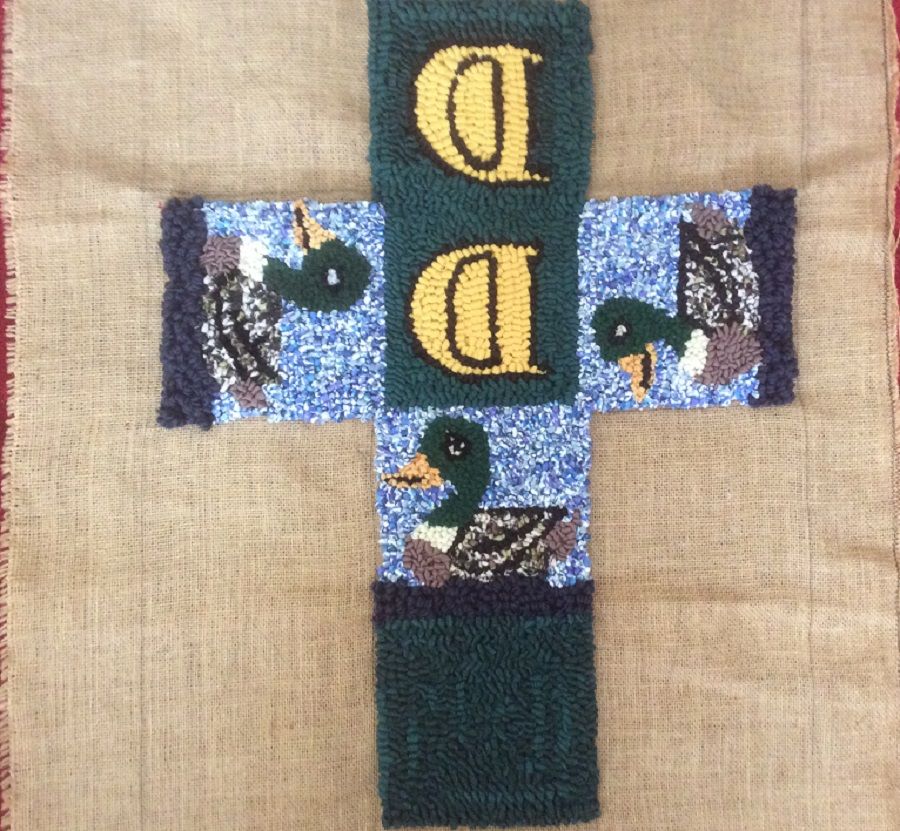
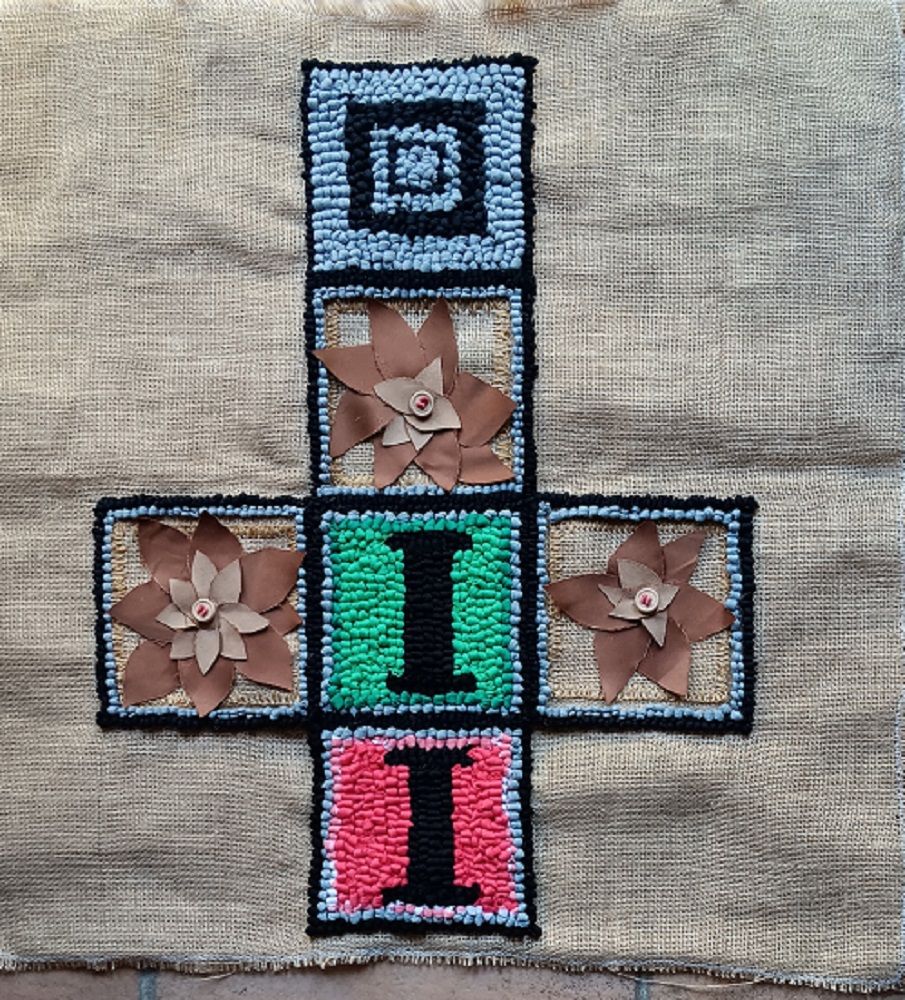
This was the pattern for the blocks. I’d seen this used before to cover a brick as a door stop.

Kath hooked a literal image while Tricia created  6inc works in stitch to embellish the side panels before they were stitched over a cube of dense foam.

Anna chose to hook a tree for this T block – it was the first block finished and hooked completely with T-shirts.


Here are a few of the 20 blocks created for the festival.

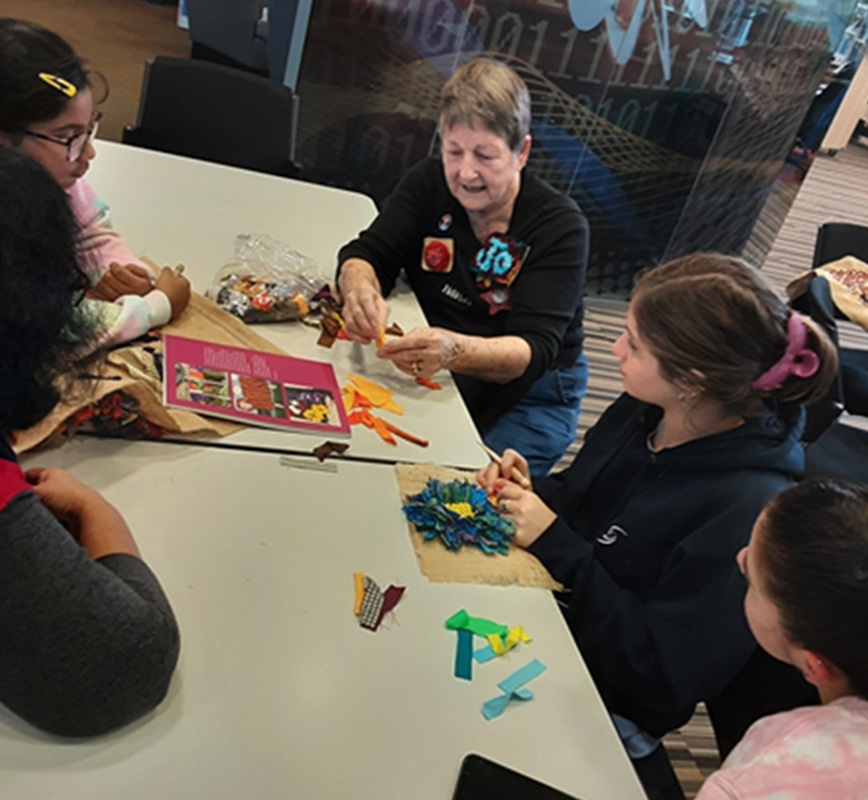
Our group of 7 core members can all teach a variety of rug hooking techniques which comes in handy when community members stop by our Saturday morning sessions at the library. Some visitors are interested to see what we’re working on, and reminisce about family members doing this traditional “craft” way back when. Others want to learn one or more of the different techniques and go off to teach family members or school art classes and some join in for the comaraderie while learning something new.

In the last 15 years over 50 people have participated in the Saturday morning sessions. Which gives us a feeling of satisfaction to be passing on at traditional craft and making people aware of the amount of clothing that can be saved from landfill and at the same time having fun!

As it’s fast approaching the end of 2025, I’d like to send greetings from the Wanneroo Rugmakers for a Merry Christmas, Happy Holidays and all the best wishes for the New Year.

Signing off today with a picture of Kath and Anna at one of our past events

Happy Hooking and Best Wishes to all,

Jo Franco

From Stash cleanout to Series

ISSN 2207-001X  October 2025

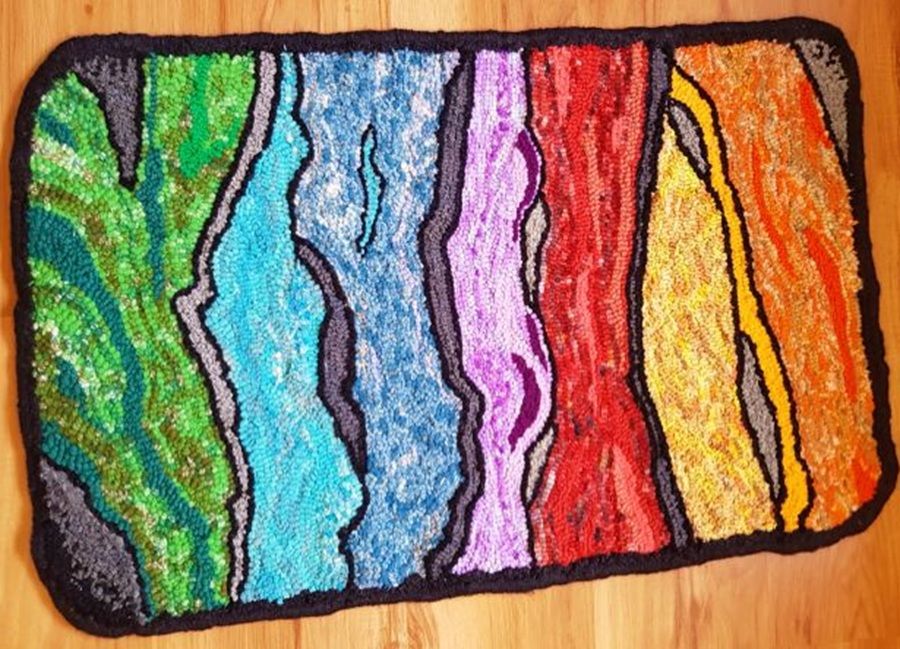
These vibrant rugs designed and hooked by Bea Nitschke from Queensland, were inspired by the colourful bark of the Rainbow Eucalyptus trees growing at Judi Tompkins Studio Palimpsest on the Sunshine Coast, where Bea meets with other textile artists.


While experimenting with ‘brights’ Bea planned her colour palette as she went. With a large quantity of leftover “worms” (previously cut fabric & yarn) in her stash Bea decided to create designs that would use up the different colours before sourcing any more fabric or yarn.

Both rugs, approximately 94 x 48 cm (37×19 inches) were created especially for family members and shipped to Austria.

The Rainbow Eucalyptus trees on Judi’s property are smaller than the tree in this image shared from a Facebook post by Ancient Forests & Champion Trees

Rainbow Eucalyptus (Eucalyptus deglupta) is a species of tall tree, that is native to the Philippines, Indonesia, and Papua New Guinea. It is the only Eucalyptus species that usually lives in rainforest, with a natural range that extends into the northern hemisphere. It is characterized by multi-coloured bark

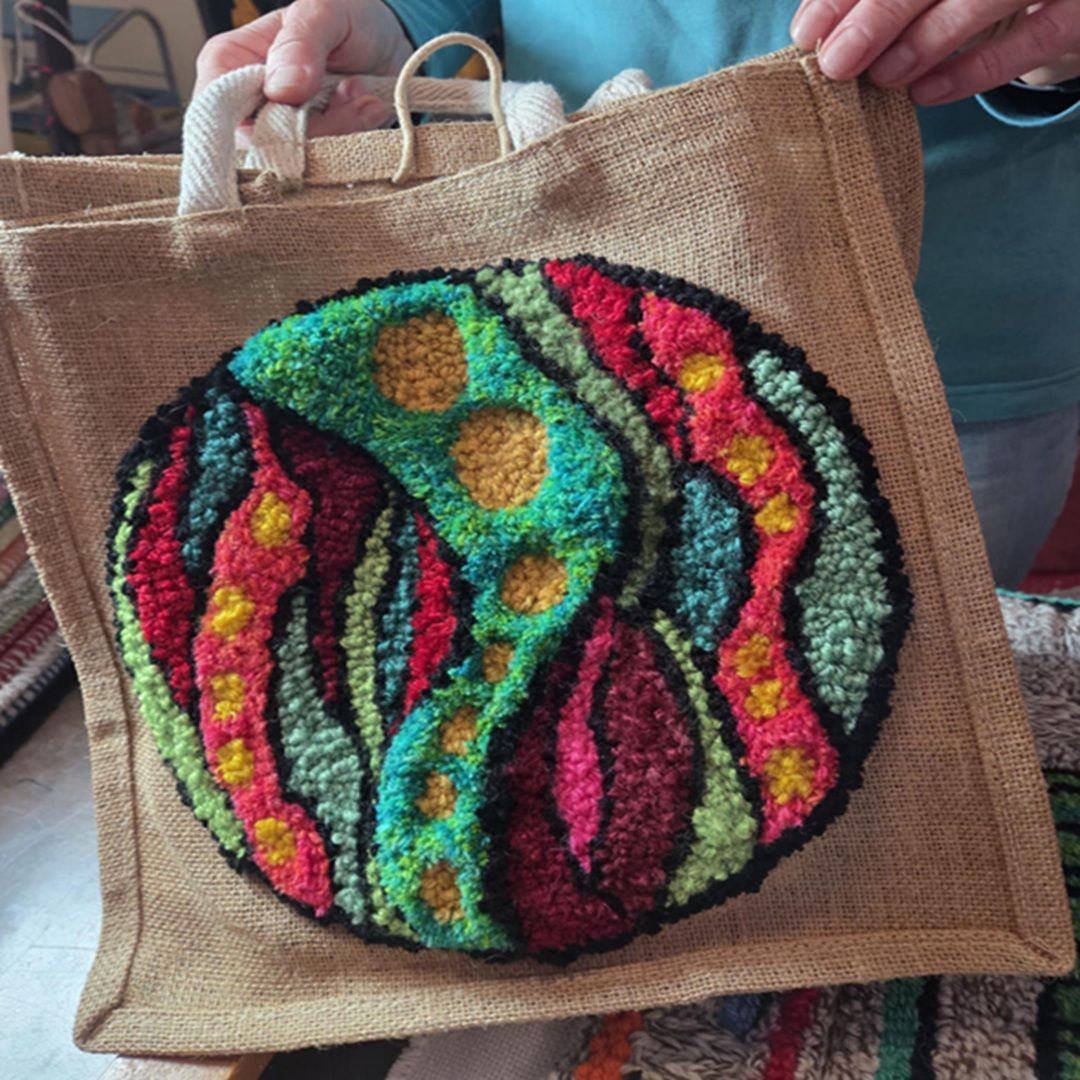
With a design reminiscent of the Rainbow Bark, Bea covered the advertising on this hessian bag purchased from one of the major grocery store chains. The bags were sold at the check-out counters some years ago when single-use plastic bags were banned in Australia.

Many of us have used an inexpensive embroidery hoop to slide into one of these bags and hook or prod directly into the hessian.  The bags are well made with strong handles; some hookers utilise the loop at the top meant for hanging the bag onto the shopping trolley, to create a closure with the addition of a button on the other side. Bea hooked a combination of high and low loops to allow for sculpting.


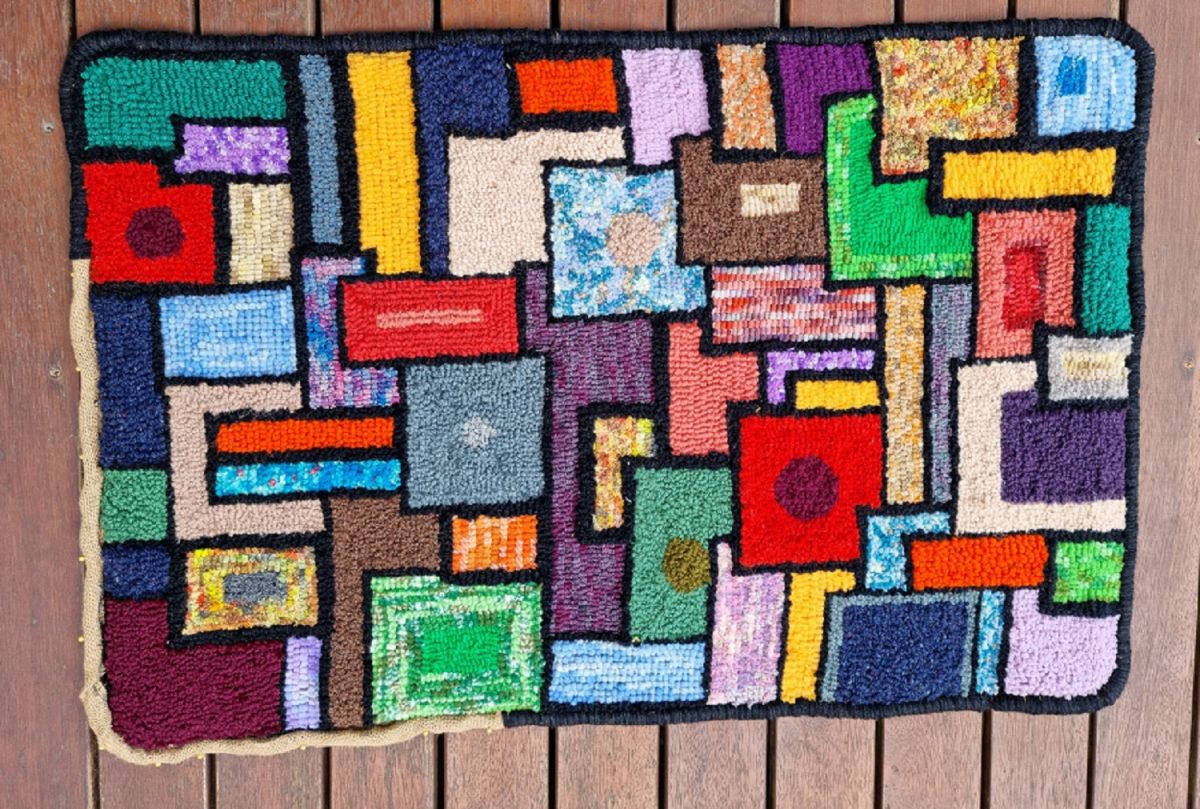
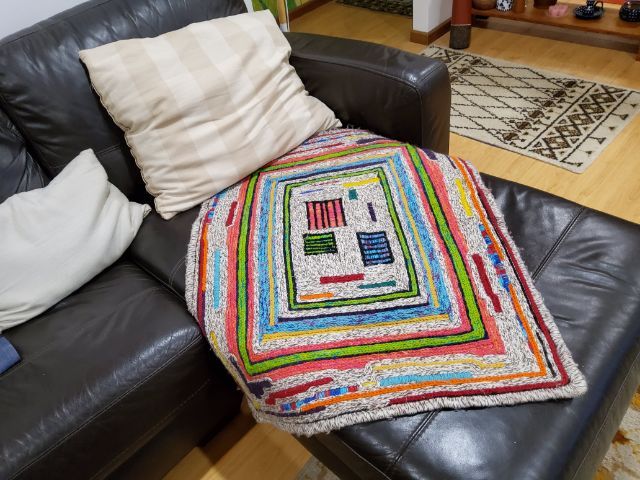
On to bigger projects – utilizing small amounts of different coloured wool, Bea gave new meaning to “hit & miss” by incorporating short sections of various embroidery stitches.

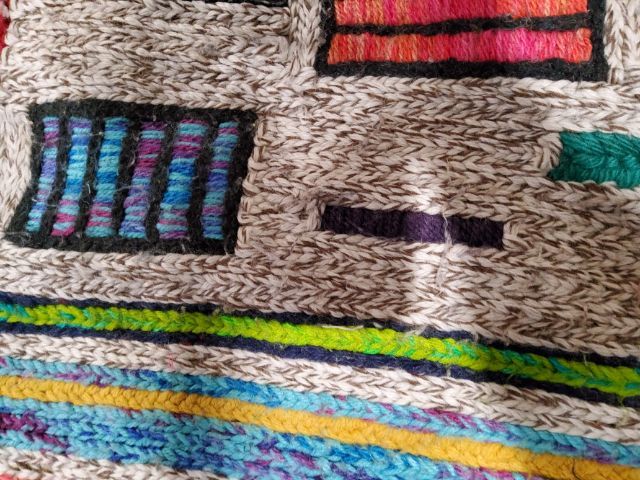
In this piece; a chain stitched inner border of yellow and short sections of colourful long stitch in both the centre and outside border of the floor rug.

To match the  floor rug, staying with the same colour palette, came a traditionally hooked cushion.

While a little hard to see in these images there are some indented areas worked into the beige background of this cushion to add interest. Bea uses a stretcher frame; the top and bottom bars define the width of her works.


As it turns out, it was the perfect size to create a backrest for her chair.


Continuing with bright colours and geometric shapes

Bea turned her attention

to locker hooking –

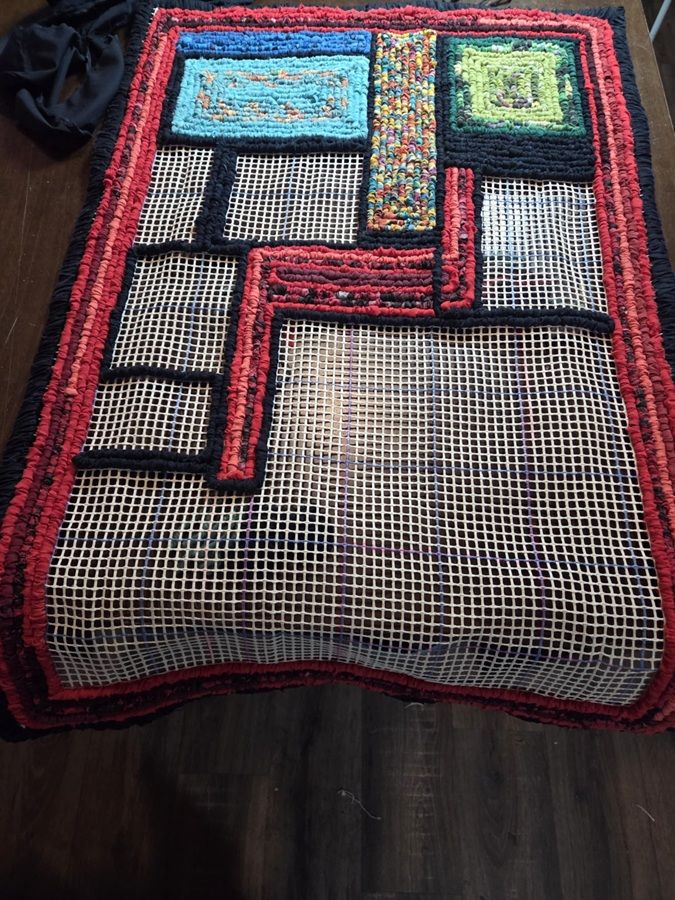
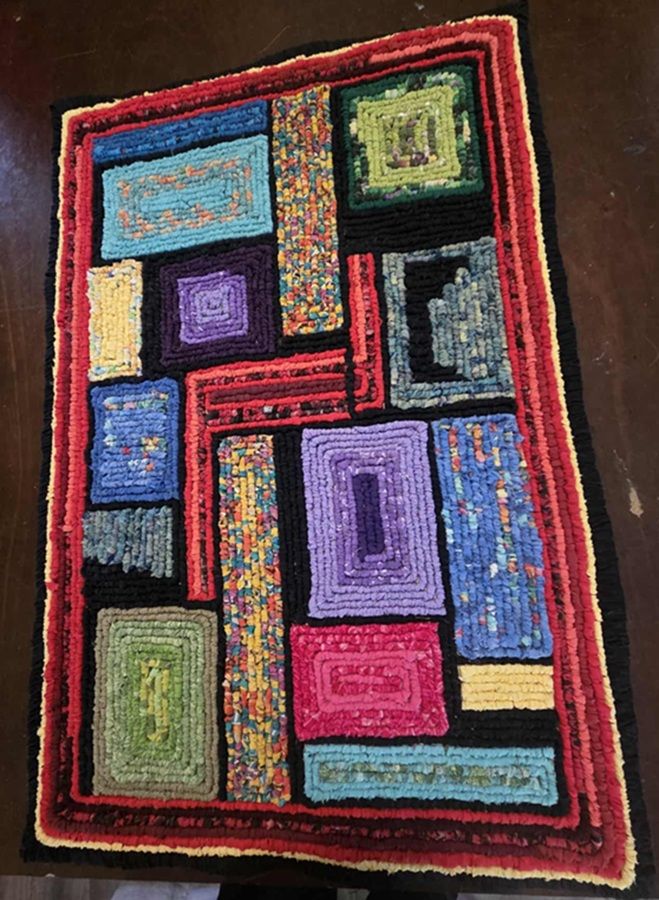
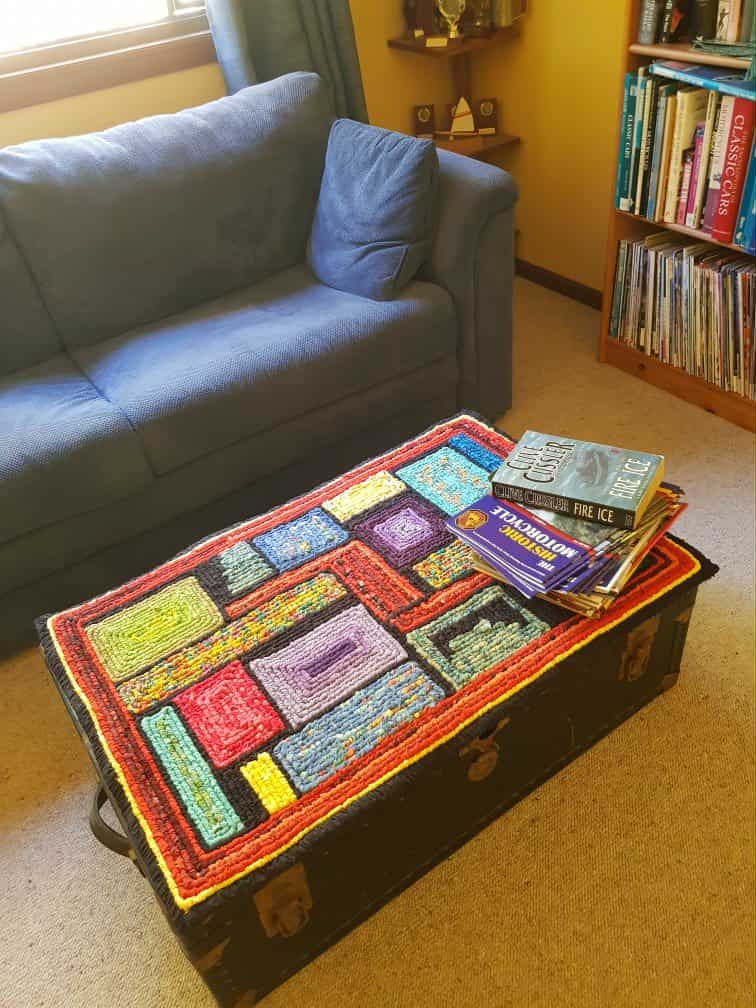
here’s a couple of  images of her trunk topper taking shape


Living on the other side of the country I occaisionally join the  Sunshine Coast  Fibre & Textile Artists online and enjoy being part of the group; seeing their works taking shape and how they’re learning to create their own designs and overcome the lack of traditional supplies. There are rug hookers, knitters, crocheters and embroiderers in the group, all happy to share their knowledge of the various disciplines and offer positive critiques. Members of the group also do a good job passing on knowledge of this traditional craft to younger people interested in textiles so I’m happy to share their work here.   

Another Digital Rug Hooking Experience

ISSN 2207-001X   August 2025

Susan L Feller, Textile Artist

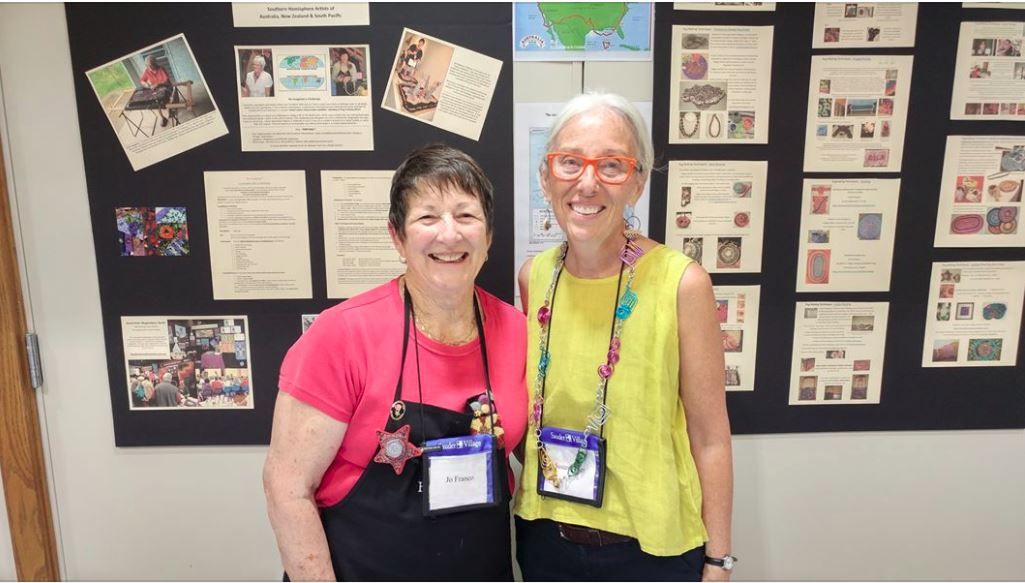
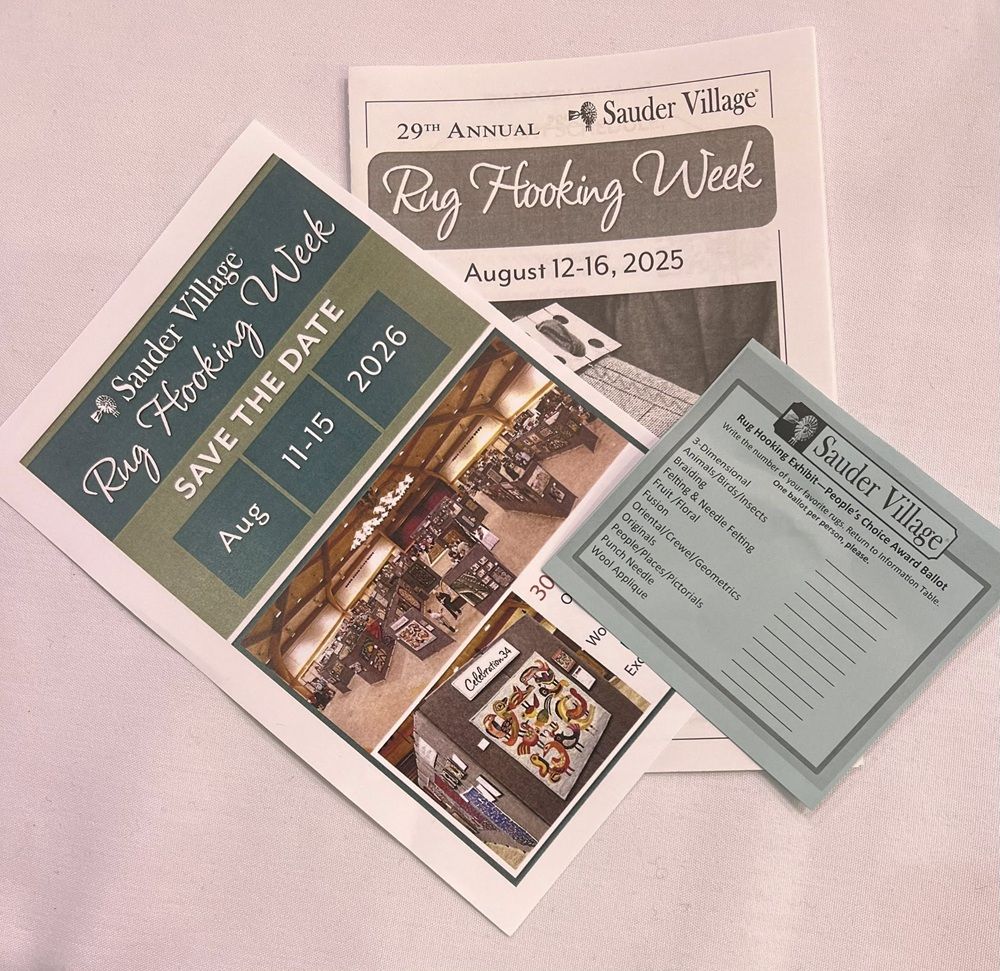
Without leaving the comfort of my own home in Perth Western Australia this year, in August 2025, I had the opportunity to visit Rug Hooking Week at Sauder Village, Ohio, USA and take part in Susan Feller’s Guided Artist Residency Workshop.

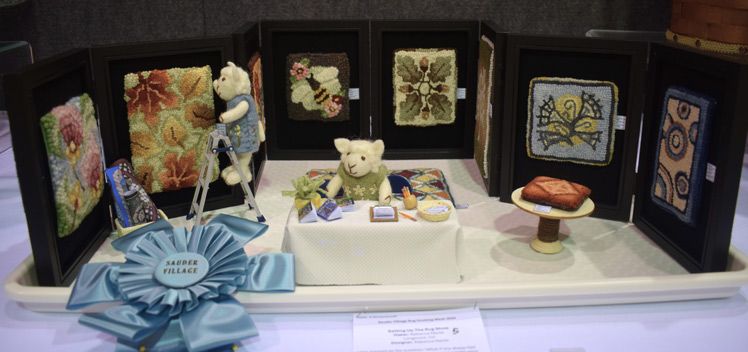
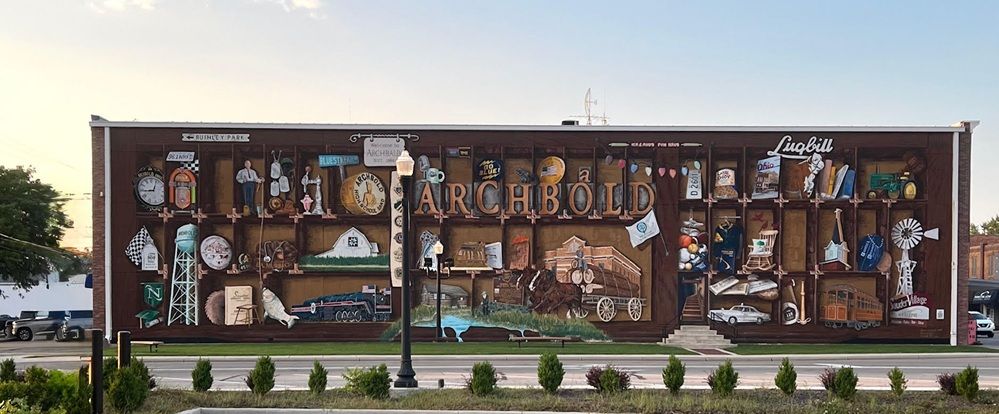
For 29 years, Sauder Village, an historic living history museum in Archbold, Ohio, USA, attracting thousands of visitors from around the world, has coordinated Rug Hooking Week, the largest annual rug hooking event in North America; it’s a week-long event where rug hookers can network, learn, and be inspired.

Highlights of Rug Hooking Week include hundreds of rugs on display, featured guest teachers, rug hooking demonstrations, classes and exceptional vendor booths. Each day brings new Workshops, Retreats, Gallery Talks, and more.

Between RHW events one can explore Sauder Villages  historic homes, barns, gardens, and craft shops and take a walk through time from 1803 through the 1920s while visiting Natives & Newcomers, Pioneer Settlement, and the 1920s Main Street.  Crafts represented here are Basket Making, Blacksmithing, Broom making, Coopering, Glass Blowing, Pottery, Quilting. Spinning, Tinsmithing and Native Crafts.

So, what does a guided artist residency with Susan Feller entail, and how could I participate virtually?

The participants would use Rug Hooking Week as their “educational studio” with Susan guiding them through the Rug Hooking Week exhibits.

Ahead of the visit to Rug Hooking Week, each participant would have a one-on-one consult with Susan, identifying exhibit elements they were most interested in. Upon arrival at Sauder Village, as a group they would go through the collections looking for how different materials, techniques and designs were used, discovering through this process, new tools and ideas; with Susan addressing questions, from the students in the workshop.

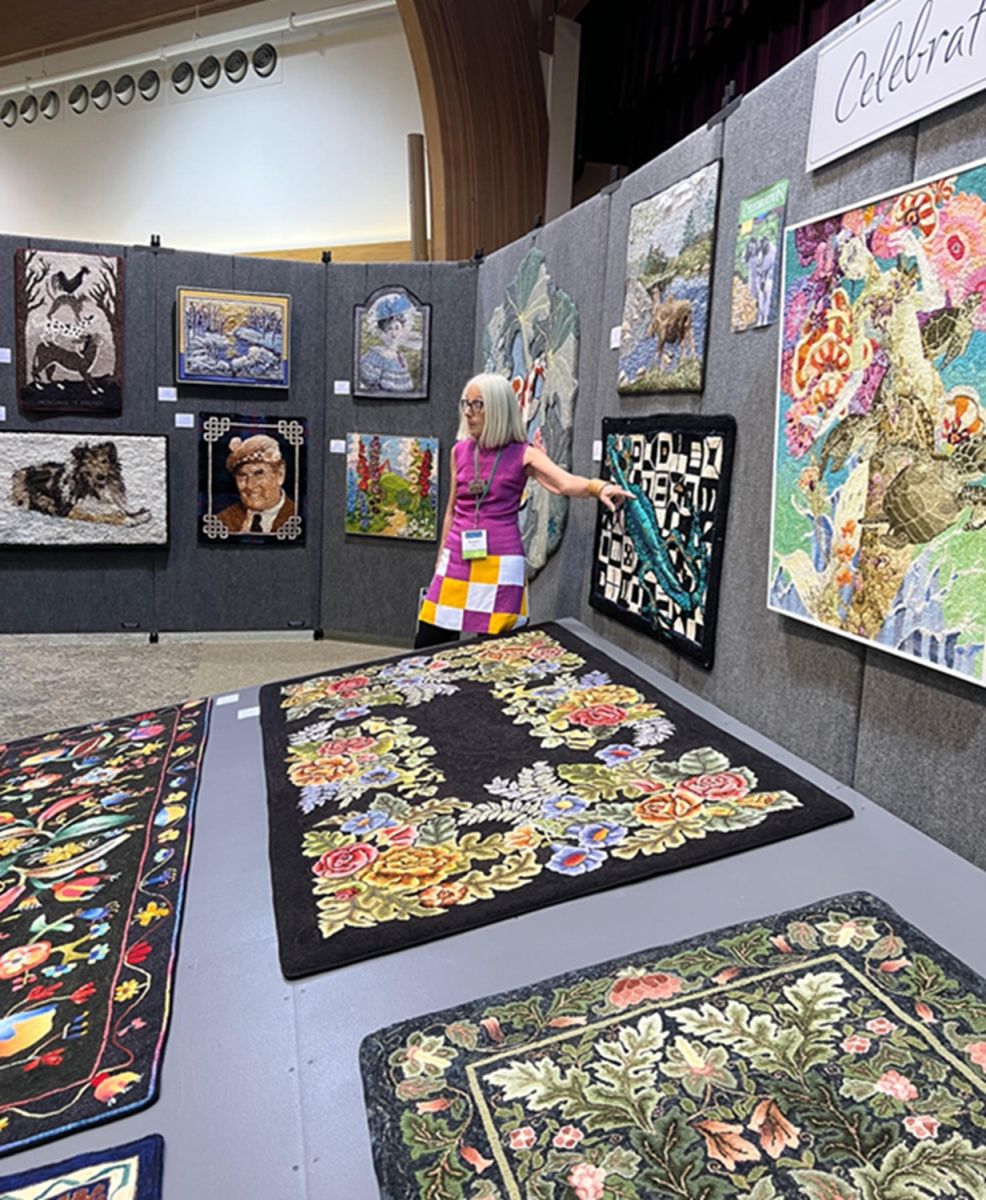
My pre-workshop visit with Susan was no different to the other participants; a Zoom meeting where Susan explained how the residency would work. I also registered to view her online Gallery Talk, a  presentation of a popular featured exhibit  Celebration 35   by Rug Hooking Magazine. The virtual talk will be available for purchase. Follow Rug Hooking Week at Sauder Village on Facebook for the announcement.

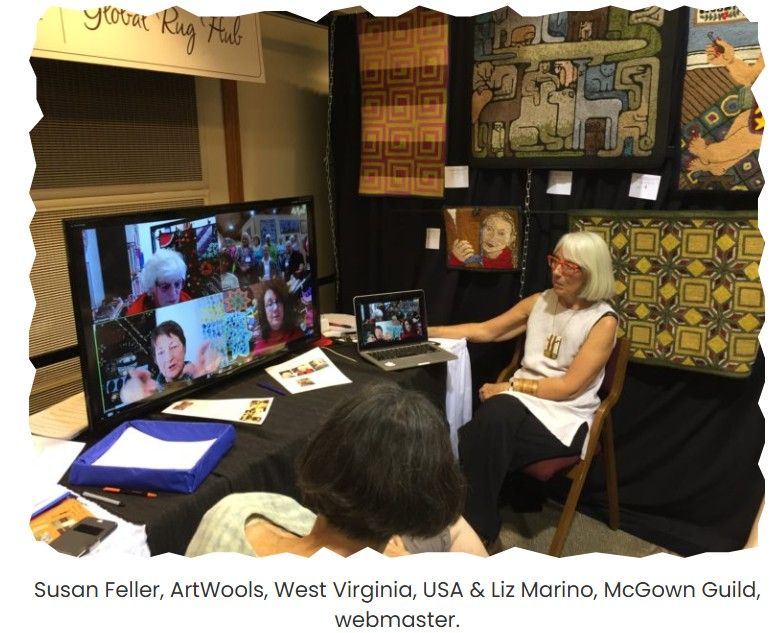
This was followed by a private zoom walk through the exhibition hall with Susan.  By the time the full class came together on the last evening to explore the exhibit again as a group; discuss observations, learn about fibre arts groups, media, and exhibit opportunities, I had seen all the various group exhibits and was there to join them!   Virtually that is, my place at the table being on Susan’s laptop and when the group broke to go look at a particular artworks I went along on her iPad – so didn’t miss a thing. It was all so easy – an excellent way to take part in an event when you just can’t travel.

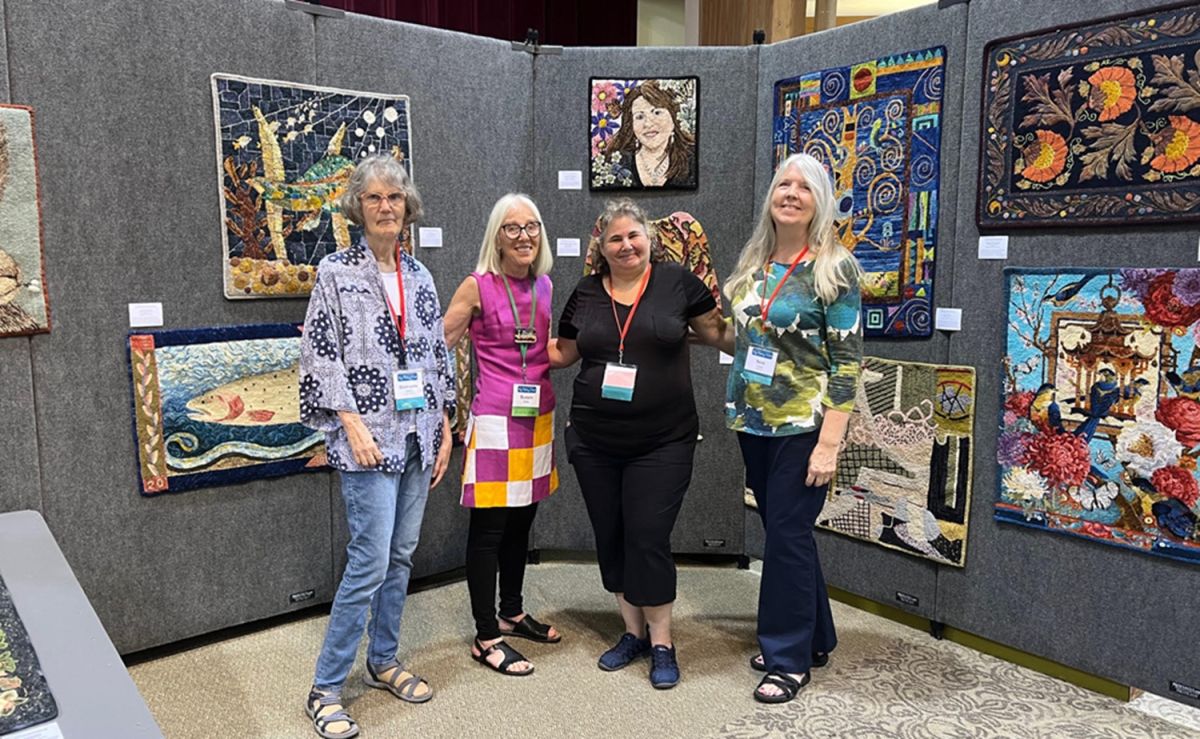
Artist Residency group members on walk thru with Susan Feller viewing Celebration 35 entries.

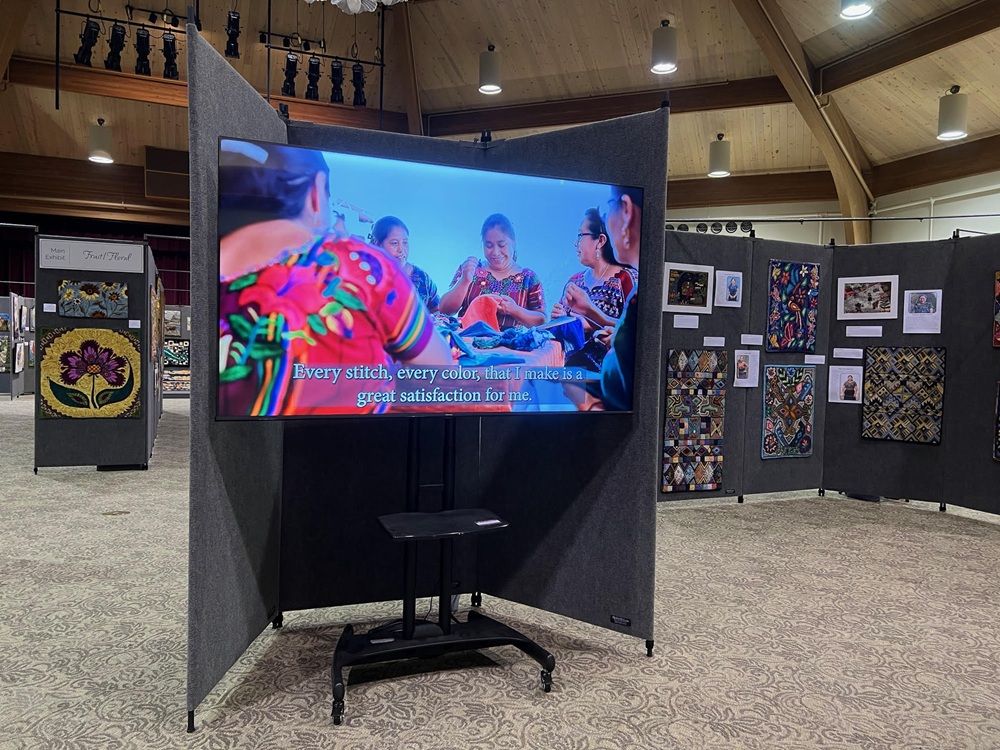
The Exhibition Hall with many exhibitions by rug hooking guilds, groups and individuals, was bookended by two feature exhibitions. Walking in the front door you saw the Multicolores exhibition which consisted of a digital presentation on a large screen and their colourful work displayed off to the side.

At Rug Hooking Week 2018 I listened to Mary Anne Wise, author or Rug Money, describe “How a group of Maya Women changed their lives through art and innovation”, and was moved to buy a copy of the book and have since followed this group on social media, traveling vicariously with the tour groups from Canada and the USA who have attended workshops given by Multicolores members in Guatemala; what an amazing experience that must be. Registration is open now for 2026 Tours    It’s been so interesting to see the growth of the local women who have not only learned to hook and work together to support their families and communities but now understand the social enterprise principles to administer their organization themselves.

Congratulations to the Rug Hooking Week 2025 People’s Choice Award Winners!

Rebecca White Martin was Sauder Village People’s Choice winner of the 3D category with this entry. A full list of Award winners can be seen here.

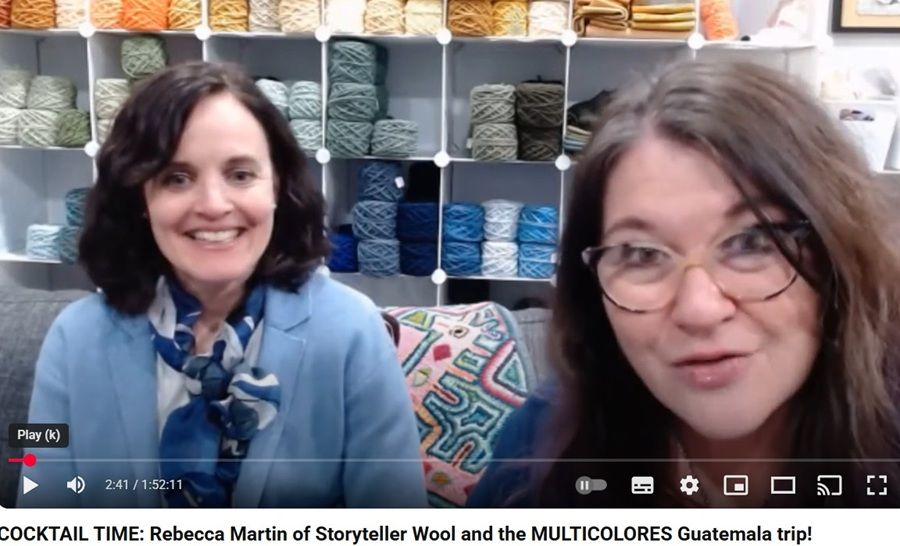
Rebecca lives in Northern Colorado, has had a lifelong love of wool and the fibre arts. As an Educator, yarn dyer, pattern designer, writer – Rebecca wears many hats at Storyteller Wool.  She is a certified Oxford Punch Needle Rug Hooking Instructor and has a McGown certification in traditional rug hooking. Rebecca travels to give workshops; and, she has even travelled to “take” a workshop… in Guatemala with the Multicolores Ruggers!

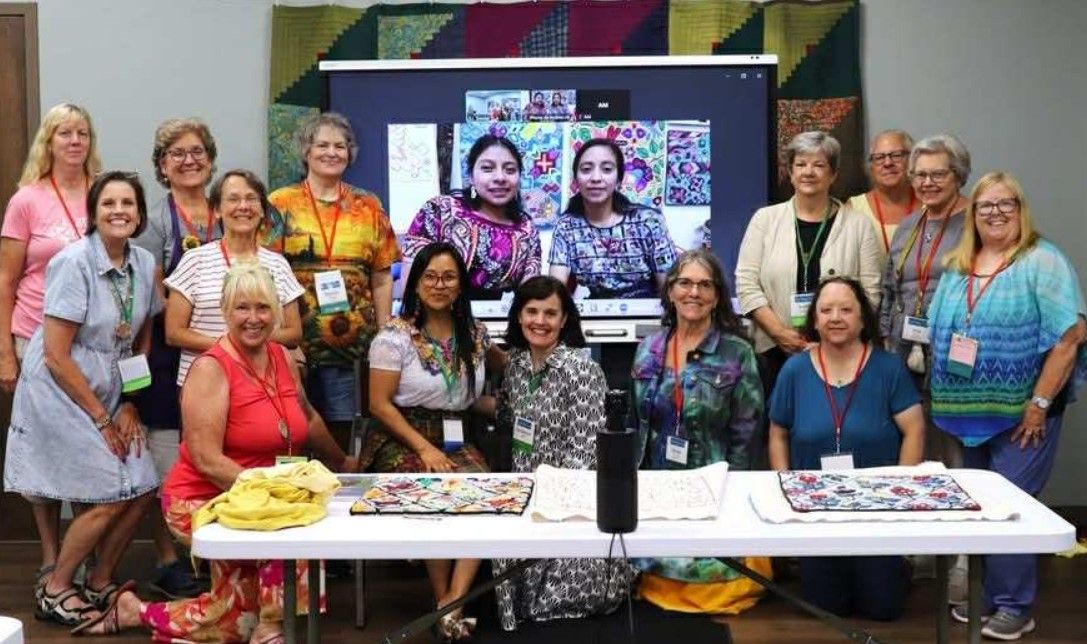
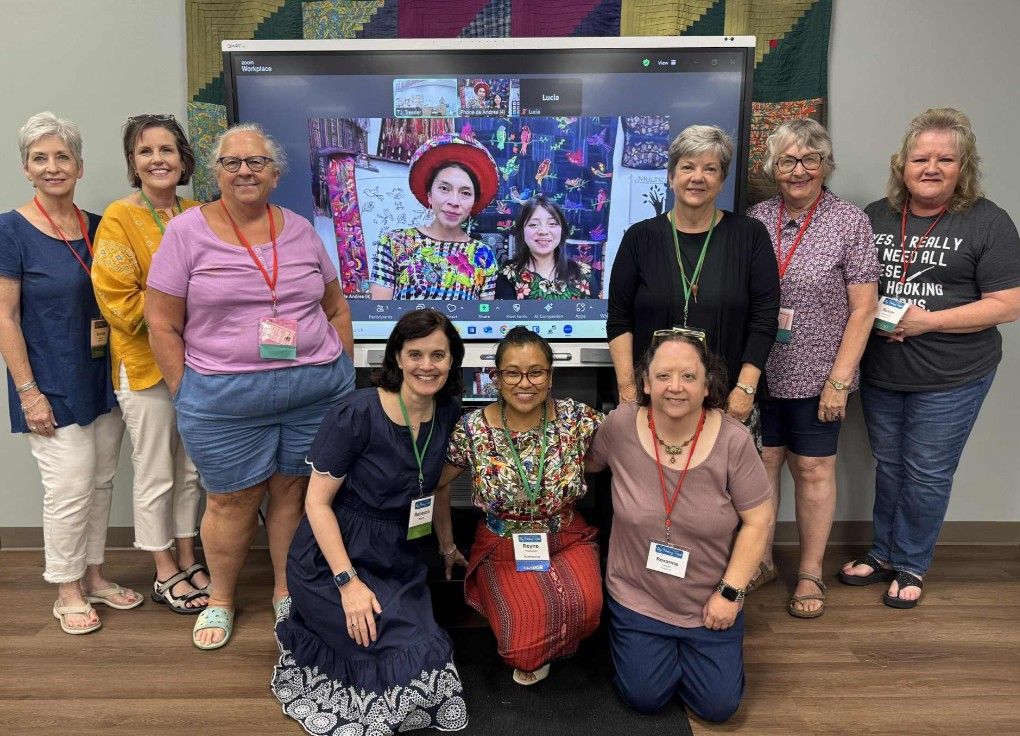
Mine was not the only digital experience at RHW 2025 – there were zoom rug hooking & embroidery classes taught online by Guatemalan teachers, facilitated at Sauder Village by Rebecca. Kim, & Judith, with the teaching fees donated to Multicolores.


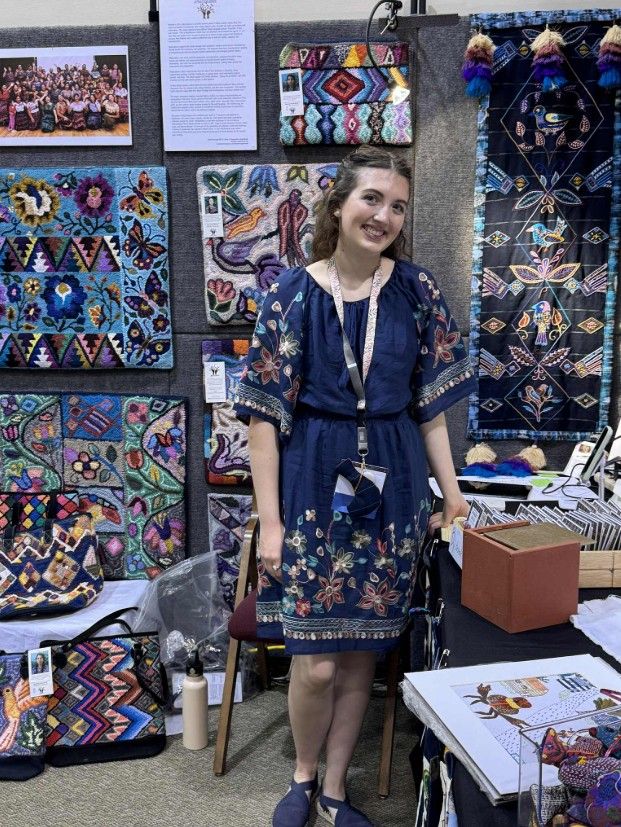
Rebecca’s 20 yr old daughter who’s in her final year of university was thrilled to help all week in the Multicolores booth, she even planned her outfits to coordinate!

You can see more images of Rebecca’s works and workshops and follow her journey in Guatemala on Facebook & Instagram

You may be wondering what a Guatemalan workshop entails? view a video chat with Deana David from Ribbon Candy Rug Hooking and Rebecca about it  here.

Deana is the current President and Rebecca, Vice President of TIGHR 27 (The International Guild of Handhooking Rugmakers)

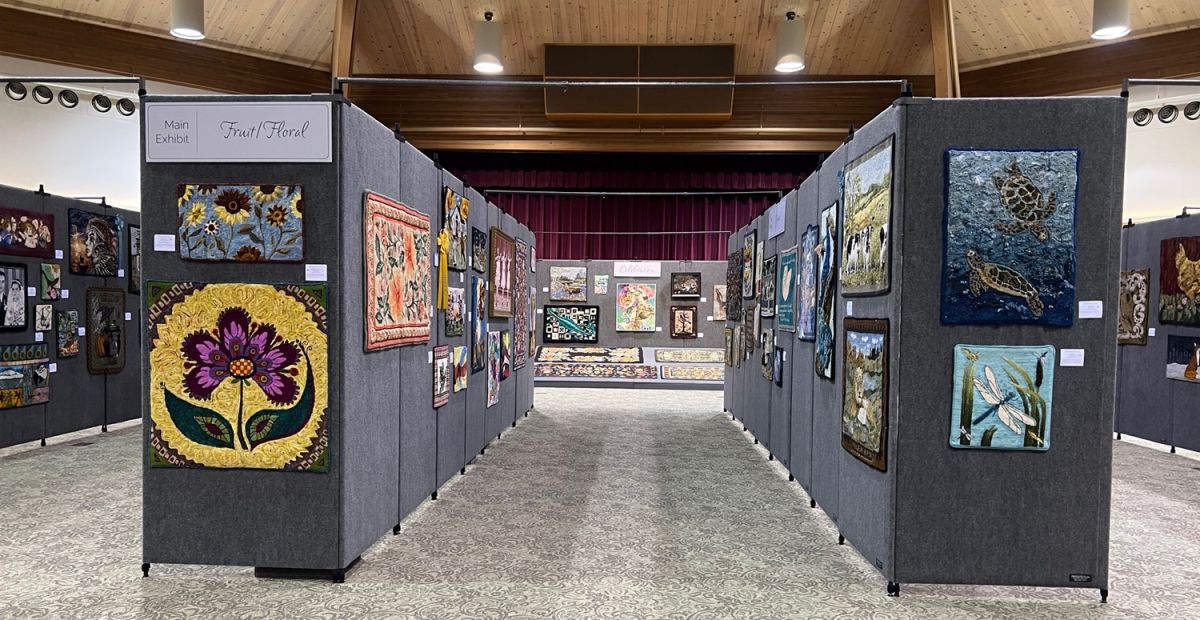
Beyond the Multicolores exhibits – looking down the aisles of the many other group and individual exhibitions

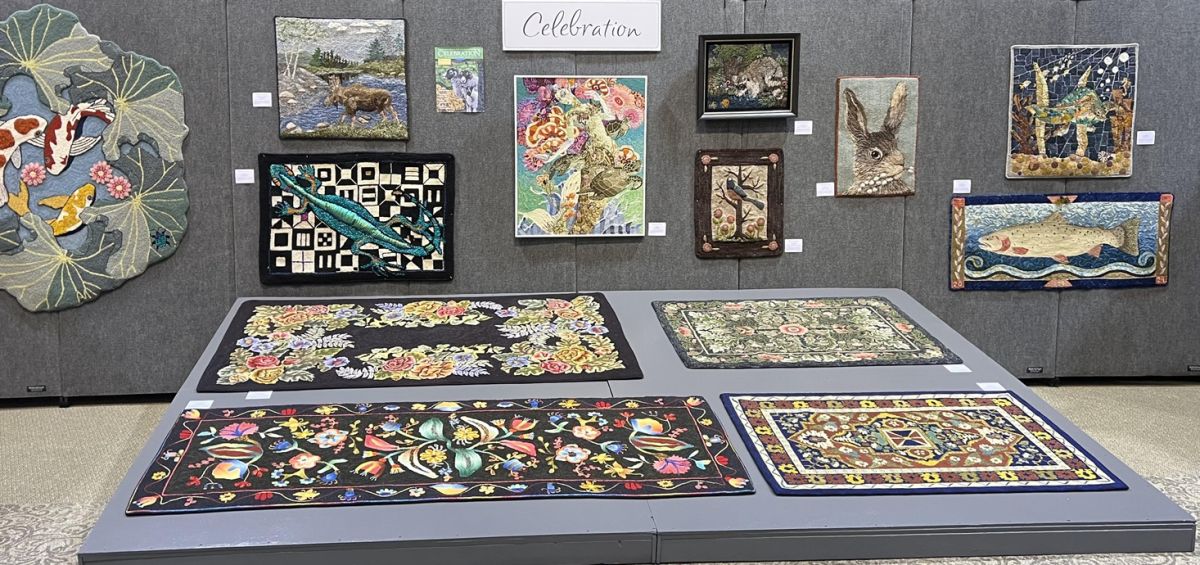
you could see the Celebration 35 pieces. There was just so much to take in, I could easily have spent several days studying all the entries.


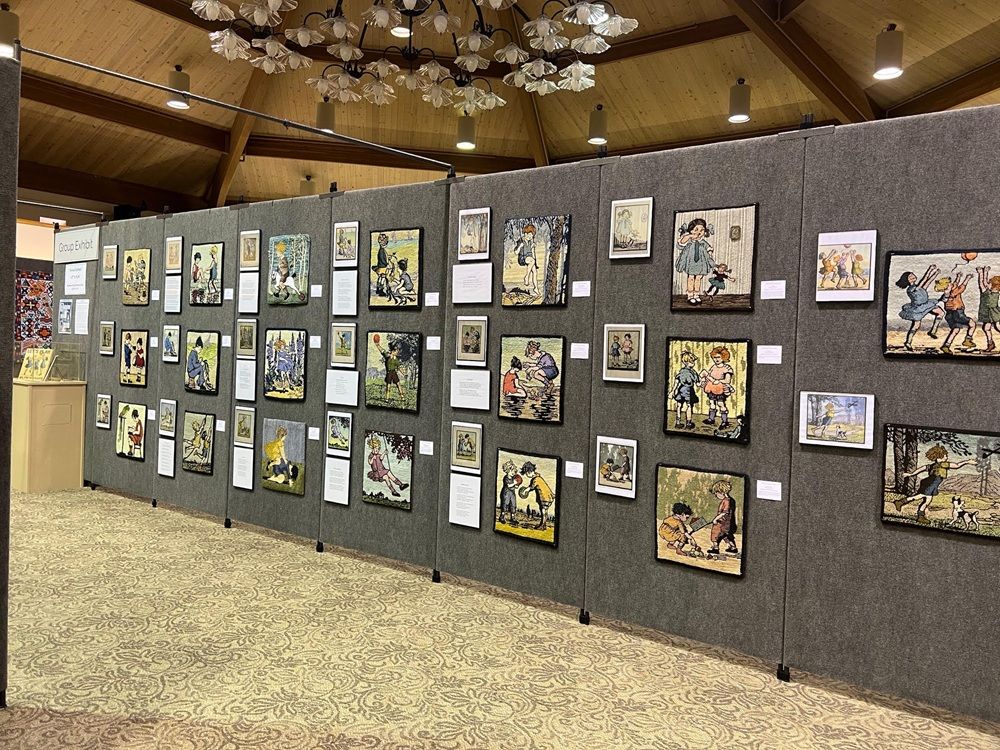
Walking through the exhibitions these works by groups I was not familiar with, really caught my attention.

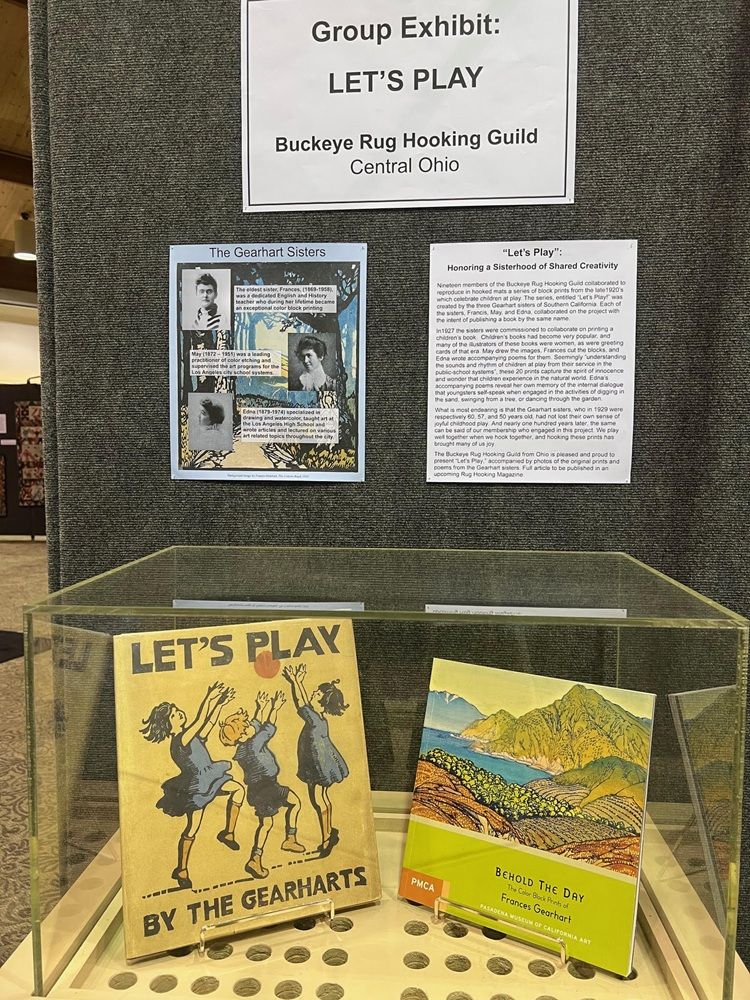
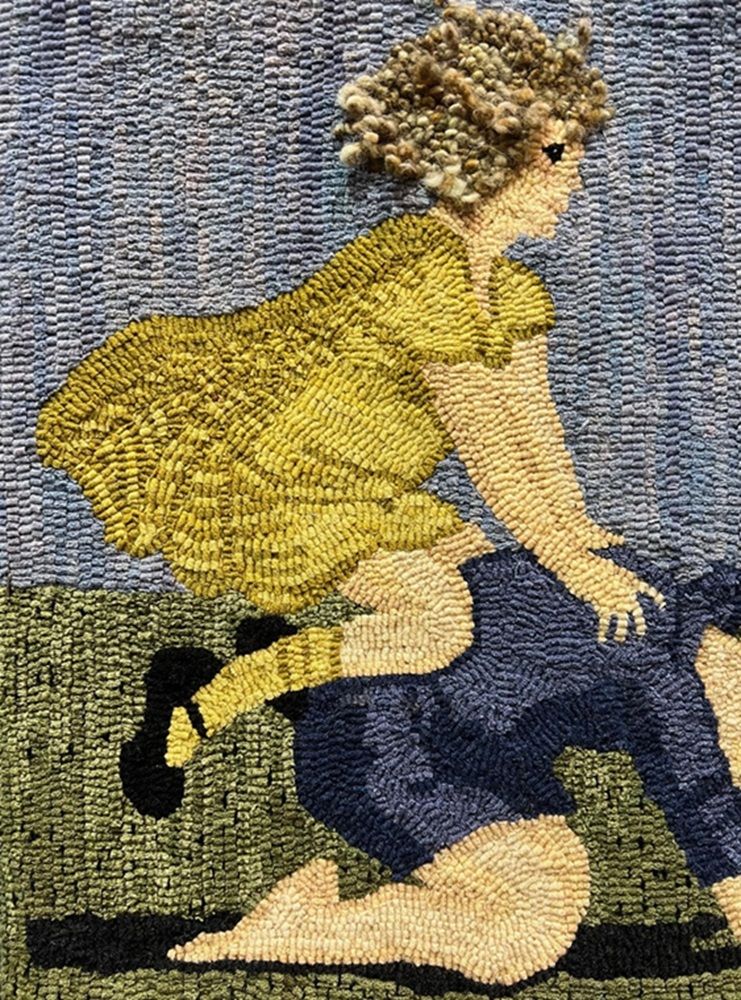
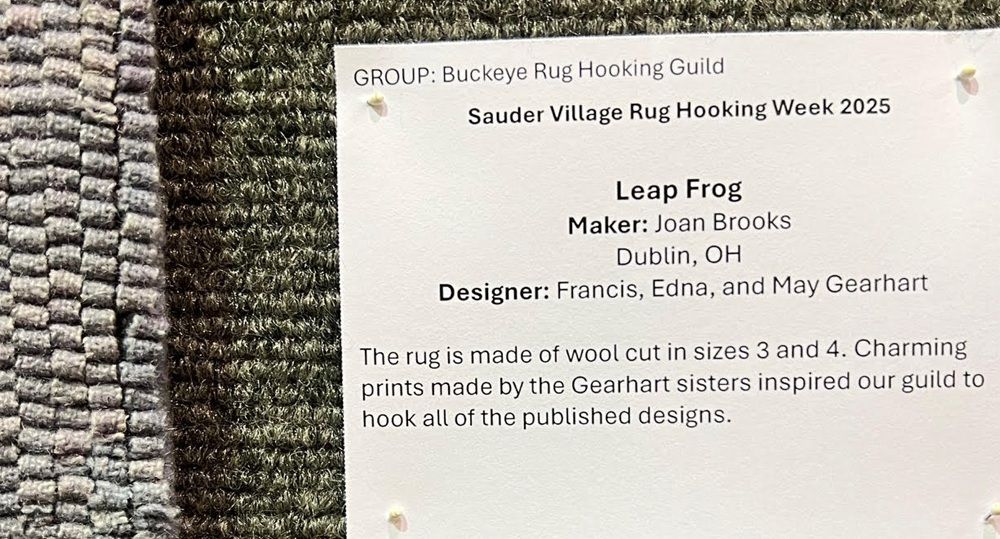
“Lets’s Play” proudly presented by The Buckeye Rug Hooking Guild from Ohio honouring the Gearhart sisters of Southern California who were commissioned in 1927 to collaborate on printing a children’s book – May drew the images, Frances cut the blocks and Edna wrote accompanying poems. The Guild members exhibited hooked pieces accompanied by the photos of the original prints and poems.


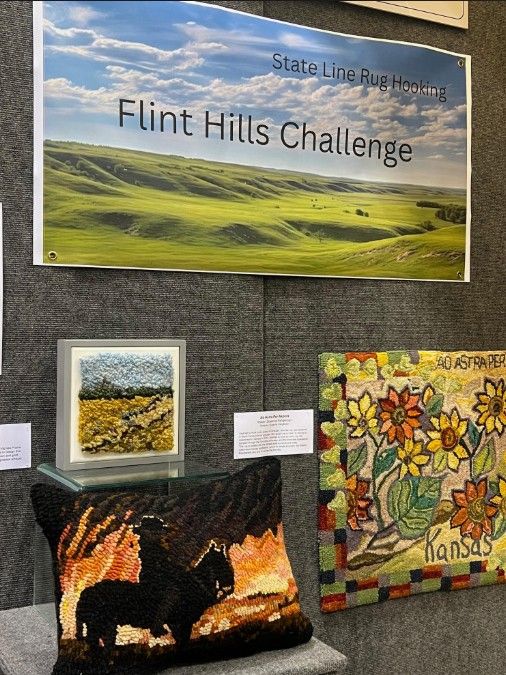
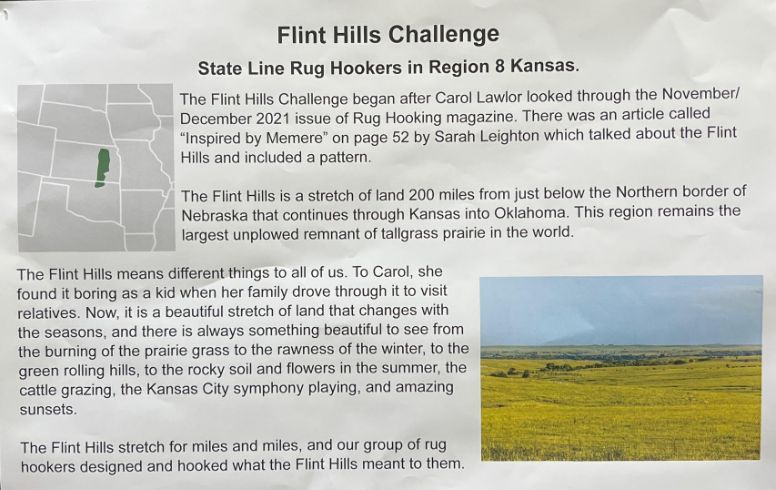
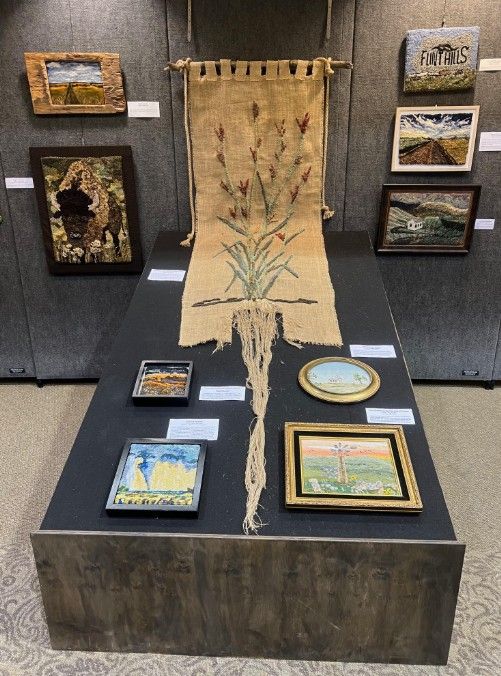
Flint Hills Challenge – This region remains the largest unplowed remnant of tallgrass prairie in the world. A group from the State Line Rug Hookers in Kansas designed and hooked what the Flint Hills meant to them.

Throughout the exhibitions it was interesting to see finishing and framing has taken on significance.

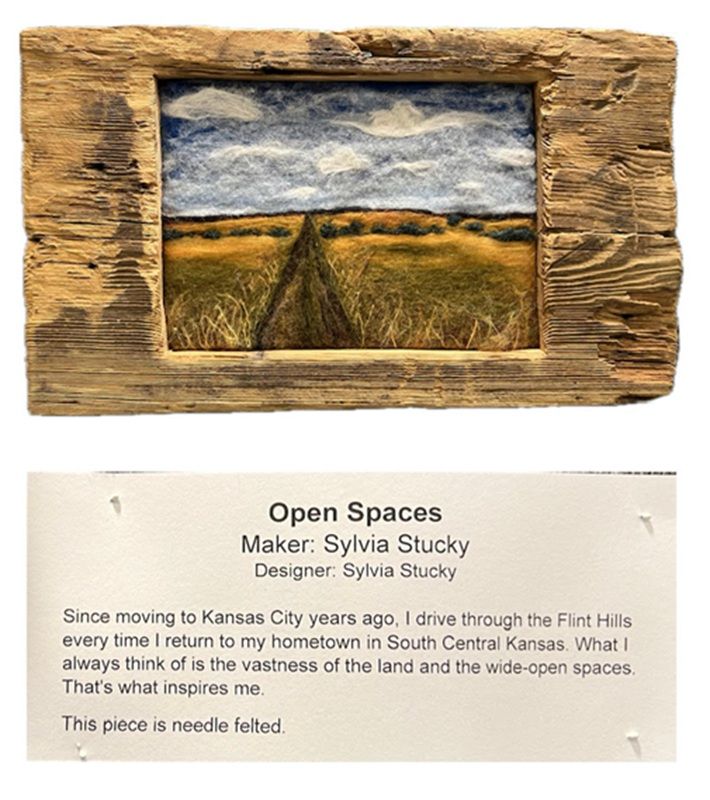
I liked the organic touch of the large central work in the Flint Hills exhibition and the unique frame shown at the top left of this display adds to the perspective of the needle felted scene.

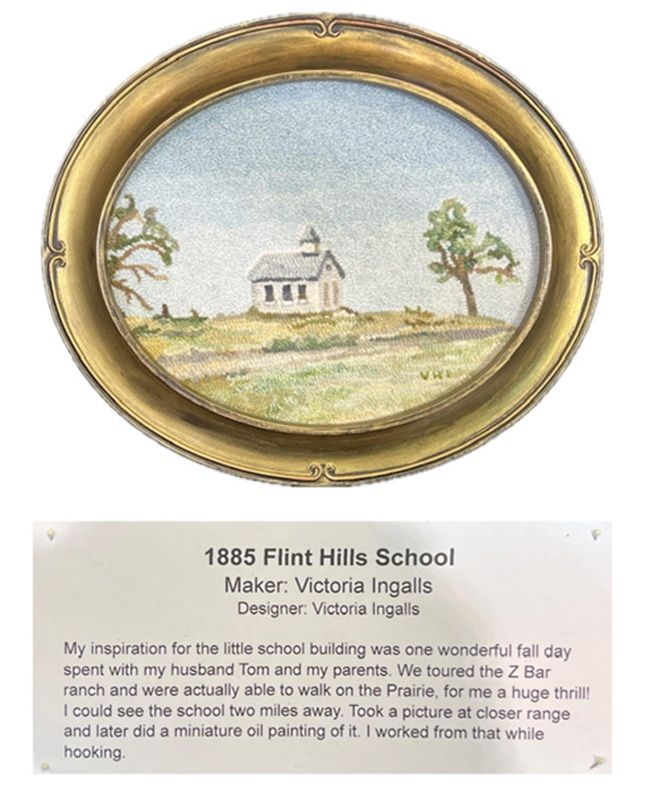
While on the other side of the plinth, a golden oval frame accentuates the soft watercolour look of this piece. As I pull up the image – I see this was copied from a watercolour done by the hooker.


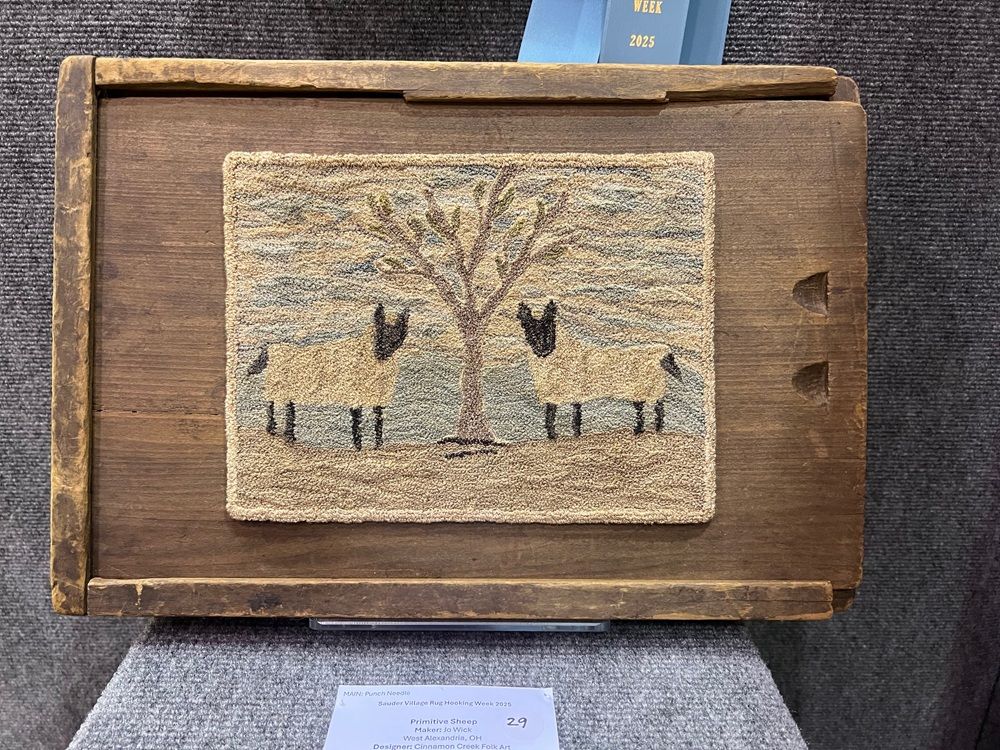
Another interesting way of finishing a hooked piece was shown in the Punch Needle category


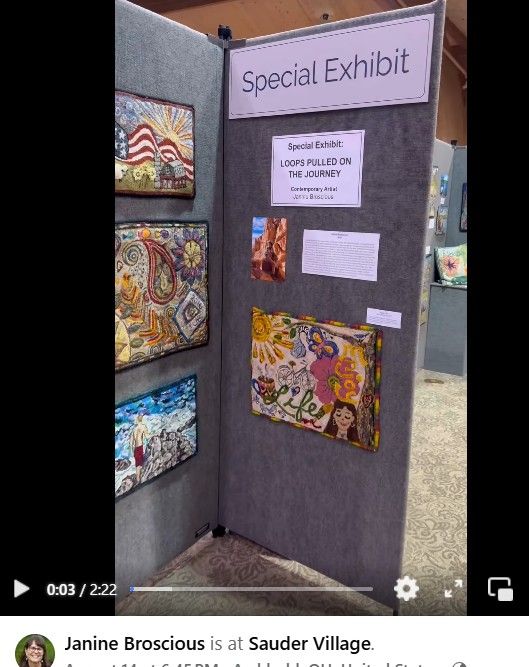
As well as the Rug hooking Guilds exhibits, there were special individual exhibits. This exhibit by Janine Broscious

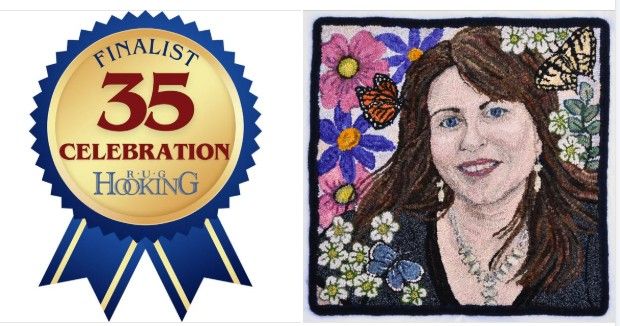
Janine’s been hooking for 10 years. Her exhibit shows pieces hooked since she and her husband who having RVed off and on for about 12 years, moved into their RV full time 8 years ago; living, working and hooking their way around the United States. Janine’s work features their love of the outdoors and national parks. Because of my love of travel and having followed Janine since the start of their journey, I wanted to share (with her permission) a link to her video. Janine is also a finalist in Celebration 35; you can see more of her wonderful hooked pieces on her  Instagram page

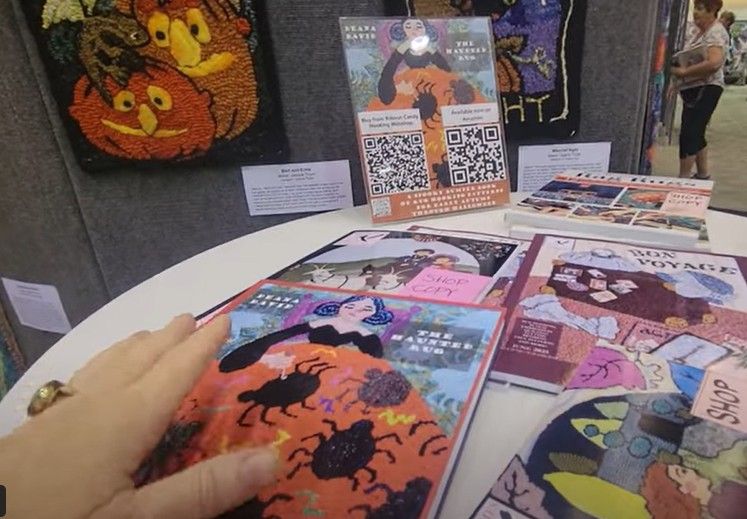
Deana David of Ribbon Candy Rug Hooking & Punch Needle Club is with Barbara Cornish as she gives an impromptu quick dash, rather than “formal walk-thru“ the exhibition – view it here.

Deana gives weekly rug hooking video talks and is a rug hooking designer, author and supplier ,as well as the President of The International Guild of Handhooking Rugmakers (TIGHR) – a very busy lady – would you believe,  went straight from being at Rug Hooking Week to moving house!


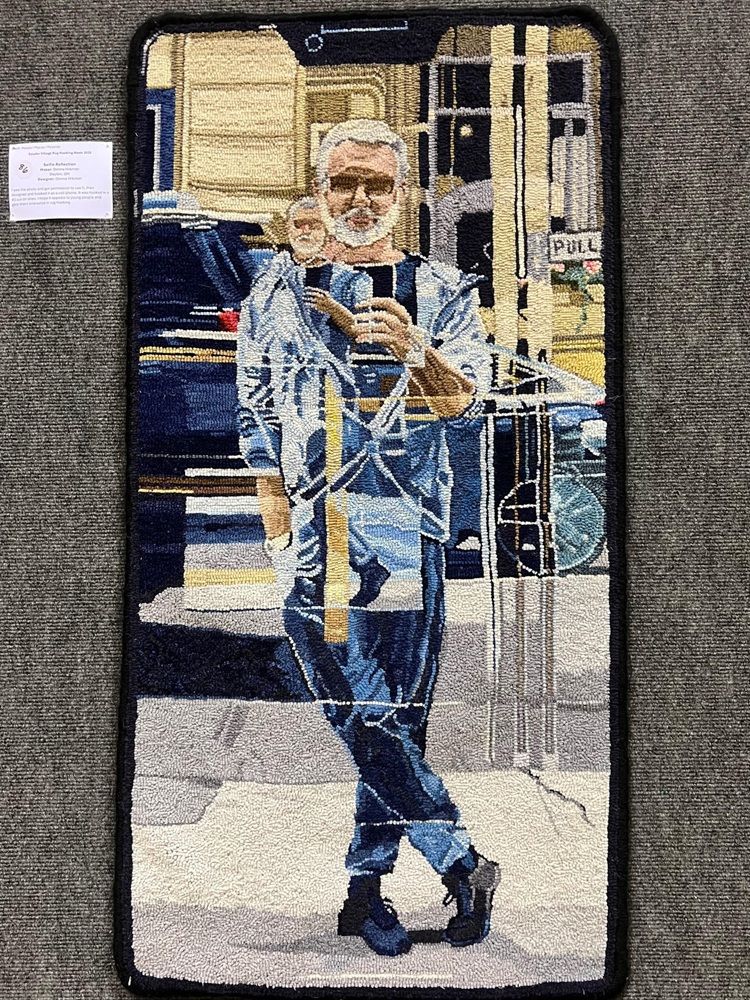
As I continued my “walk through” the exhibition with Susan – even though I was behind a camera, this piece by Donna Hrkman caught my eye. I found the geometry of the colour changes of the reflections fascinating.

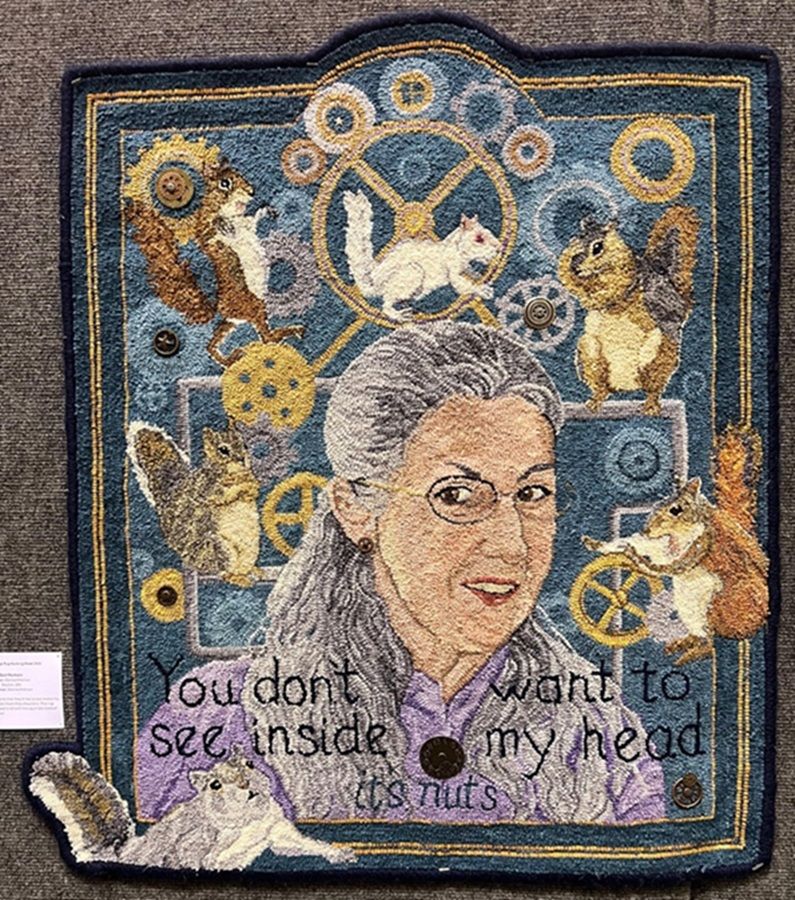
Donna also had this “nutty” self-portrait on exhibit and as we walked past it, she was standing ahead of us talking to a group of people – I must say her likeness in her hooked piece was spot on.

The image below was Donna’s entry in Celebration 35


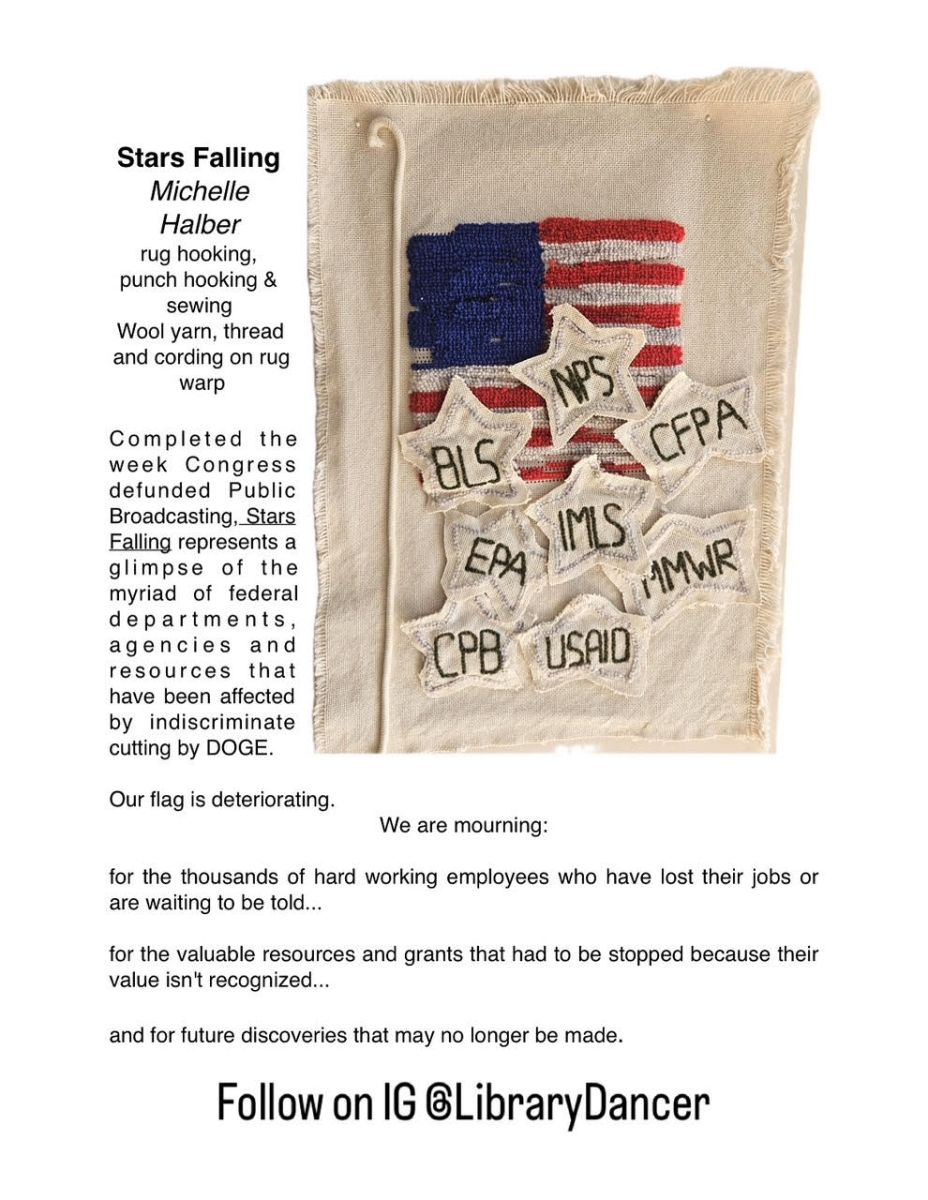
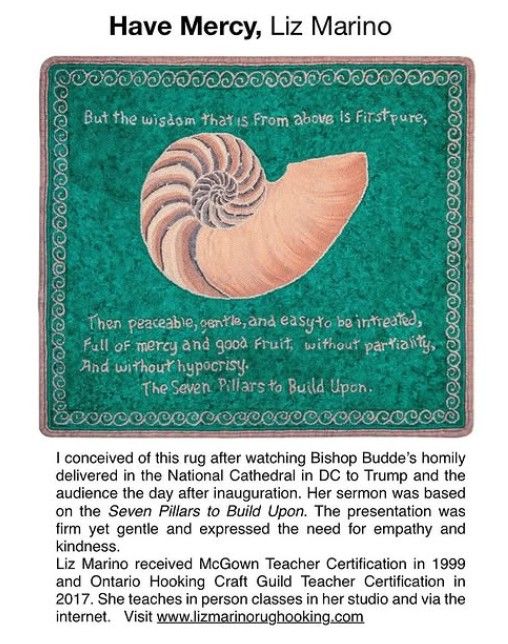
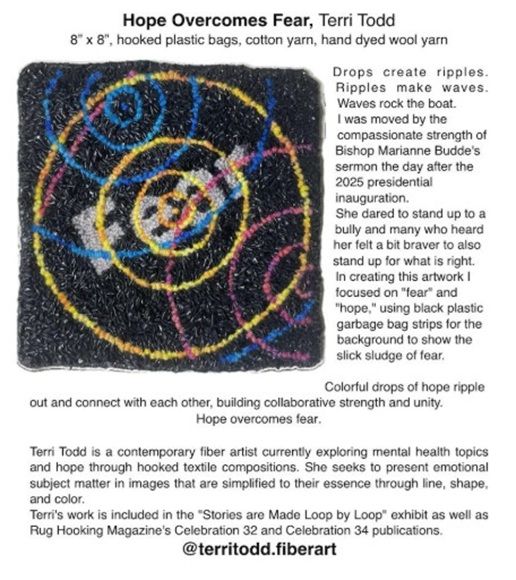
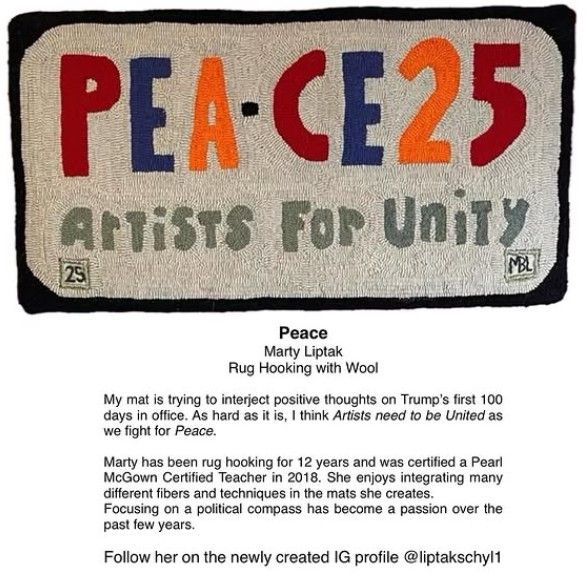
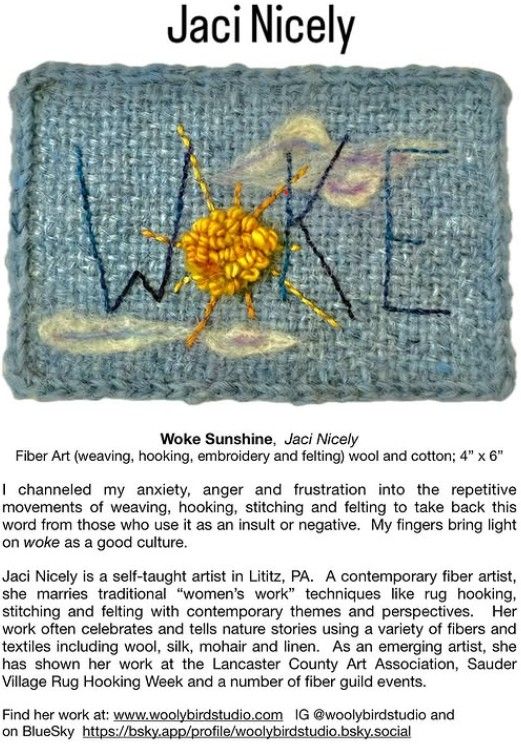
Which brings us back to the final session with the Artist Residency group. As well as discussing the exhibits of Rug Hooking Week, several members of the Artists Residency workshop, Michelle Halber, Terri Todd, Marty Liptak, Jaci Nicely and Liz Marino, had also submitted works to @braveartspeaks an Instagram page exhibiting textile artworks speaking out on current events. The Call for Entries to @braveartspeaks went out earlier in the year with deadline for pieces to be submitted by was June 30, 2025. The works began being posted on this Instagram page, Tues and Thurs starting July 1, 2025.  There is much more to cover on this subject – it’s worthy of another Blog already in the making.

Michelle Halber was putting the finishing touches for the hanging of her piece ” Stars Falling” in an upcoming exhibition


Liz Marino’s work submitted to @braveartspeaks was on exhibit at RHW.

This image of Liz Marino’s work cannot fully convey the detail and texture present in the original work that I saw on display. Viewed up close, the intricate lettering and the fine circular border are meticulously hooked, adding rhythm and texture to the piece.

The chosen colour palette was thoughtfully applied to reinforce and elevate the piece’s central message of peace.


These works and Artist Statements by Artist Residency group members,   Jaci Nicely, Marty Liptak, and Terri Todd, are posted on @braveartspeaks…


Susan Feller is well qualified to take you on a gallery walk-through and compare the technicality of the works; she has attended Rug Hooking Week as a vendor, exhibitor, presenter, and instructor for almost two decades. Susan served on the boards of several fibre organizations. Her art has been juried into national exhibits, received awards and is in private collections. Susan’s networking skills include advocating for the arts community in West Virginia. Telling stories through visual art, spoken and written material, encouraging communities to connect with history and current events. Visit her website for details and examples, Here are her social media links. –  Facebook & Instagram

I first met Susan in 2006 at The International Guild of Handhooking Rugmakers’ Triennial Conference in Wales where she was elected the incoming President for USA, 2006-2009. We met again in Louisville, Kentucky, USA in 2009 when Australia was voted in as the next host country 2009-2012. Then it was Susan’s turn to make the long trip to Australia for the 2012 TIGHR Triennial Conference in Strathalbyn, South Australia. Our paths had crossed at Gene Shepherd’s Cambria Rug Retreat in 2011, where I took Susan’s design workshop, again at the 2013 ATHA Biennial and at the TIGHR Triennial on Vancouver Island in 2015 – and yet again in 2016; while on a trip around the US visiting family and friends with my husband to celebrate his 80th birthday and our 50th wedding anniversary – we had lunch with Susan and Jim in their West Virginia home.

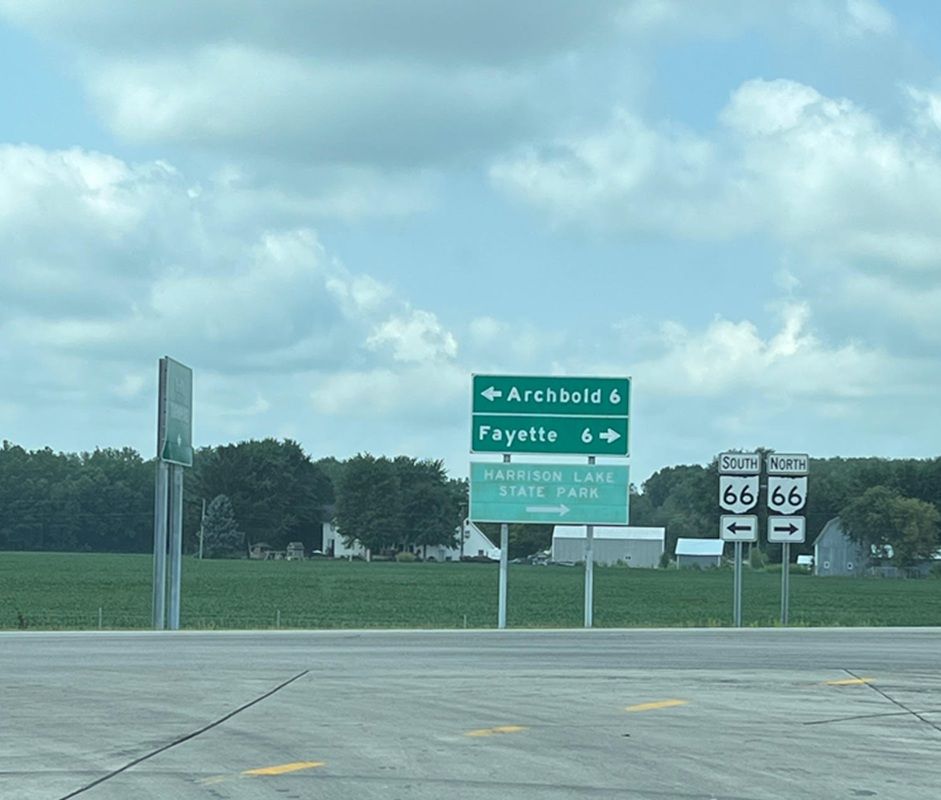
In 2018, when as a member of the Global Textile Hub, I flew halfway around the world to Sauder Village to present in person, an online mixed media exhibition showing in a virtual gallery.  Susan offered to pick me up from the Detroit airport in Michigan on her way from West Virginia to RHW in Archbold, Ohio,


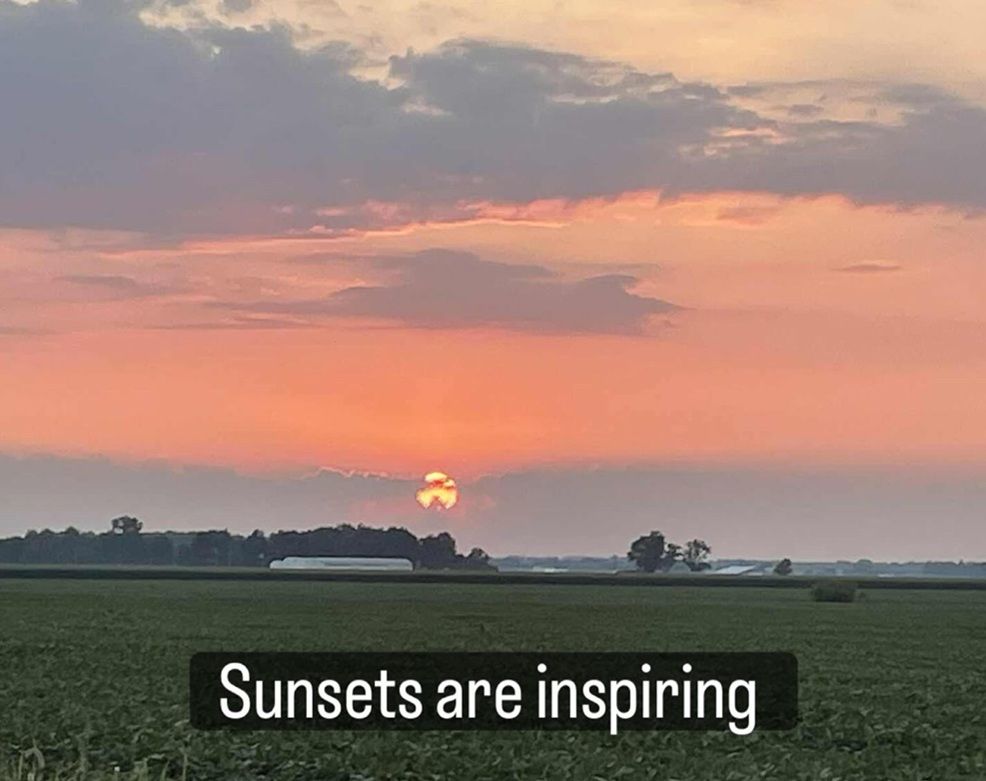
so images taken on her trip this year were familiar to me. Susan left home in West Virginia at 5.30am, the beginning of her the long 7 hr drive alone to Sauder Village, with just one stop on the Ohio Turnpike for gas, photo documenting her trip along the way. The turn off to Sauder Village, and heading into Archbold, Ohio as well as sunset across the vast fields –


The following year 2019 I returned “virtually” to RHW at Sauder Village, along with my GTH Team members Judi Tompkins and Kira Mead.  Susan was our on-the-spot coordinator introducing our video presentation and fielding questions and facilitating conversations with the viewers at Rug Hooking Week in Sauder Village and others tuning in from around the globe


Then came COVID 19 and

a second online exhibition in a virtual gallery with entries from around the globe was debuted at Rug Hooking Week 2021 and Susan, Lead Juror, of “Re-Imagined” a Collaboration with a Difference: Make the Ordinary Extraordinary, stepped in again to facilitate not only the virtual gallery presentation to viewers at Sauder Village, she was also the hands on support for an online workshop given by Kira Mead, the Accidental Rugmaker of standing wool rugs.

Since then, Rug Hooking Week has grown significantly – reaching out to those who just can’t travel to view the exhibits and take part in workshops held in Sauder Village and being given online at Sauder Village.

So, follow RHW on Facebook and when you see Rug Hooking Week 2026 announced,and you’d love to attend but can’t travel, give some thought to attending the events and workshops virtually, it is as ‘they say’ – very doable.  I can vouch for that.

My first rug hooking commission

Recently, while watching a free video workshop by Deana David for members of TIGHR (The International Guild of Handhooking Rugcrafters) I saw a rug designed by Claire Murray, from Massachusetts, USA, and was reminded about the challenges of hooking this rug design in 2019 and how it came about.

Since the website RughookingAustralia went online in 2014, I have received many requests for help and advice; people looking for other rug hookers, tools or supplies, and occasionally for repairs to treasured family rugs.  With my connection to groups across Australia I have been able to help put many people together.

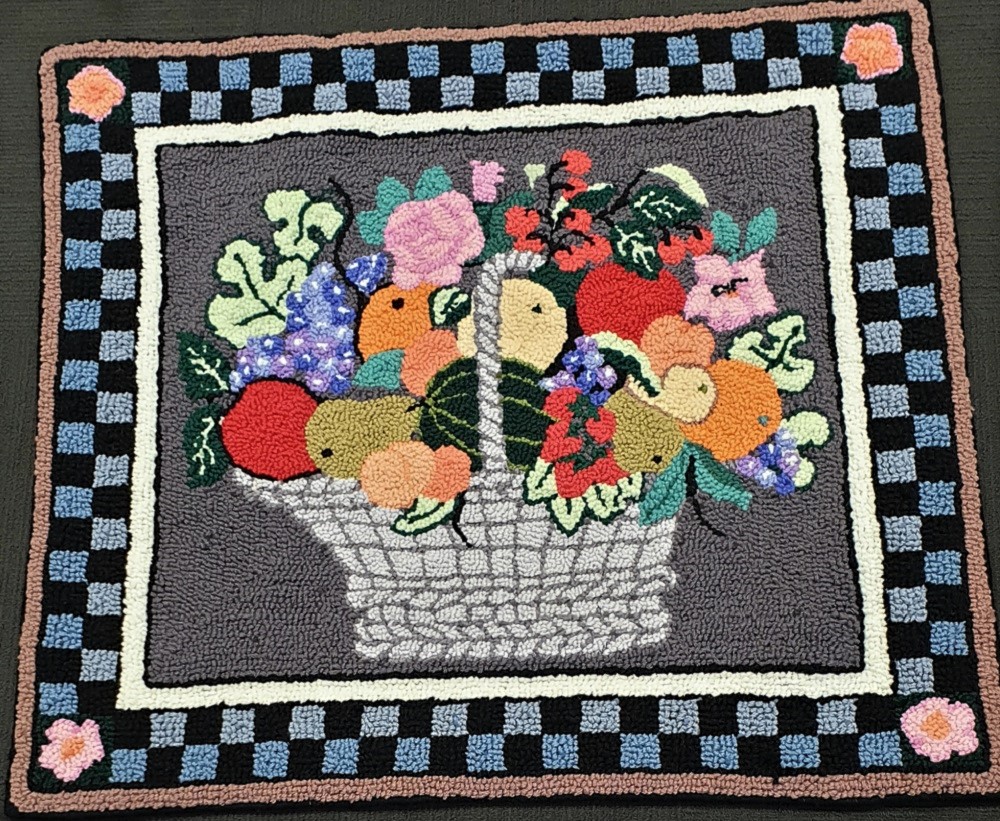
In December 2018 a request came in from a woman in Brisbane who 30 years previously while living in Melbourne had started painting (Folk Art) and fell in love with what she called  the American primitive decor and the look of hooked rugs. She bought this Claire Murray rug kit (design, wool yarn and tool) and a rug by the same designer already hooked which she said was quite expensive at the time.  She’d done cross stitch, and attempted a tapestry neither appealed to her, so feeling rug hooking would be the same, she was looking to pay someone to hook the rug. The owner was moving into a new home and wanted to put both rugs on the floor.

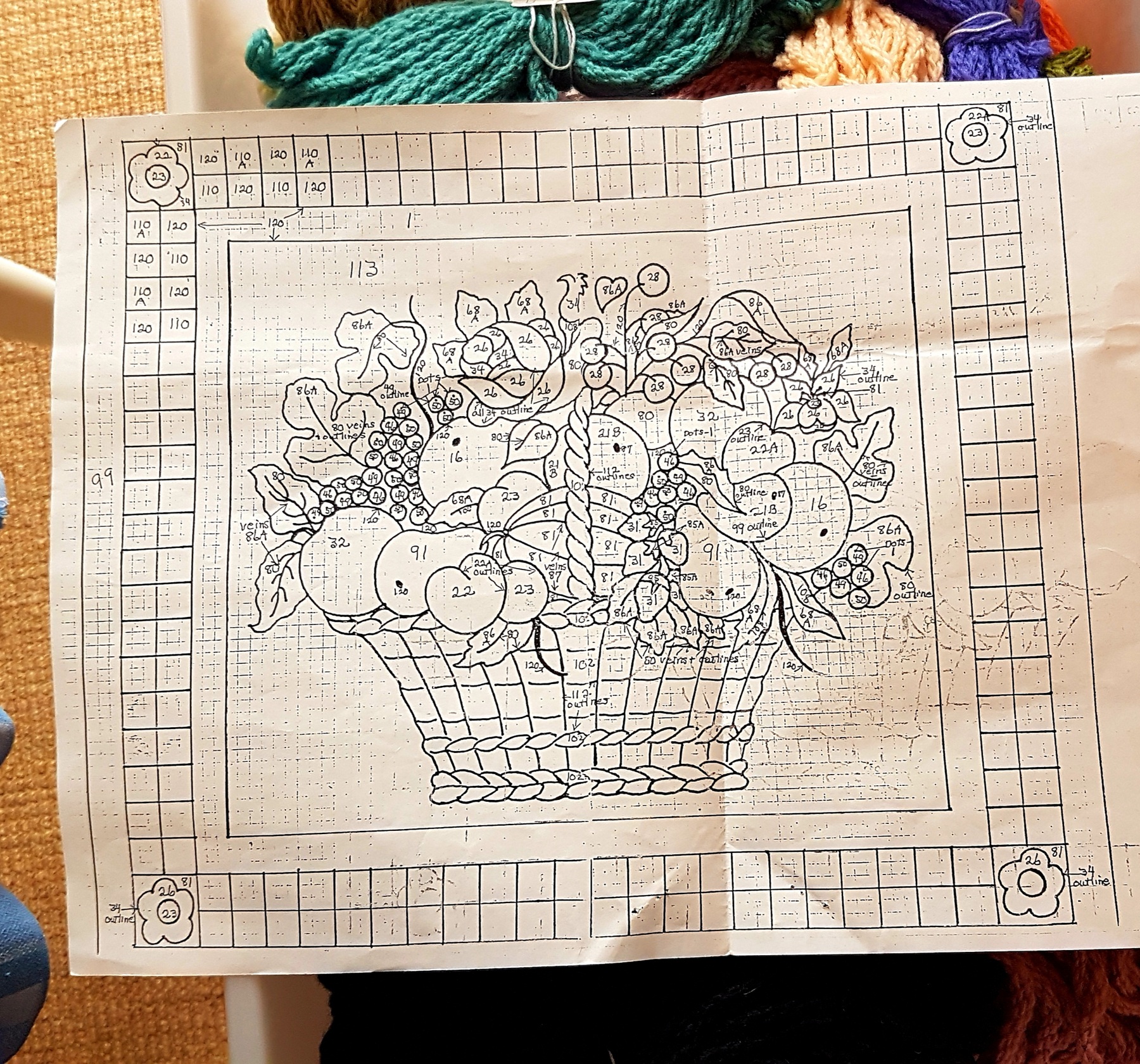
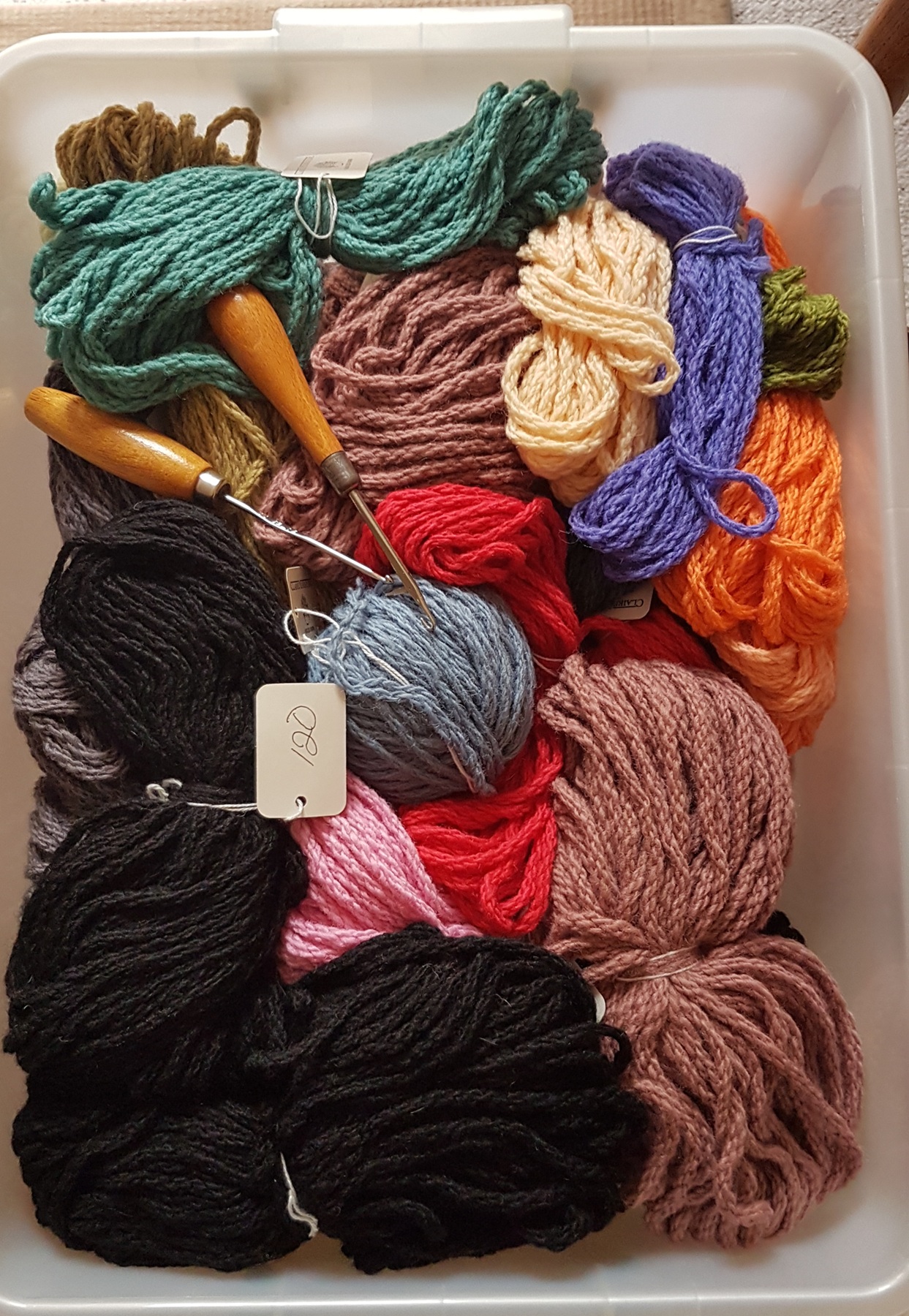
I put the word out but none of the rug hookers from groups around the country were interested in taking on the commission. As I had nothing on my frame at the time I decided to do it, even though florals would not have been a personal choice. I’d only hooked one rug with yarn so saw it as a challenge.  Challenge, how hard could it be?  should be easy as it came with a coloured picture of the design and each of the shapes were numbered with corresponding numbered hanks of woollen yarn. I told the owner not to send the tool as I preferred to use my own hook. As it turns out I would not have used either of the tools pictured with the wool, one was a latch hook and the other had a shank that would have been way too long for the way I work the traditional rug hooking technique.

Determining what to charge was my first challenge.

I reached out to members of the international guild and found that this is a subject for another time because it’s complex, so much depends on who the hooker is and what they create, craft projects, or one of many pieces produced for sale or the work of an artist who has a high profile and/or has exhibited work in prominent venues.

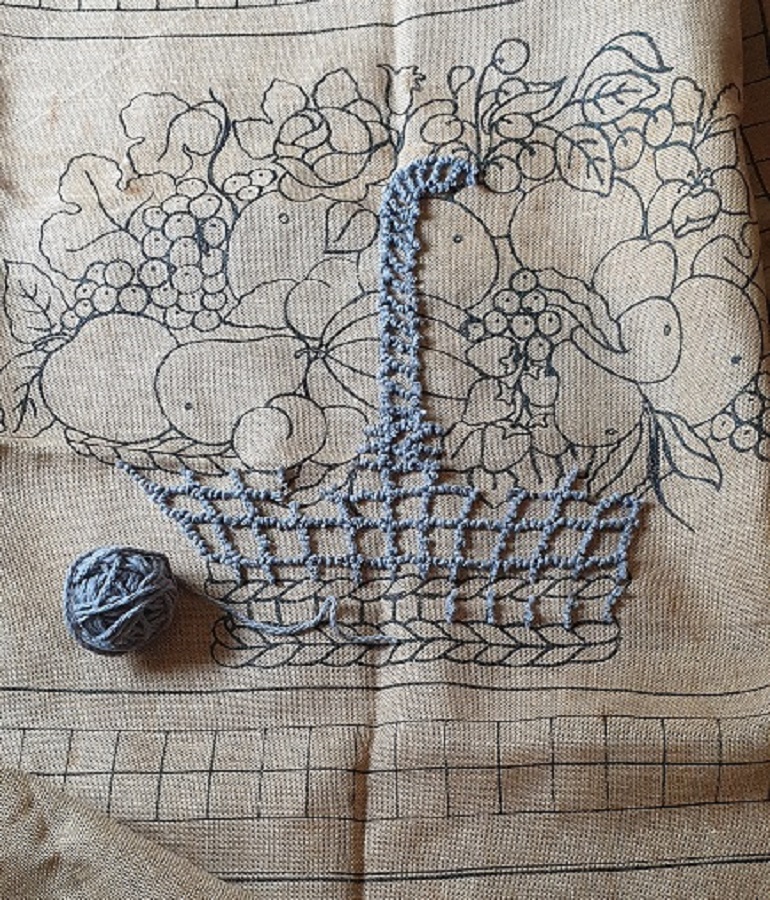
Since the kit was old and had been opened, with some hanks rolled into balls, I was concerned about not having enough yarn, so decided to hook the basket outline first as there was only one ball of wool of that colour. Turns out there was enough to complete the outline of the basket with a little to spare – indicating my tension and loop height must have been correct. I became enthralled with the different colours and kept hooking and before I knew it, I’d almost completed the basket, flowers, fruit and leaves. That was the easy part, not having to colour plan, just follow the numbers and hope you had enough of each colour.

Then the finish of the rug needed to be considered, because I find once it’s all hooked it’s difficult to handle a large piece, on the sewing machine to zigzag edges or stitch on the facing.

Tape was provided in the kit, for finishing the hessian edge but I could see that the last narrow border to be hooked in black was not an even width around the rug, and there didn’t appear to be enough black yarn, or tan yarn for that matter, so I decided to add a corded edge, whipped with some additionally purchased black wool and apply the tape as a facing on the back at the base of the corded edge.

However, by far the biggest challenge was…

What do you do when you start working on a rug and find there’s a problem with the printed design, especially if the piece is not yours?

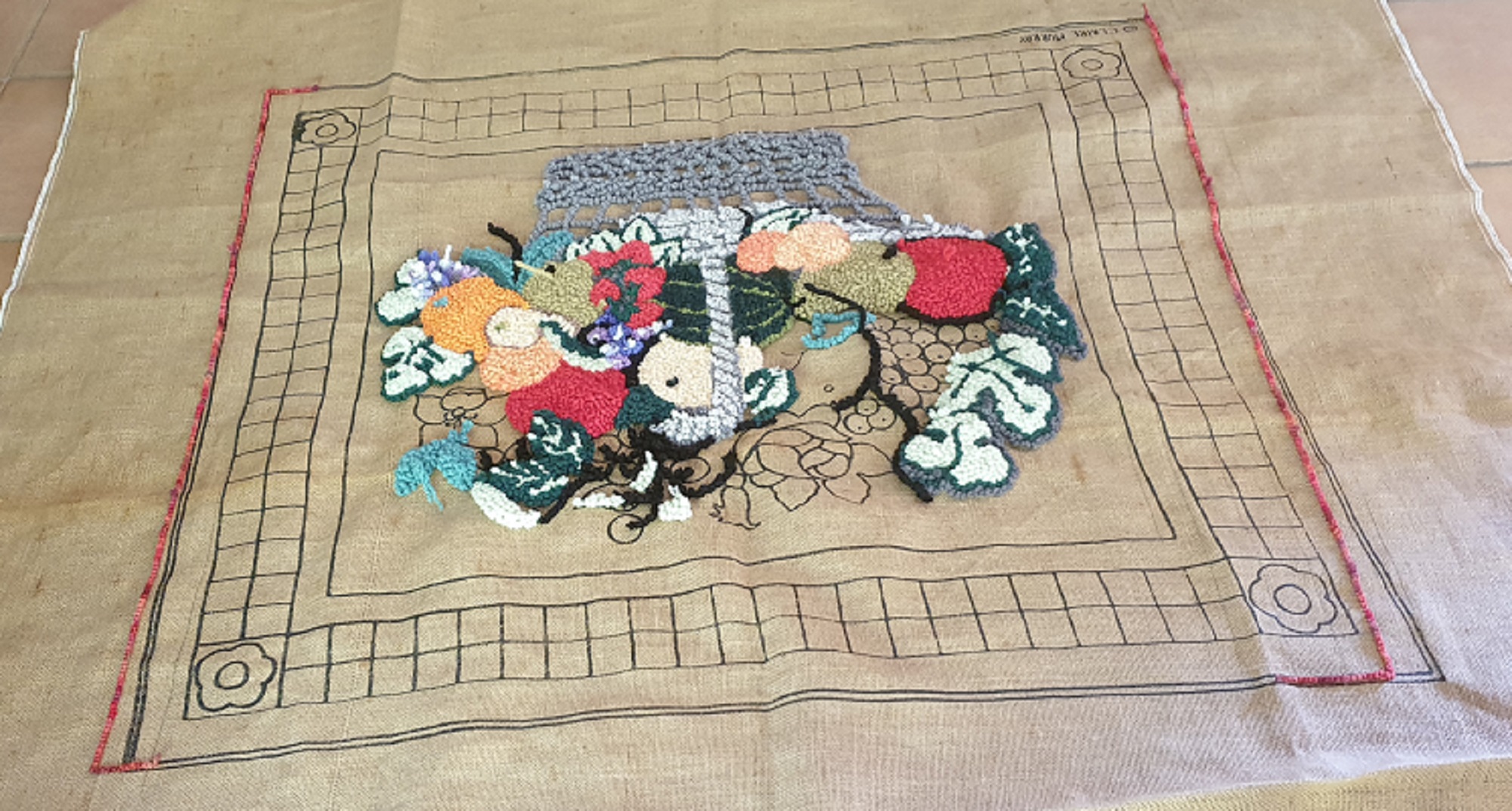
During this preparation process I discovered the design on the sides had not been drawn straight on the weave.

It would probably look alright hooked as is, but on my tiled floor the “off” shape of the sides would be obvious, and I’d know it wasn’t right – that would make the difference to me. This pattern was not an original no matter what the pamphlet said – it may have been an original design but the pattern had been printed on the backing. Misalignment in patterns can happen during the printing process, that’s why individual hand drawn patterns are so expensive.

The obvious fix was to re-draw the border, however this would impact the central motif, it would no longer be “centered” and besides there was not enough of the grey coloured yarn to add in extra background around the basket. There was no way I was going to pull out the central motif and reposition it, I couldn’t risk re-hooking as in several cases there had just been enough of the colour to complete the individual shapes. However, I was not able to escape some re-hooking, I’d hooked the grey background following the shape of the central motif and come up short of grey yarn so pulled it out and re-hooked in straight lines from the border inward and managed to make the grey go further. I see now on the coloured pamphlet image that two shades of grey are shown in the background, however on the instructions there was only one number indicated for the grey and no other wool.

Had the piece been mine I would have changed the border design, so the problem wasn’t as obvious, but the owner had purchased the kit to go with a companion rug that had a similar checked border. I sent off an email to her listing a couple of alternatives for fixing the problem which would not take as much time as redrawing the borders, squares and medallion flowers. Not being a rug hooker herself, she left it up to me to decide. The lack of wool yarn determined the final decision; hooking the piece as it was with only 3 rows of tan colour instead of 5 and finishing off with a corded edge whipped with black yarn which I felt gave a firmer finish and would be more protection than just a folder over edge with a single row of hooking as shown on the instructions.

The rug was then rolled and mailed in what probably looks like a most unconventional way. I’d used this method of shipping before, and it worked. I sent email instructions warning her to be careful in the unwrapping process; cutting the tape without cutting into the rug .

It arrived promptly and was safely opened, and the owner was delighted to have the companion piece to add to her new home, and I sighed with relief looking at the small amount of leftovers.

Presenting Dreamtime Mats

ISSN 2207-001X – May 2025

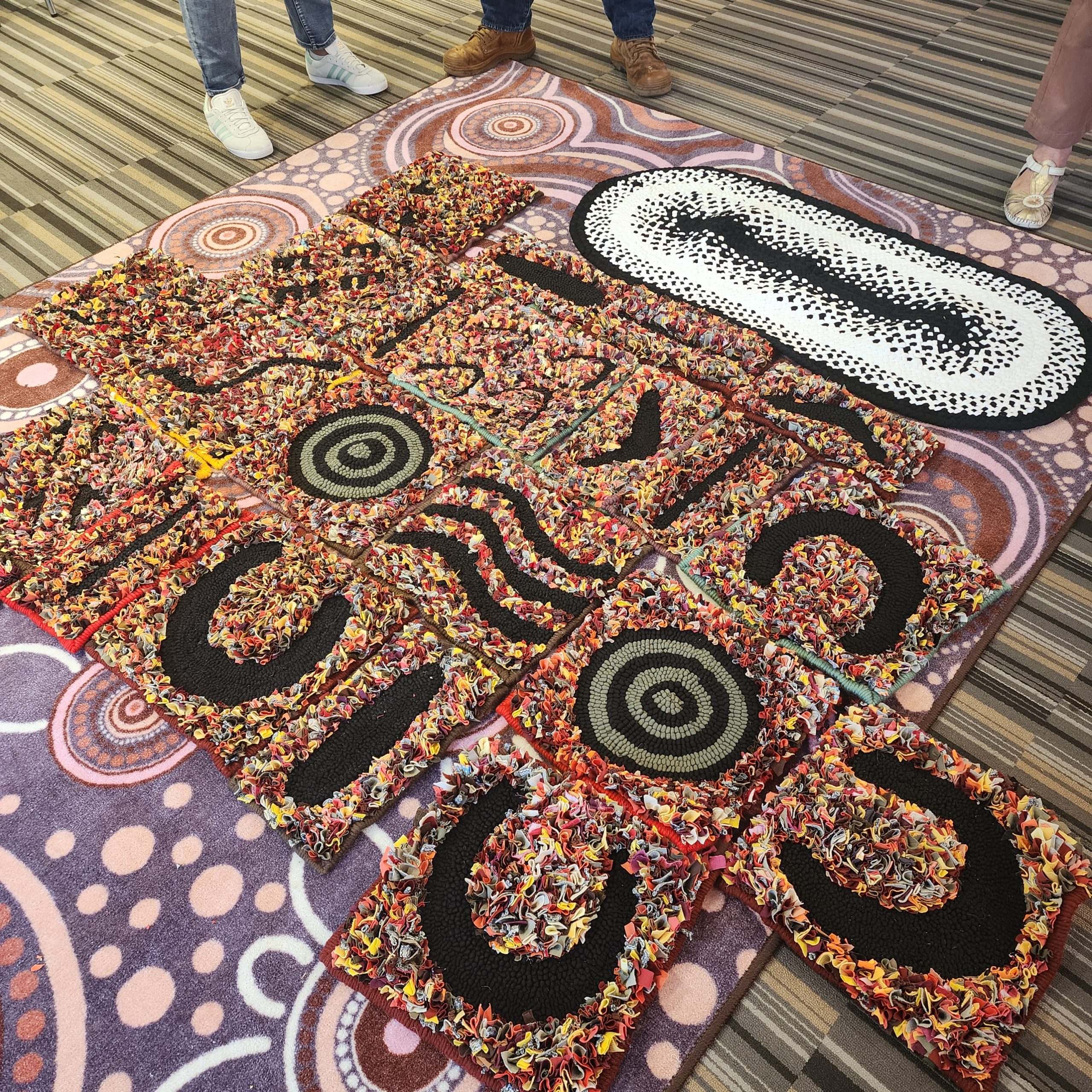
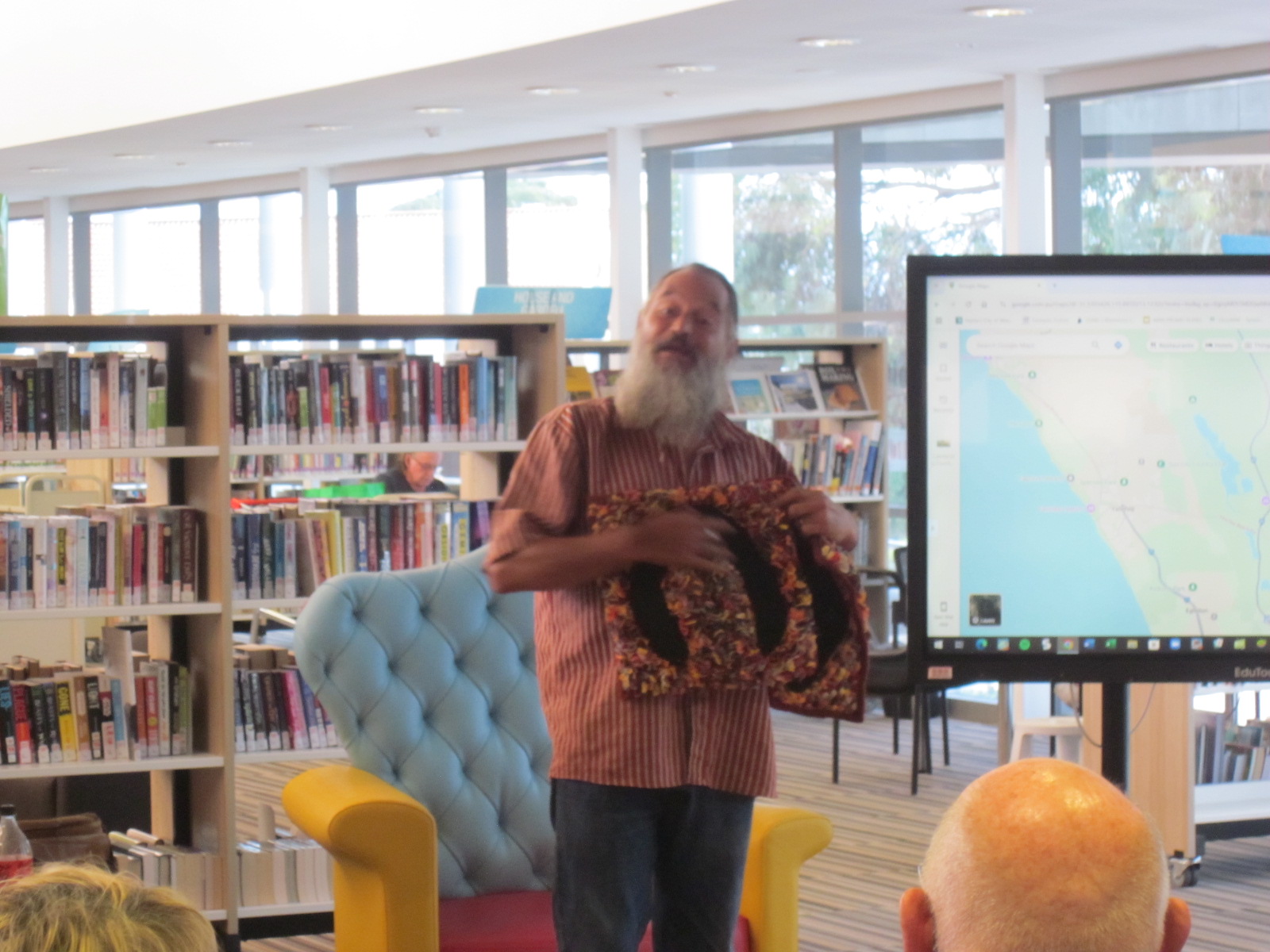
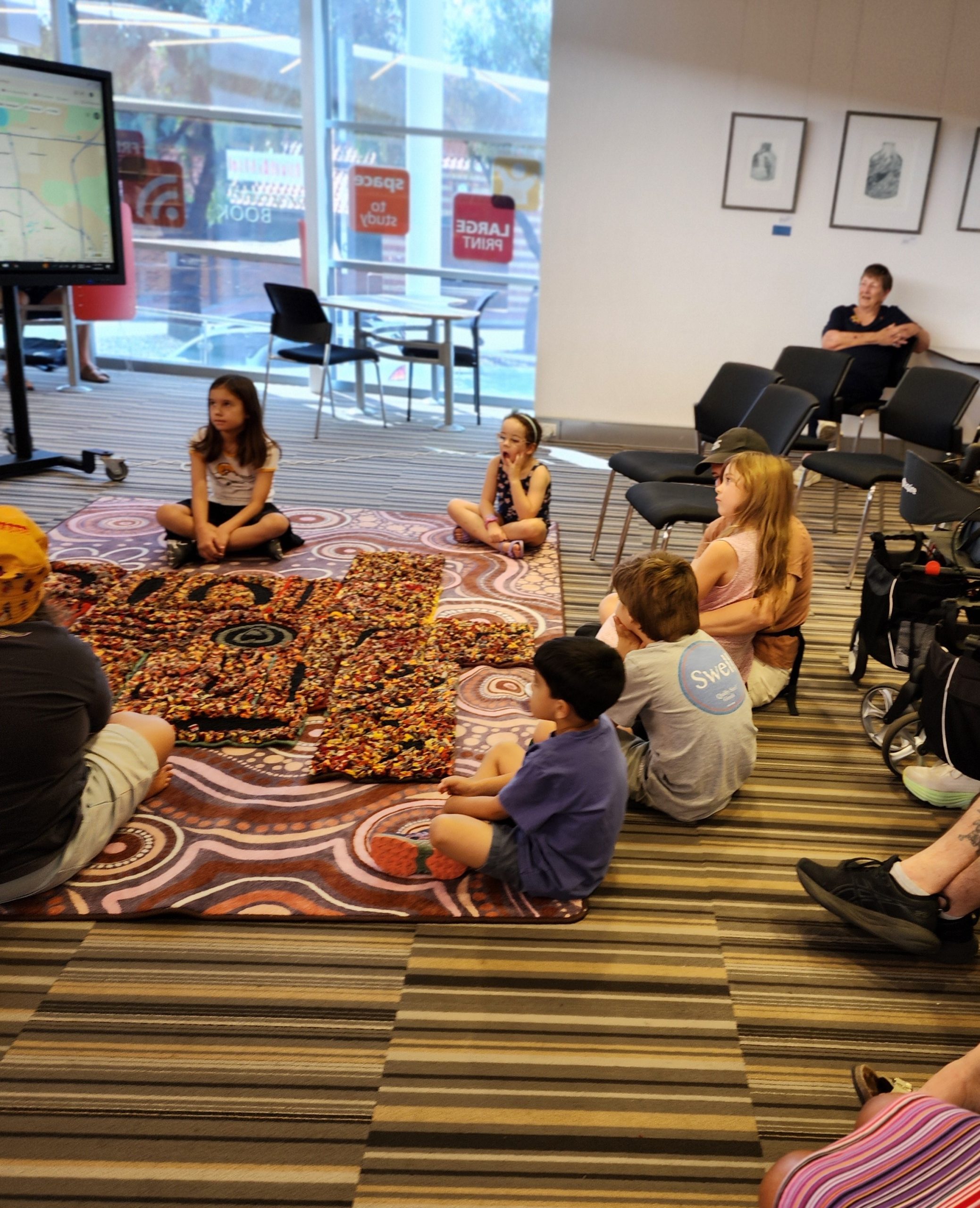
Derek Nannup, a talented artist and cultural advisor brought his Noongar stories to life for members of the community at the Wanneroo library with the help of hand-crafted Dreamtime Mats adorned with unique local Aboriginal symbols created with traditional rug making techniques by the Wanneroo Rugmakers.

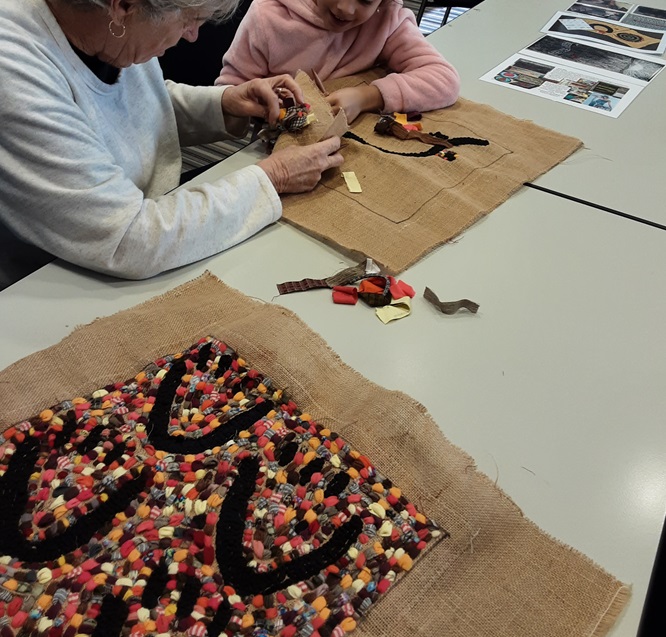
Each year since 2014 the Wanneroo Rugmakers have worked on a new community project. COVID19 put a stop to that with Western Australia being shut down; isolated from the rest of the country and the world for almost 2 years.  When our meetings resumed at the library in mid-2022 there wasn’t enough time for a project to be planned and completed by the end of the year.

During 2022 there was much discussion across the country about cultural issues; this was the catalyst for my idea of story mats incorporating aboriginal symbols of animal tracks, people and places, to be used as storytelling mats in the children’s section at the library, enhancing the community awareness of traditional culture and language through an engaging activity.

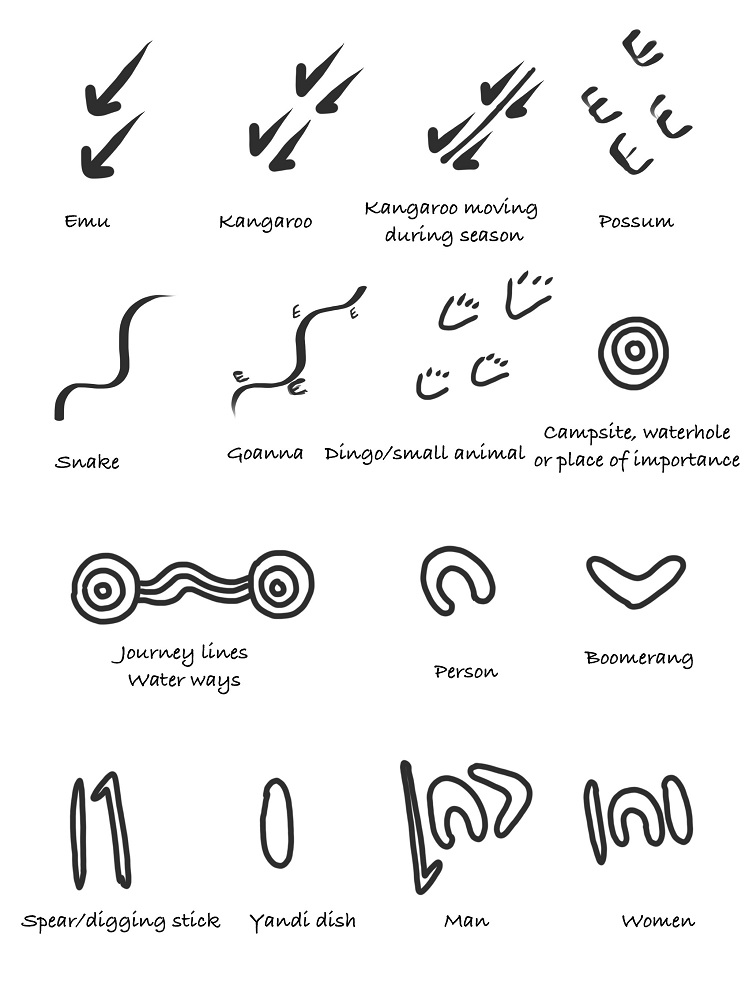
At the start of this project Peta Korb, a member of the group and I met with Derek and a representative from the library to discuss our idea for the creation of the mats and their use in library.  Derek provided us with a page of symbols commonly used by aboriginal peoples when drawing their stories on the ground or painting them on tree bark or rocks.

As Derek explained during his presentation, stories depicted in paintings on whatever surface are not to be copied by anyone, because they are the personal stories of the person who drew them. However, he was happy for the page of symbols he gave us to be used for our project.

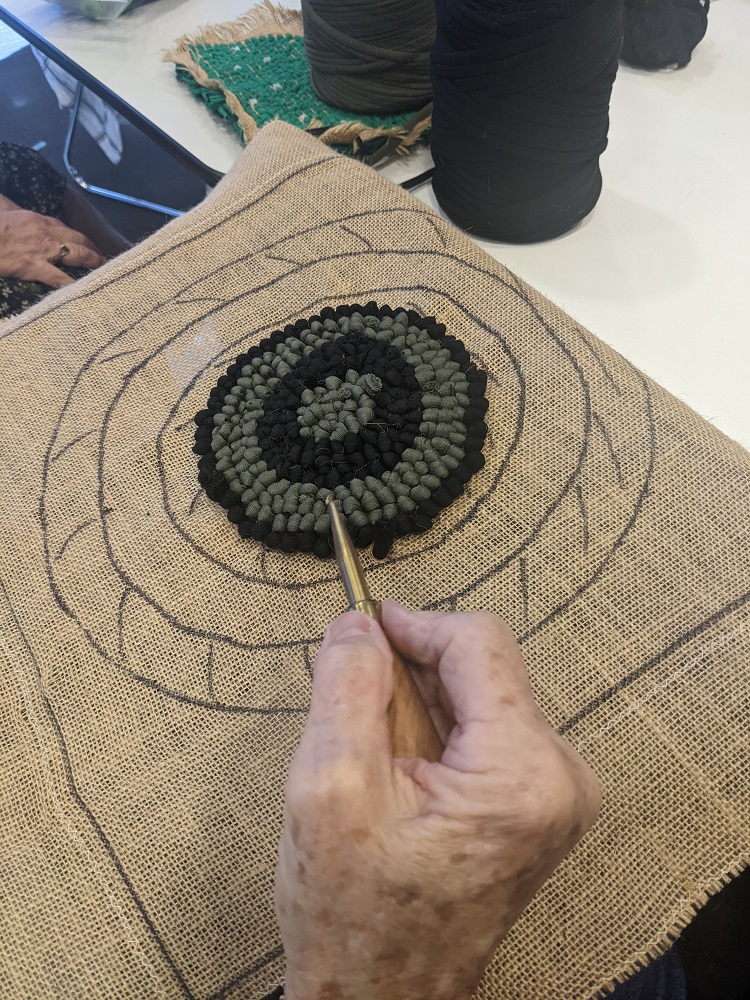
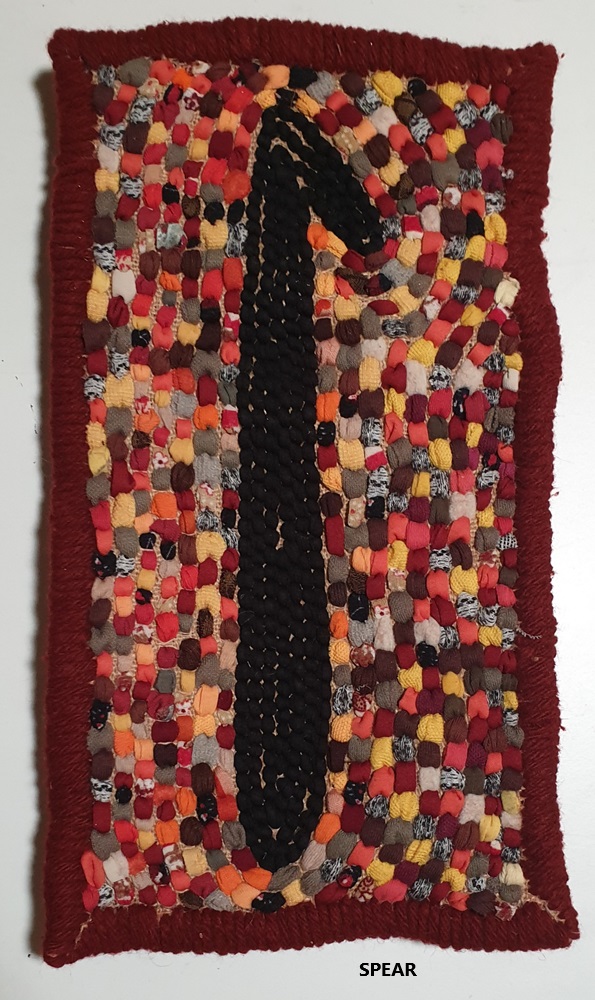
This project was also a chance to introduce a traditional textile craft to children who were included in the mat making. Proggy or Proddy is a simple old mat making technique that does not require the expensive or hard to find tools and frames used for rug hooking. Anyone from 4 to 94 can learn in a very short time. Open house sessions were held during school holidays. Short pieces of pe-loved T-shirts in the “Kimberley” colours of the northwest of Western Australia were used for the background, with the symbols traditionally hooked with black T-shirt yarn so that they were easy to see.

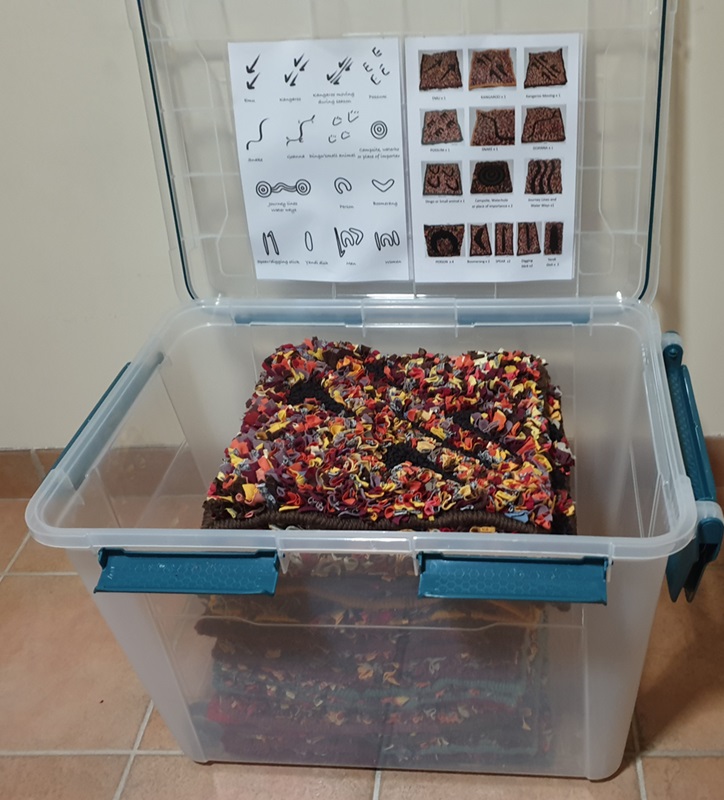
After being presented by an indigenous storyteller we envisioned the mats having multiple uses, the children could use the mats to tell their own stories, a learning opportunity for them as labels on the storage box show the page of the symbols in English and traditional Noongar language with an image of the corresponding finished mats alongside.

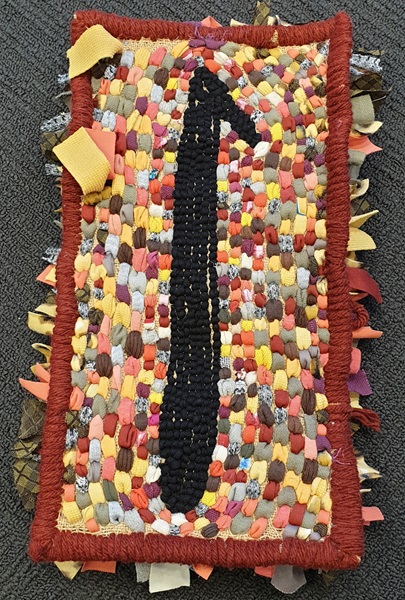
Besides storytelling, the mats could be hung on the wall as a Gallery display, arranged on floor leading into gallery to tell a story as you walk through, or loaned out for use in local schools. The pile of finished mats was reduced in size by half once the shaggy sides were “shorn” to make the black symbols easier to see. By whipping the edges instead of stitching on a backing as originally planned, allows the mats to be viewed from either side.

The backs with the tight tension of the shaggy prodded pieces looked very much like the recognizable aboriginal dot paintings.

The pieces used to prod were at least 2 inchs long before being shaved almost flush and sculpted in to the sides of the symbols.

This satisfied all the makers in the group because they were divided about which side would be the best to show. It also means without a backing the mats can be easily repaired if necessary.

A black and white rug was braided by Kath from donated T-shirts and can be seen in the featured image on this page, it has become pride of place for the storyteller to sit.

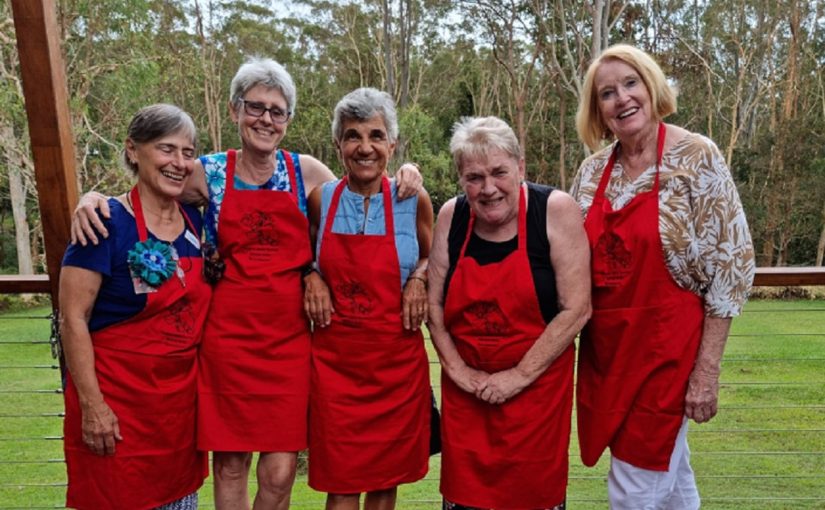
In the video below learn more aboutDerek Nannup shown here with group members, Tricia, Jo, Kath and  Michael.


Queensland Open Studios – Studio Palimpsest

ISSN 2207-001X – April 27, 2025

Judi Tompkins believes it’s time for her highly skilled and professional Docent Team to show off their talent, so she issued the first annual “Docent Challenge” to be held during the May 2025 Sunshine Coast Open Studios;

Judi’s Studio Palimpsest will be open Fri- Mon (16-19) and by appointment Tue-Fri (20-23).

OR,  for those who want to visit again you can contact Judi through this website.
You’ll find Studio Palimpsest on the Foothills Trail guide at (H02) follow the app on your phone or download to keep all the information for future reference.

FIRSTLY, you ask – What is a Docent? A person who acts as a guide, typically on a voluntary basis, in a museum, art gallery, or zoo.

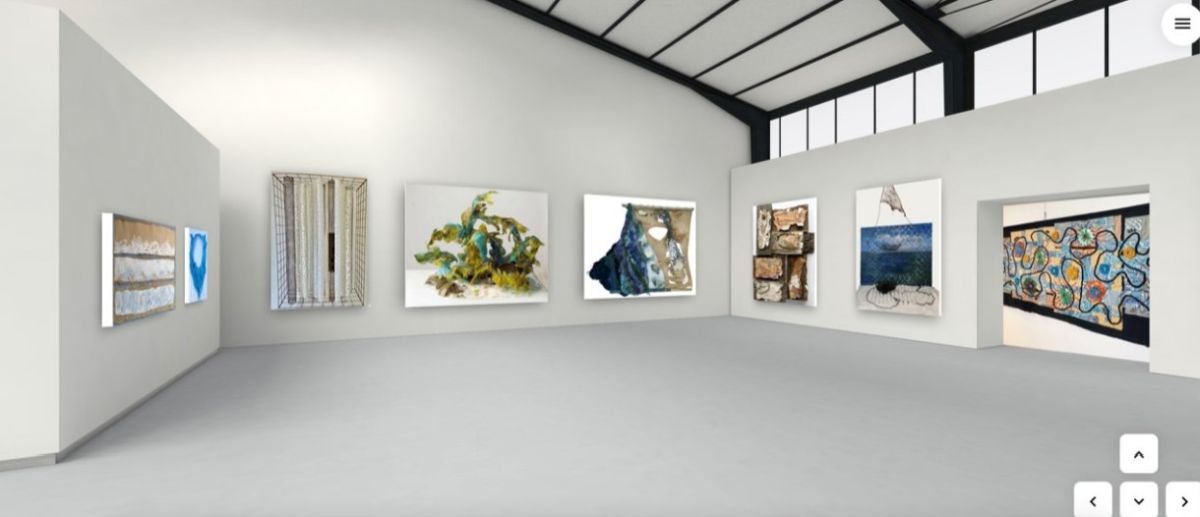
Docents are needed at Studio Palimpsest to guide visitors through the various Galleries –

Mini Gallery – Desktop landscapes & hanging works.

Adventure Gallery with Peculiarities, Visual Puns, Installations & Interactions.

Essential Gallery Eccentric, Abstract, Unique Australian Locker Hooking, Landscapes/Natural Objects, Portraitures.

Fractured Colours Series – 1
4th in the series of Fractured Colours – Colour Storm
Fractured Colours Series _2
Hope in a time of Darkness – the 3 eggs glow blue when exposed to light. Australian locker hooking – embellished.

Challenge Space, a hands-on Fibre puzzle – yes you can do it!

And the Docents Challenge –

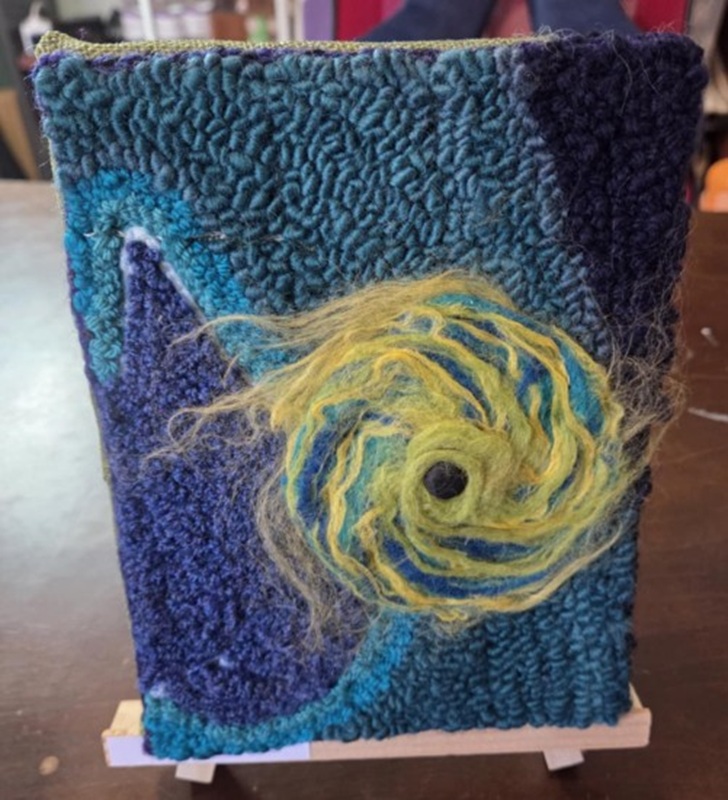
Cyclone Alfred off the QLD coast by Annette
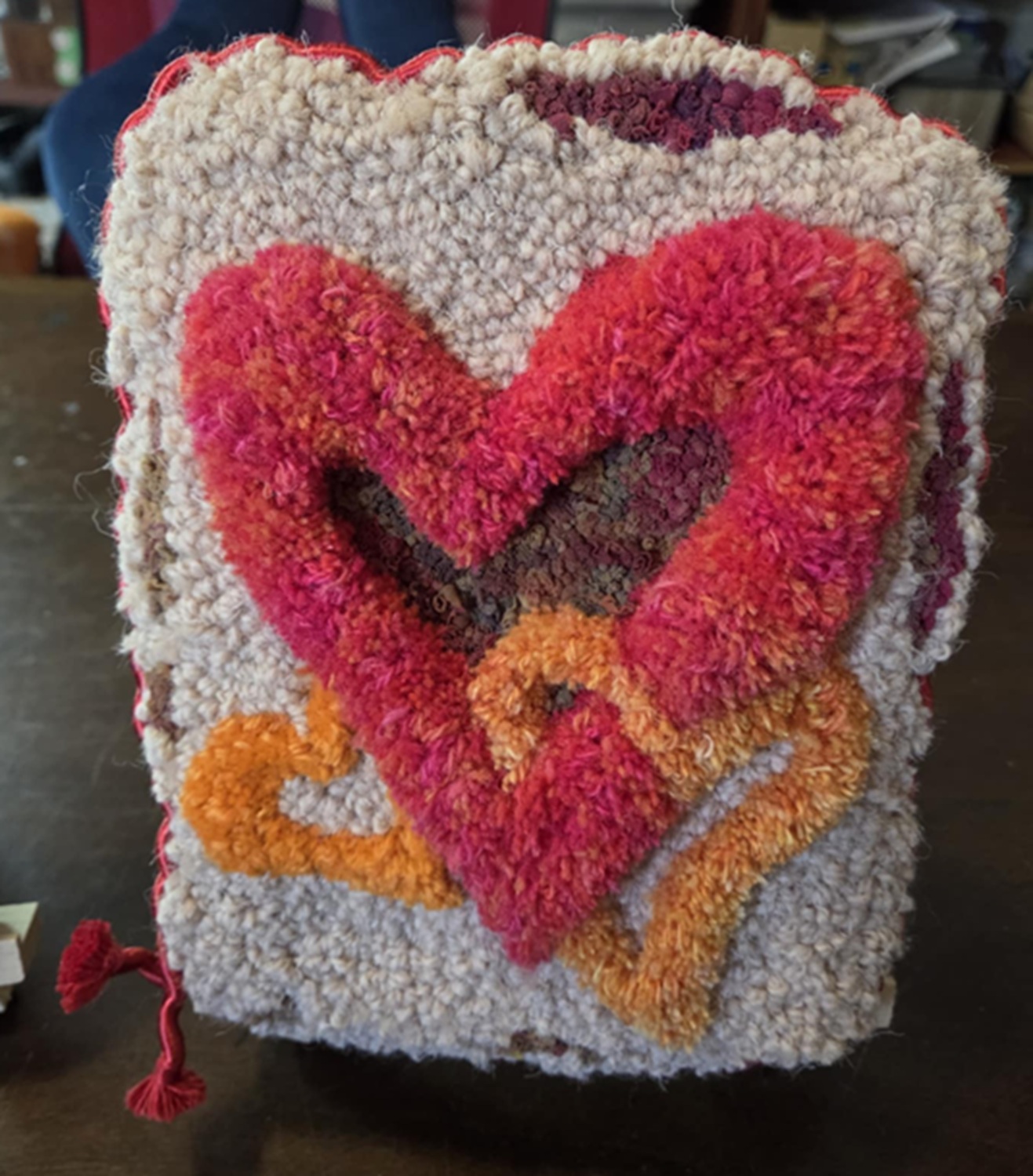
Hearts entwined by Bea


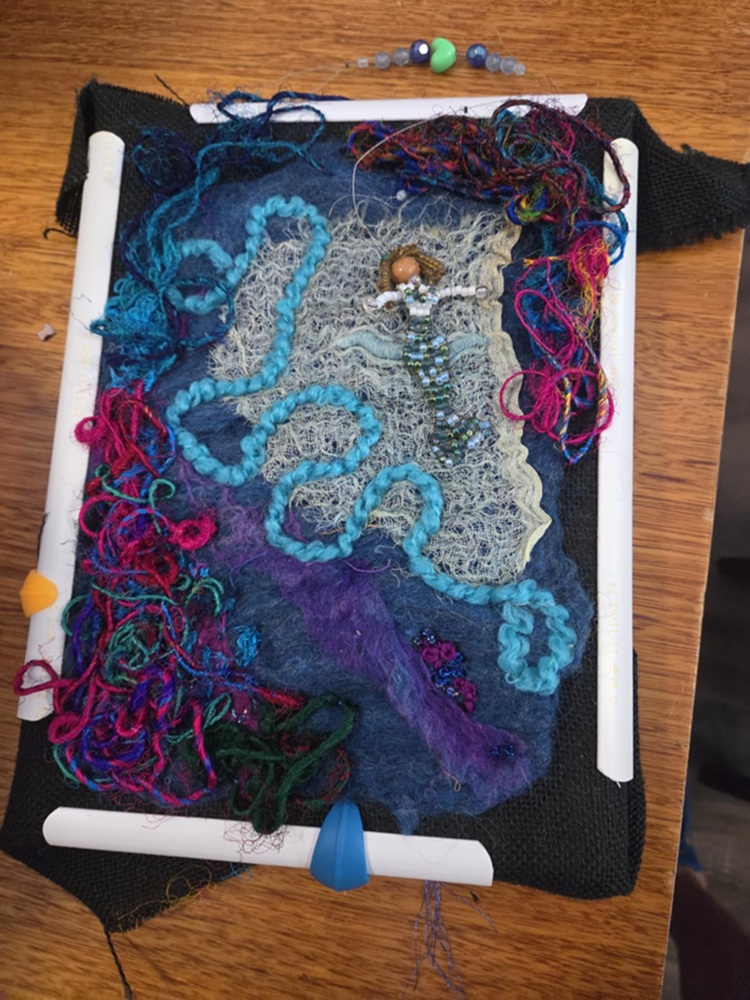
Mermaid work in progress by Judy Owen
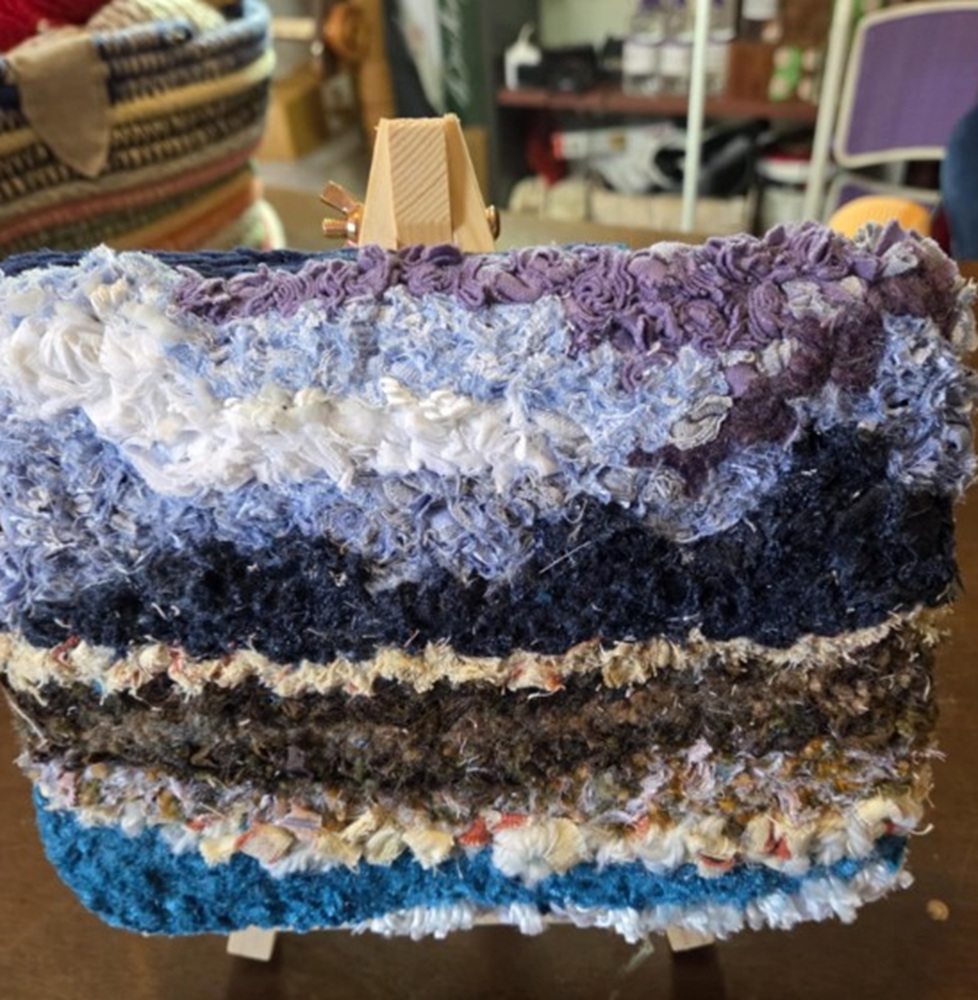
Abstract by Laureen
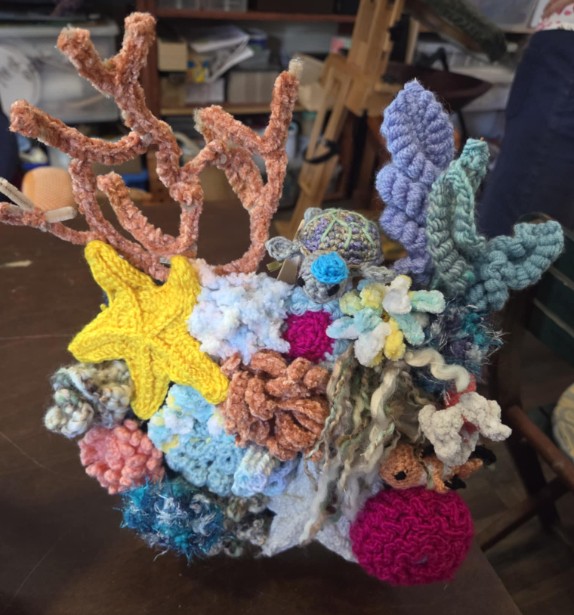
Crocheted Coral Reef by Gita

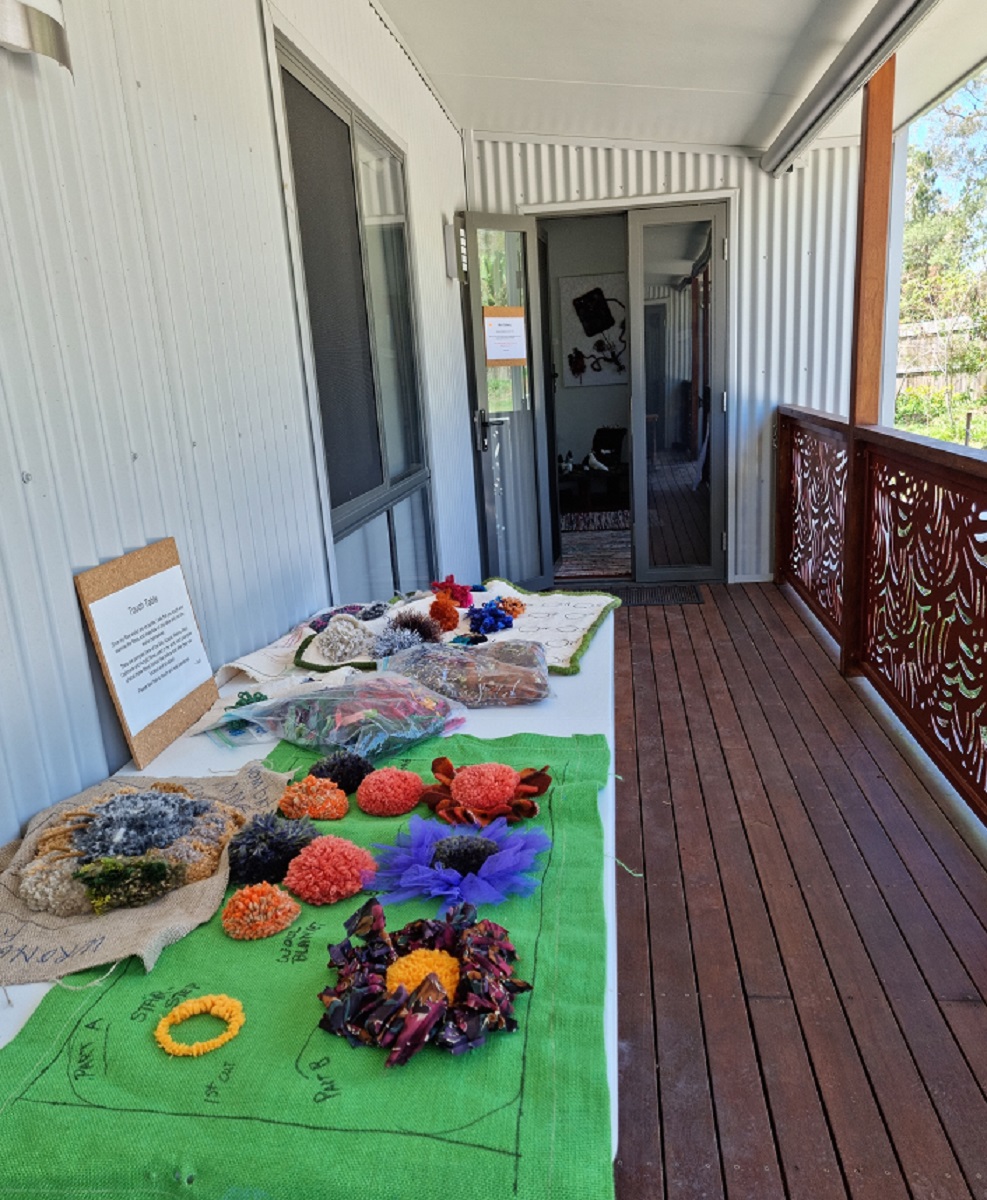
Not to be forgotten…  the Touch Table. Yes, the artworks are all deliciously tactile and here you are welcome to touch, fondle and handle the silk, cashmere, Alpaca, Merino wool fibres used. (Judi even included a few of her mistakes)  Visitors should feel free to ask questions of the Artist or the Docents.

and SECONDLY, the name “Palimpsest” what does it mean?  While most definitions talk of reused manuscripts, I find this definition best describes Judi’s work…  something reused or altered but still bearing visible traces of its earlier form.

Studio Palimpsest features Judith’s ability to reshape existing materials into new works that retain traces of their earlier form. For Judith, writing a story with reworked fibres/textiles takes on new meaning when viewed as a palimpsest. From childhoods hour I have not been as others were; I have not seen as others saw. (E.A. Poe)

Judith’s unconventional, tactile, interactive 2 & 3D sculptural fibre/textile works reflect her ability to weave science, pottery, and literature into whimsical, visual surprises, fibre puns and metaphorical “whacks on the side of the head”, challenging the viewer to see differently.

More of Judith’s works can be seen in the Sunshine Coast Open Studios catalogue here 

Lest We Forget

ISSN 2207-001X – April 2025

ANZAC Day, 25th April 2025 will be the 110-year anniversary of the landing of the Australian and New Zealand Army Corps troops at Gallipoli, Turkey.  This brings to my mind the “Lest We Forget” wall hanging I designed and created with the help of the Wanneroo Rugmakers in Western Australia; for centenary celebrations in 2015 to commemorate the departure of the first ANZACs (Australian and New Zealand Army Corp), from Albany, Western Australia in November 2014.

I wanted this piece worked in greyscale to create a sombre effect with just one red poppy to represent the loss of many lives but the members of the group found it difficult to work on, they said it made them sad and wanted to introduce more colour. The work went home with a group member one week and came back the next with the rising sun hooked in pale yellow. I re-hooked it in a shiny silver fabric, donated by Judy a long-time member of the group; it was a stole (wrap) she’d made years ago for her daughter to wear to a high school dance. The fabric was shiny silver on one side and a flat grey on the other, perfect for the rays of the rising sun. The fact that the piece engendered feelings of sadness as it was worked on confirmed that my choice of grayscale had been correct.  It was left to me to hook the lettering and the banner which was inspired by an image of a work by Rachelle LeBlanc, from the USA.

In 2015 this piece was hung on ANZAC Day in the Wanneroo Library & Cultural Centre and in 2016 exhibited in the Western Australian Fibre & Textile Assn. Inc. (WAFTA) “Memories & Commemoration” exhibition in Perth and Busselton.

After being acquired by the Wanneroo Museum it has since been displayed in a glass cabinet in the Museum, and on several occasions in a glass case in the centre of the Great Court of the Cultural Centre .  Personally, I would prefer to see it hung on the wall, however since it’s now part of the Museums art collection I suspect that being a textile piece it is displayed under glass in a public space for protection.

The banner in this piece was inspired by Rachelle LeBlanc a French American/Canadian artist. Rachelle and I came to rug hooking about the same time in very different ways. My introduction was through the very traditional learning process of the Pearl K. McGown Guild while Rachelle is self-taught.

In this issue of Rug Hooking Magazine (Sep/Oct 2014) Anne-Marie Littenberg documents Rachelle’s introduction to rug hooking, describing Rachelle as a fiercely independent rug hooker using humble tools to create exciting works with a style uniquely her own that evokes an emotional response in the viewer.

Seeing Rachelle’s artistic creations in those early days I was amazed to learn that she didn’t use a frame, and her hook was a second-hand un-altered latch hook. Over the years Rachelle’s journey has taken her from an artistic creative rug hooker to a contemporary textile artist whose primary medium is hand-hooked surface tapestries (rug-hooking) and 3D hooked works with the addition of clay and glass casting, adding depth and texture to her storytelling. You can read more about Rachelle here

Updating this new version of the Rughooking Australia website will be an ongoing project, as I continue to network with rug hookers and rug hooking groups around Australia while introducing rug hookers from around the globe.

I hope you will enjoy and contribute to the new website. You can contact me through social media or email rughookingasutralia@gmail.com