
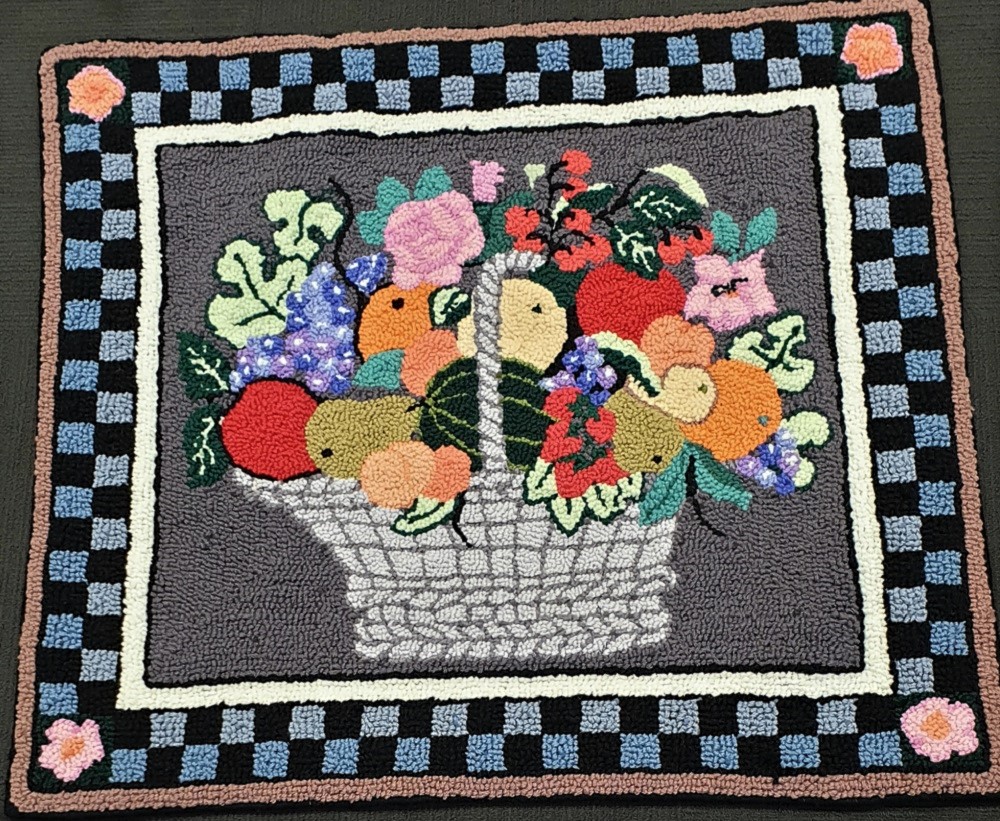
Recently, while watching a free video workshop by Deana David for members of TIGHR (The International Guild of Handhooking Rugcrafters) I saw a rug designed by Claire Murray, from Massachusetts, USA, and was reminded about the challenges of hooking this rug design in 2019 and how it came about.
Since the website RughookingAustralia went online in 2014, I have received many requests for help and advice; people looking for other rug hookers, tools or supplies, and occasionally for repairs to treasured family rugs. With my connection to groups across Australia I have been able to help put many people together.
In December 2018 a request came in from a woman in Brisbane who 30 years previously while living in Melbourne had started painting (Folk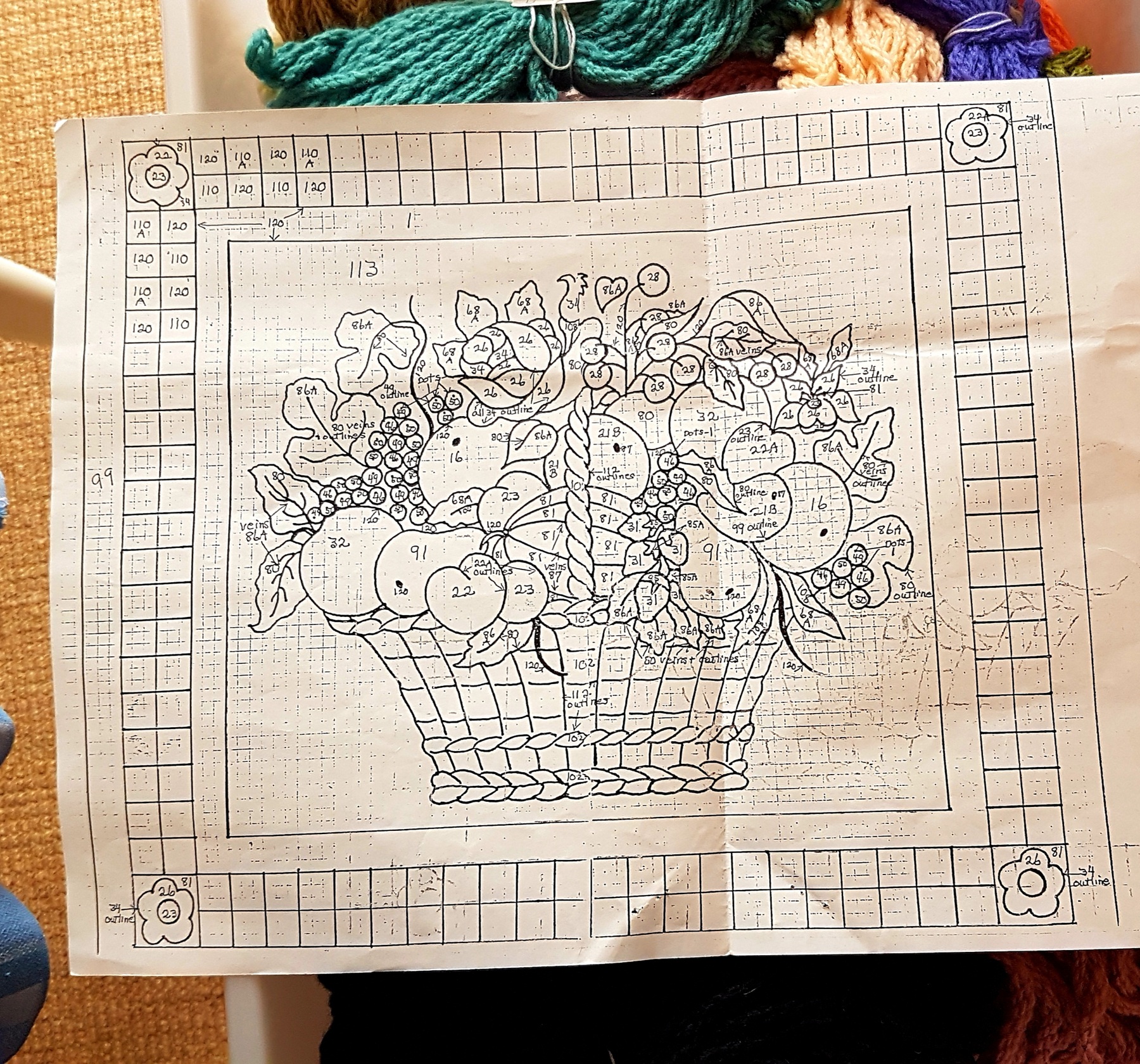
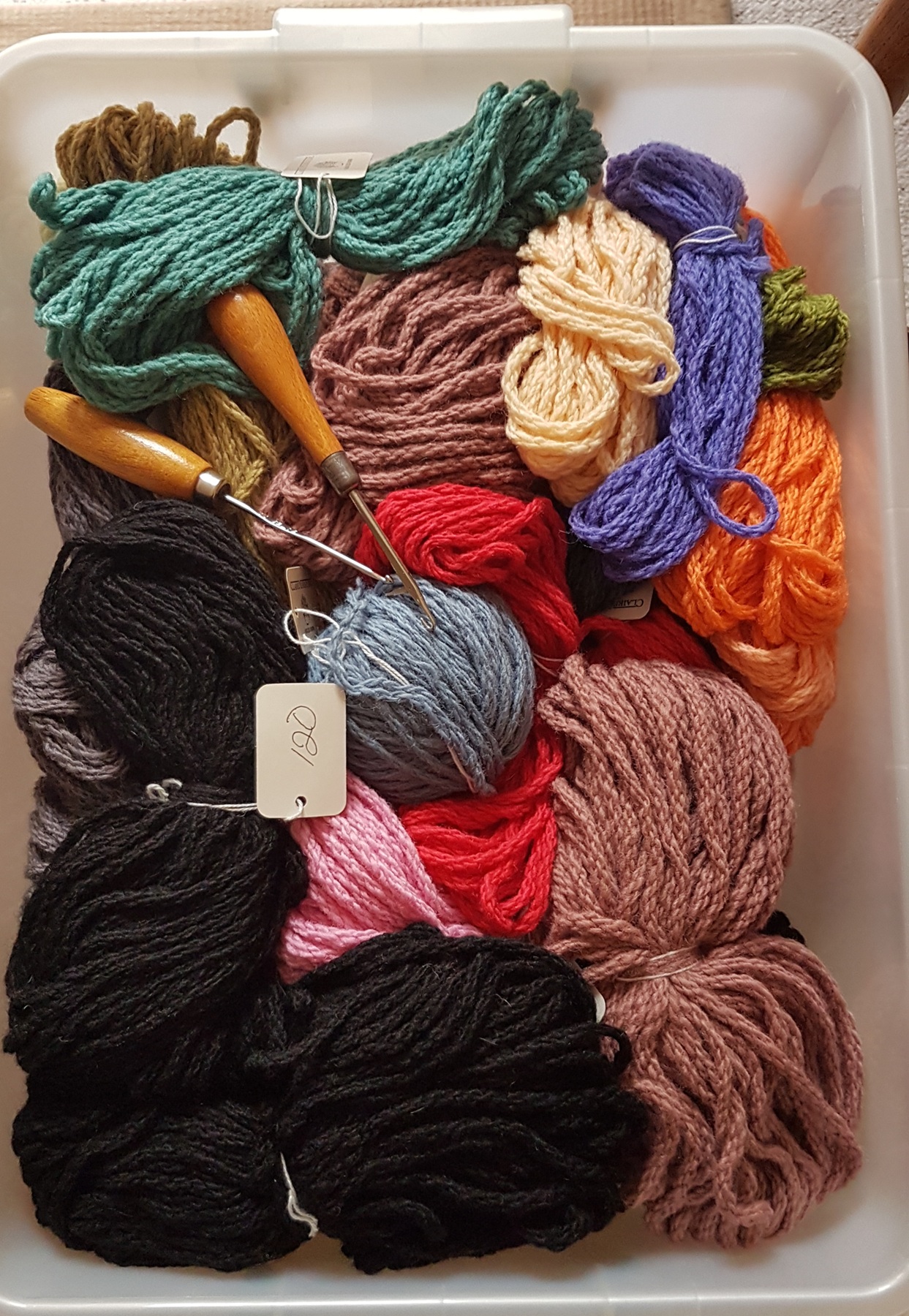 Art) and fell in love with what she called the American primitive decor and the look of hooked rugs. She bought this Claire Murray rug kit (design, wool yarn and tool) and a rug by the same designer already hooked which she said was quite expensive at the time. She’d done cross stitch, and attempted a tapestry neither appealed to her, so feeling rug hooking would be the same, she was looking to pay someone to hook the rug. The owner was moving into a new home and wanted to put both rugs on the floor.
I put the word out but none of the rug hookers from groups around the country were interested in taking on the commission. As I had nothing on my frame at the time I decided to do it, even though florals would not have been a personal choice. I’d only hooked one rug with yarn so saw it as a challenge. Challenge, how hard could it be? should be easy as it came with a coloured picture of the design and each of the shapes were numbered with corresponding numbered hanks of woollen yarn. I told the owner not to send the tool as I preferred to use my own hook. As it turns out I would not have used either of the tools pictured with the wool, one was a latch hook and the other had a shank that would have been way too long for the way I work the traditional rug hooking technique.
Determining what to charge was my first challenge.
I reached out to members of the international guild and found that this is a subject for another time because it’s complex, so much depends on who the hooker is and what they create, craft projects, or one of many pieces produced for sale or the work of an artist who has a high profile and/or has exhibited work in prominent venues.
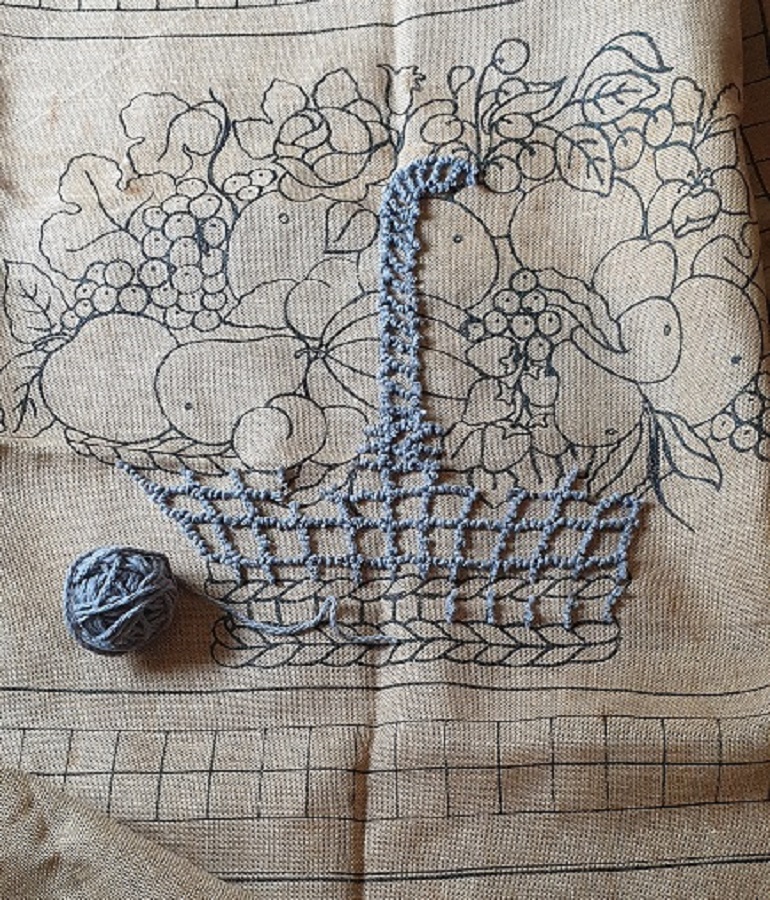 Since the kit was old and had been opened, with some hanks rolled into balls, I was concerned about not having enough yarn, so decided to hook the basket outline first as there was only one ball of wool of that colour. Turns out there was enough to complete the outline of the basket with a little to spare – indicating my tension and loop height must have been correct. I became enthralled with the different colours and kept hooking and before I knew it, I’d almost completed the basket, flowers, fruit and leaves. That was the easy part, not having to colour plan, just follow the numbers and hope you had enough of each colour.
Then the finish of the rug needed to be considered, because I find once it’s all hooked it’s difficult to handle a large piece, on the sewing machine to zigzag edges or stitch on the facing.
Tape was provided in the kit, for finishing the hessian edge but I could see that the last narrow border to be hooked in black was not an even width around the rug, and there didn’t appear to be enough black yarn, or tan yarn for that matter, so I decided to add a corded edge, whipped with some additionally purchased black wool and apply the tape as a facing on the back at the base of the corded edge.
However, by far the biggest challenge was…
What do you do when you start working on a rug and find there’s a problem with the printed design, especially if the piece is not yours?
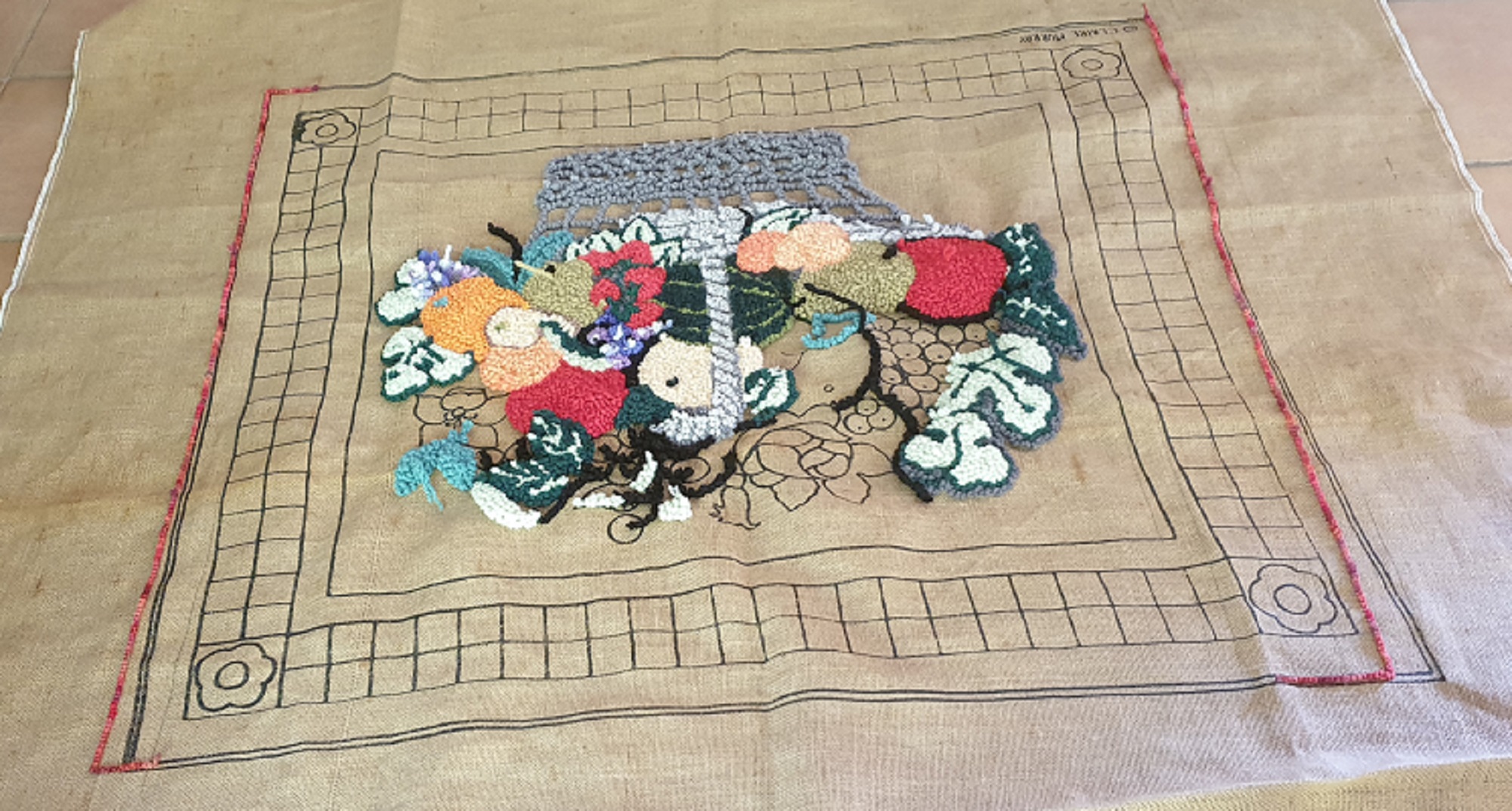 During this preparation process I discovered the design on the sides had not been drawn straight on the weave.
It would probably look alright hooked as is, but on my tiled floor the “off” shape of the sides would be obvious, and I’d know it wasn’t right – that would make the difference to me. This pattern was not an original no matter what the pamphlet said – it may have been an original design but the pattern had been printed on the backing. Misalignment in patterns can happen during the printing process, that’s why individual hand drawn patterns are so expensive.
The obvious fix was to re-draw the border, however this would impact the central motif, it would no longer be “centered” and besides there was not enough of the grey coloured yarn to add in extra background around the basket. There was no way I was going to pull out the central motif and reposition it, I couldn’t risk re-hooking as in several cases there had just been enough of the colour to complete the individual shapes. However, I was not able to escape some re-hooking, I’d hooked the grey background following the shape of the central motif and come up short of grey yarn so pulled it out and re-hooked in straight lines from the border inward and managed to make the grey go further. I see now on the coloured pamphlet image that two shades of grey are shown in the background, however on the instructions there was only one number indicated for the grey and no other wool.
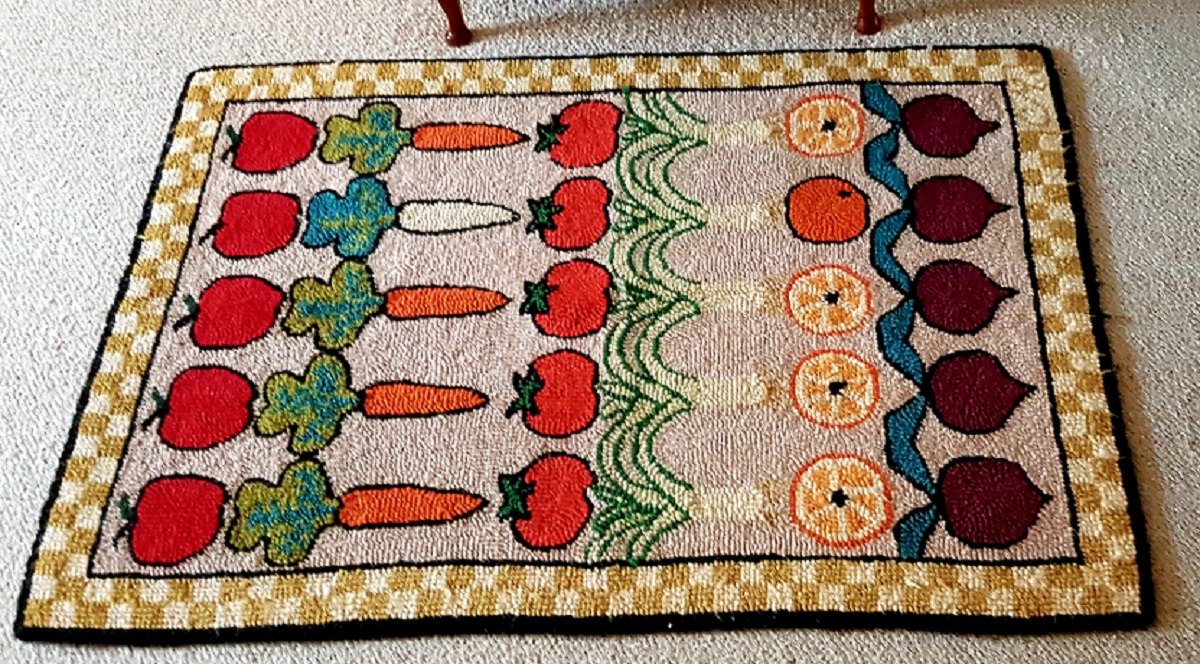 Had the piece been mine I would have changed the border design, so the problem wasn’t as obvious, but the owner had purchased the kit to go with a companion rug that had a similar checked border. I sent off an email to her listing a couple of alternatives for fixing the problem which would not take as much time as redrawing the borders, squares and medallion flowers. Not being a rug hooker herself, she left it up to me to decide. The lack of wool yarn determined the final decision; hooking the piece as it was with only 3 rows of tan colour instead of 5 and finishing off with a corded edge whipped with black yarn which I felt gave a firmer finish and would be more protection than just a folder over edge with a single row of hooking as shown on the instructions.
 The rug was then rolled and mailed in what probably looks like a most unconventional way.
 I’d used this method of shipping before, and it worked. I sent email instructions warning her to be careful in the unwrapping process; cutting the tape without cutting into the rug .
It arrived promptly and was safely opened, and the owner was delighted to have the companion piece to add to her new home, and I sighed with relief looking at the small amount of leftovers.

